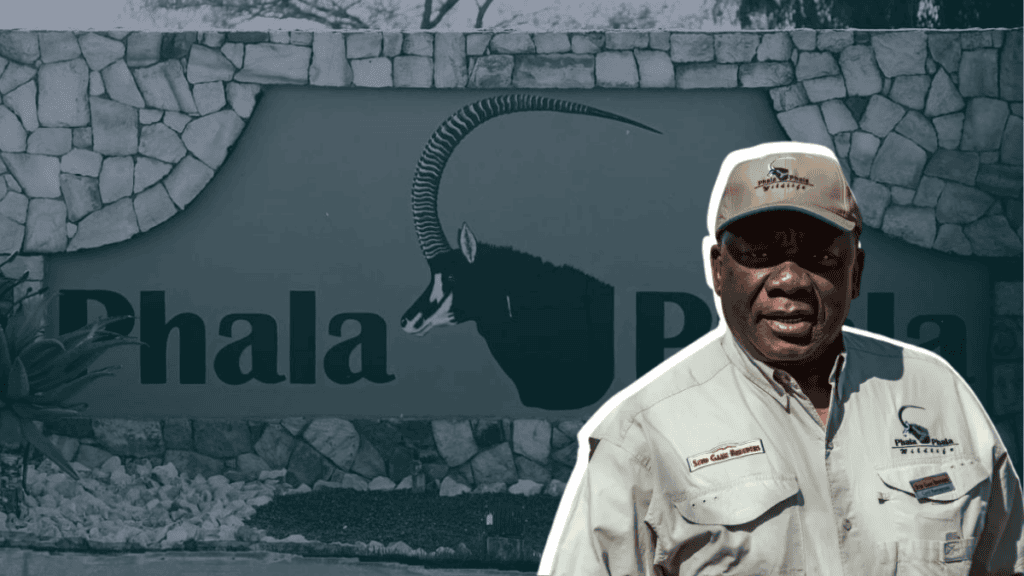
By Themba Khumalo
I am no legal expert, and I have no intention of pretending to be one. I am, however, an ordinary citizen watching the long-running Phala Phala saga unfold with the increasingly uncomfortable feeling that the country is being invited to become an expert in procedural delay rather than a witness to the truth.
Somewhere between court applications, parliamentary manoeuvring, legal opinions and objections to objections, the central question has begun to disappear beneath the machinery designed to answer it.
Like millions of South Africans, I do not have a Master of Laws degree, nor do I claim to understand every intricate nuance of parliamentary procedure. What I do have, however, is enough common sense to recognise when a process intended to establish the facts starts to look less like a search for truth and more like an obstacle course in which every hurdle produces another.
That is what makes the Section 89 impeachment inquiry so deeply frustrating.
At the heart of the Phala Phala saga lies a question that should not require a lifetime of legal scholarship to understand: what precisely happened at President Cyril Ramaphosa’s game farm, whose foreign currency was hidden there, how did it get there, and what followed once the theft was discovered?
These are questions of fact. They may have complicated legal consequences, but the facts themselves should not be imprisoned indefinitely inside a maze of procedure.
For years, South Africans have been told that the constitutional and parliamentary processes would ultimately provide the answers. That assurance carries weight only if those processes are allowed to reach their natural conclusion. Yet every time the machinery appears to move towards the examination of evidence, another legal challenge, procedural objection or application seems to arrive to slow it down.
The latest development is particularly revealing.
When the Section 89 independent panel produced findings serious enough to trigger a parliamentary process, the report was challenged in court. The Constitutional Court later intervened in that process, setting aside the parliamentary rule that had allowed it to be terminated before the allegations had been fully investigated. It did not pronounce President Ramaphosa guilty, nor did it determine the merits of the allegations. It simply cleared another procedural barricade and sent the matter back towards the parliamentary process.
The process then moved forward, only for the Western Cape High Court to intervene and halt the public hearings while the President seeks judicial review of the original independent panel report.
The parliamentary Impeachment Committee nevertheless proceeded with its preparatory work and finally got down to one of the more ordinary tasks associated with an inquiry: recommending an evidence leader.
From a list of candidates, the committee voted to recommend Senior Counsel Thandazani Madonsela.
Before that recommendation had even settled, the President submitted a formal objection, raising two concerns: potential bias and a possible conflict of interest.
The first argument is that because the President removed Advocate Madonsela from the Judicial Service Commission in 2022, there could be a reasonable apprehension that the advocate harbours a personal grievance which might influence his conduct.
The second concerns legal advice Madonsela had previously provided to an ANC study group on the very impeachment inquiry, which prompted ANC members of the committee to abstain from voting.
These are not insignificant questions. In a constitutional democracy, an evidence leader must be, and must be seen to be, impartial. The integrity of the process therefore matters as much as its outcome. But there is a difference between scrutinising a legitimate conflict and allowing the possibility of conflict to become another reason for the process itself to retreat into the bushes.
Madonsela has rejected the objections. On the question of personal grievance, he has pointed out that he has never said or done anything to indicate resentment over his removal from the commission. On the previous legal advice, he disclosed the engagement before the committee made its decision, meaning that the committee was not making its choice in ignorance of his involvement.
That distinction matters.
If disclosure is made, the relevant decision-makers consider it, and nevertheless determine that a person is suitable to perform the task, then the integrity of that decision should not automatically be presumed to collapse simply because one party is unhappy with it. Otherwise, every disclosed circumstance becomes an invitation to reopen the question indefinitely.
And that is where the broader problem begins to emerge.
The Phala Phala saga is no longer simply a dispute about what happened on a farm. It has become a test of whether South Africa’s constitutional institutions can actually complete a difficult process when the person at its centre has the resources, political standing, and legal capacity to challenge almost every significant step along the way.
When the Section 89 independent panel produced findings serious enough to trigger a parliamentary process, the report was challenged in court. When Parliament sought to proceed with its inquiry, the public hearings were interdicted. Now, when the committee moves towards appointing someone to lead the evidence, the suitability of that person becomes another battleground.
There is nothing inherently improper about a president exercising his legal rights. Nor should anyone suggest that constitutional rights disappear simply because the person exercising them occupies the highest political office in the country. Judicial review exists for precisely the reason that public power and public institutions must remain subject to scrutiny.
But there is a point at which the accumulation of lawful procedural interventions produces a political effect that deserves examination even when each intervention, considered separately, may be legally defensible.
That effect is delay.
And delay, in a matter of such profound public interest, is not politically neutral.
The longer the public waits for a process to establish what happened, the less confidence people have that the institutions involved are capable of providing an answer. The public does not experience constitutional procedure as a series of finely calibrated legal principles; it experiences it as time passing while the same questions remain unanswered.
This is where President Ramaphosa’s position becomes particularly difficult.
He may ultimately be vindicated. It may indeed be established that he committed no impeachable or unlawful conduct in relation to the events at Phala Phala. That possibility must remain open, because the purpose of an inquiry is to establish facts and reach conclusions through evidence, not to manufacture guilt.
But if the President genuinely wants the matter put to rest, there is a persuasive argument for allowing the parliamentary process to do precisely what it was established to do: hear the evidence, test the competing claims and reach a conclusion.
There is something inherently unsettling about a president who says, in effect, that he wants the truth established, while repeatedly contesting the mechanisms through which that truth is to be established. One can win every procedural battle and still lose the larger argument in the court of public confidence.
That is the peculiar tragedy of Phala Phala.
The more the process is contested, the more distant the underlying facts appear. The more technical the arguments become, the more ordinary citizens are left wondering whether constitutional accountability has somehow become an exercise in finding the next legal exit.
South Africans are not demanding a predetermined verdict. They are demanding an answer.
They deserve to know what happened at Phala Phala, whether the conduct surrounding it breached any law or constitutional obligation, and whether the institutions of the Republic are capable of reaching that determination without becoming trapped indefinitely in procedural quicksand.
President Ramaphosa has every right to defend himself. Parliament has an equally important duty to interrogate the evidence. The courts have a constitutional responsibility to determine the legal questions brought before them.
But none of these principles should become a substitute for the truth.
Because when every road towards an answer appears to lead to another postponement, another objection or another legal detour, suspicion inevitably fills the vacuum left by certainty.
That may be profoundly unfair to the President.
It is also entirely predictable.
And until the Phala Phala process is allowed to reach the evidence, rather than endlessly litigating the road towards it, the shadow over the presidency will continue to grow — not necessarily because guilt has been established, but because South Africans are beginning to wonder why the truth seems to have so much difficulty getting through the door.
Get the morning briefing
Our editors’ choice of the day’s stories, in your inbox at six.


Comments
No comments yet.