By Sandile Memela
I learn that the geography of Johannesburg’s southern suburbs has apparently been redrawn, although nobody thought it necessary to tell the rest of us.
Perhaps I have fallen behind and need to update myself on the latest demarcations, because according to the increasingly confident descriptions doing the rounds, Nasrec has somehow been absorbed into Soweto.
But geography is not a matter of political convenience, marketing enthusiasm or the location a publicist finds more attractive. Facts still matter, and some of us are angry enough to insist that they do.
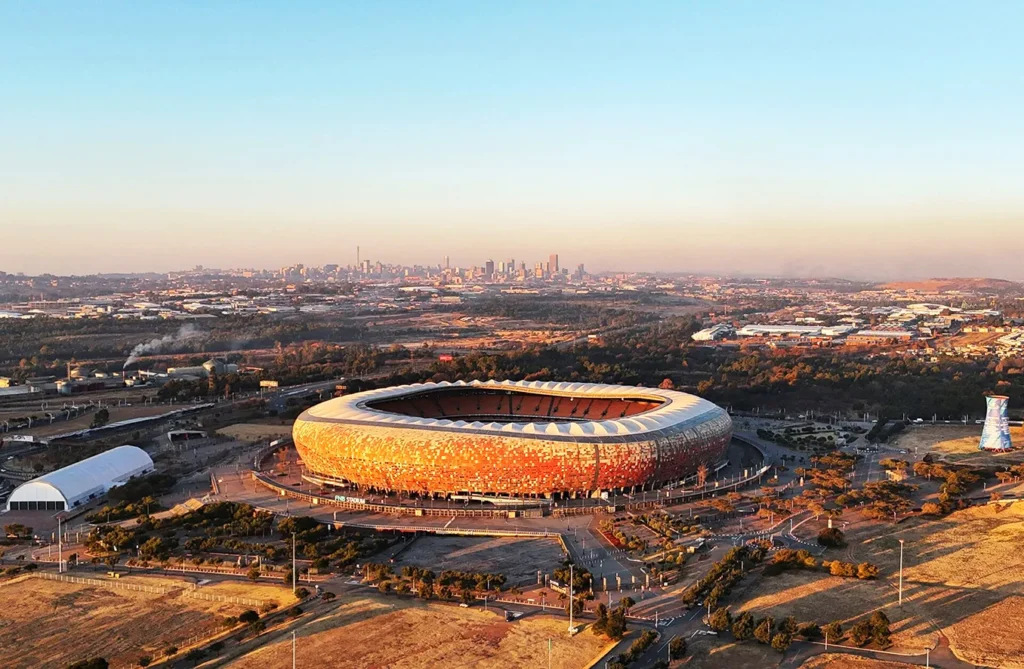
FNB Stadium is NOT in Soweto.
Let me repeat that for the commentators, the government press releases, the Springbok PR machine and the FIFA nostalgists: FNB Stadium, Soccer City, The Calabash – call it what you want – is not in Soweto.
Officially and geographically, it is located in Nasrec, bordering the Soweto area of Johannesburg. Address: Soccer City Avenue, Nasrec, Johannesburg, 2147.
It sits on old mine land, on gold mine dumps between Soweto and the south of Joburg, next to SAFA House and the Apartheid Museum. It is managed by Stadium Management South Africa as a national stadium, not a Soweto municipal stadium.
Soweto’s actual stadia are Orlando Stadium in Orlando East, Jabavu Stadium in White City, Elkah Stadium in Rockville, also called Elkah Cricket Ground, and Dobsonville Stadium in Dobsonville.
These are inside Soweto. These are where Soweto football was born, where fathers took sons, where local derbies raised dust and where no television camera came unless there was violence.
Why does everyone now say “FNB in Soweto”? Why did recent Springbok reports and NASA satellite images in 2010 caption it as “stadium in Soweto”?
This is pure propaganda. It is a marketing gimmick. It is a lie to hide indifference to the misery and suffering of Soweto people.
Let us be blunt about this demarcation fraud.
“Nasrec” sounds like what it is – an industrial park. Nasrec stands for National Recreation Centre. It was a showground. It smells of mine dumps and diesel. It sounds like nothing.
“Soweto” sounds like soul. Soweto sounds like struggle. It is a Black symbol of resistance. Soweto sounds like Mandela, Tsietsi Mashinini, Sisulu, Hector Pieterson. Soweto sounds like authentic, township, African, gritty, beautiful. Soweto sells.
So government and tourism marketing dressed Nasrec in Soweto’s borrowed robes to make it look authentic. They needed an African backdrop for a World Cup final and for Springbok triumphs. They could not say: Come to a stadium on a mine dump next to an industrial area in Nasrec. They had to say: Come to Soweto, the beating heart of South African liberation.
It is exactly like claiming Sandton City Mall is in Alexandra because they share a fence on the Jukskei. Sandton borders Alexandra. Nasrec borders Soweto. Bordering is not being. Sharing a fence is not sharing a life.
You would never say Sandton is in Alexandra to make Alexandra look rich, or to make Sandton look poor. That would be geographic distortion. So why do it with Soweto?
Because it allows you to claim you have developed Soweto without developing Soweto.
This is the crux of the anger.
When FIFA built the R3.3 billion calabash for 2010, what did Soweto get? A stadium it cannot afford to fill? Or roads, clinics, sports fields?
When the Springboks win, and the commentators shout “The Boys played for Soweto!”, what does Soweto get? A drinking spree by Springbok fans and some prominent Afrikaners in Vilakazi Street or Disofeng?
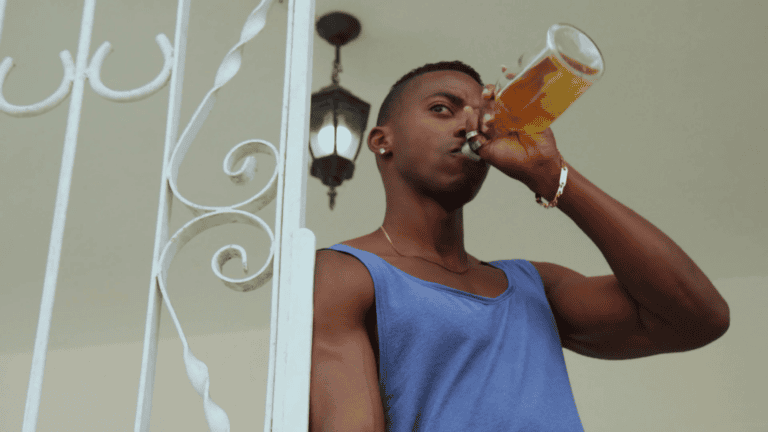
Yes, we saw them. After the triumph, they went on a drinking spree in Soweto. They drank beer in Vilakazi Street, took selfies with children, sang Shosholoza badly, and left. The TV cameras loved it. See? Rugby is now Black. See? Unity!
It does not change anything.
There are no sport or rugby development programmes happening, as promised to Madiba, after the Springbok triumph back in the Madiba years.
Remember 1995. Remember Mandela wearing the No. 6 jersey. Remember François Pienaar saying “This trophy is for all 43 million South Africans.”
Remember the promise that rugby would go to the townships? That Soweto would have rugby academies? That Black children would hold a rugby ball not as a novelty but as a career?
Thirty-one years later, where is it?
Go to Orlando Stadium on a Saturday. Is there a junior rugby development league? No. Is there a Springbok-sponsored coaching clinic for 1,000 Soweto kids? No. Is there a high-performance centre at Elkah Stadium? No.
What we have is Orlando Pirates and Kaizer Chiefs struggling to maintain their own home grounds, while FNB Stadium sits empty most of the year, too expensive for local teams to use, hosting the Springboks against New Zealand, with ticket prices no Soweto resident can afford.
FNB Stadium borrows Soweto’s cultural capital and returns nothing.
If it were truly a Soweto stadium, its economics would be Soweto economics. Its toilets would work for Orlando Pirates vs Moroka Swallows on a Wednesday night with 5,000 people. Its parking would be taxis from Bara, not BMWs from Sandton. Its development fund would build fields in Dobsonville, Protea Glen, Naledi.
Instead, it is a national monument on Soweto’s fence that extracts value from Soweto’s name.
This is not accidental. This is how apartheid geography still works.
Apartheid put Soweto far enough to supply labour, close enough to control. Today, marketing puts Soweto close enough to supply authenticity, far enough to not require investment.
We call it the Soweto stadium when we want soul. We call it Nasrec when Soweto people ask for services. Who must fix the lights at Orlando Stadium? Not FNB. That’s the City of Joburg. Who must fix the potholes on Soccer City Avenue? Not Soweto. That’s national government.
The name floats depending on who needs to be praised and who needs to be blamed.
This is why factual accuracy matters. Names are not neutral. Maps are not innocent.
When you say FNB is in Soweto, you create a false image that Soweto has world-class infrastructure. You tell the world, and more dangerously, you tell the budget planners: Soweto is fine. It has a 94,736-seater stadium. Why does it need anything else?
And so Elkah Stadium’s grass dies. Jabavu Stadium’s grandstand rusts. Dobsonville Stadium’s dressing rooms have no hot water. Orlando Stadium’s floodlights fail mid-game.
But hey, Soweto has FNB!
The Springboks did not build a legacy in Soweto. FIFA did not build a legacy in Soweto. They built a legacy next to Soweto, in borrowed robes, and asked Soweto to ululate.
I am not against the Springboks. I am not against FNB Stadium. The Calabash is beautiful. When Bafana or Amabhokobhoko win there, I cheer.
I am against the lie.
If you want to honour Soweto, do not dress Nasrec in its clothes. Invest in Soweto’s real clothes.
Invest in Orlando Stadium’s lights so that development games can happen at night.
Invest in Elkah’s changing rooms so that young girls playing football can have dignity.
Invest in a rugby development programme in ten Soweto schools with Springbok money, not Springbok selfies.
Invest in the road from the N1 to Orlando so that mothers don’t break their backs in taxis to get to work.
Stop using Soweto as a postcard. Soweto is not a postcard. Soweto is 1.5 million people living in a place that still has bucket toilets in 2026, while 2 km away there is a stadium with 1,200 toilets that are cleaned once a month, whether they are used or not.
That is the misery and suffering this marketing gimmick hides.
FNB is not in Soweto.
Say it clearly. Write it correctly. Caption your images truthfully. And if you really love Soweto as much as you love saying FNB is in Soweto, then take off the borrowed robes and come inside Soweto itself – to Orlando, to Elkah, to Dobsonville, to Moroka – and build something that truly belongs to it.
Otherwise, it is nothing but propaganda.
Sandile Memela is a writer, cultural critic and social commentator.
Get the morning briefing
Our editors’ choice of the day’s stories, in your inbox at six.


Comments
No comments yet.