By Jabu Kumalo
Approaching the hospital bed, I could not accept that the man they were showing me was my relative.
Barely two months earlier, my brother and I had sat with him at his home, talking about everything and nothing. He was sick then, yes. But he was still himself.
And now this.
I wish I could paint the full picture of what my cousin had become. I cannot. It would be too cruel to him and to you. I will say only that I struggled to move closer, and that questions crowded my mind as we settled beside his bed.
How do they know he is still alive? Is he still alive?
Then his arm twitched, as though something had shocked him. He was still breathing.
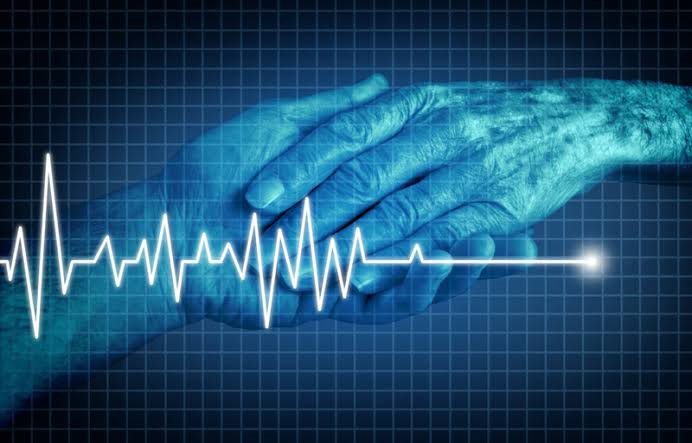
In that moment, the words of the late Archbishop Emeritus Desmond Tutu came flooding back to me. After he stood at the bedside of Nelson Mandela, Tutu said it was an affront to prolong a life that was ending.
He called it disgraceful. He said he never wanted his own life artificially stretched, and he spoke in favour of what others call assisted suicide. He preferred to call it assisted dying.
I understand why. The word suicide is a clumsy thing, and it is harsh in every language I know. In isiZulu and the other African languages, we reach for blunt, graphic phrases for a person who takes their own life. Afrikaans is the bluntest of all: selfmoord, self-murder. Language like that does not leave room for mercy.
I asked the medical practitioner whether there was any chance he would recover. Her answer stabbed me in the place where the heart hides when it meets pain.
“He is in the last stages of the disease … ehh … iyaa … so iyaaa …”
She did not need to finish. I got the drift.
As I took in the state my cousin was in, I cursed life. I cursed everything to do with living and dying. Why must a human being endure such agony if there is no coming back from it?
In isiZulu, when we beg a disease to loosen its grip on a sufferer, we say: “Akudle kuzishiyele.” Let it eat and leave the rest.
Looking at my cousin, motionless the whole time we were there, I knew those words would be an insult. This illness was not going to leave anything.
In my mind’s eye, I saw it feasting on a helpless man as though he were its enemy. Does this disease never tire? Does it never sleep? Can it not move on to someone else and give this man a rest? Does it have no conscience at all?
Then came the thoughts I was afraid of, the ones that torment a mind already raw. Assisted dying. What must we weigh? Is it a good thing? And if it is, who carries it out? The doctors? If the doctors refuse, does the family get that right? Which of us would be brave enough to switch off the machine if asked?
The patient may be cared for beautifully. But what of the pain, if any, that he is feeling right now, where none of us can see it?
I will say little about the dyed-in-the-wool voices of religion and the guardians of tradition who rush to speak on these matters. Conversations this tender need clear, sober thinking, and too often they bring a verdict instead.
Organisations such as DignitySA stand for choice, dignity and care for those medicine can no longer cure. They call for “comprehensive palliative care, the right to refuse unwanted treatment and a safeguarded framework for medical assistance”.
They want each person free to choose their own path out of this world.
But what of the person who has lost the ability to choose? The one whose illness has taken even their voice?
Some who can still decide have boarded planes to Switzerland, where assisted dying is legal. In South Africa, a person with an irremediable illness has no such option, because the law forces doctors to refuse. DignitySA is now in court, mounting a constitutional challenge to decriminalise medical assistance in dying.
Against them stand the ministries of health and of justice, the National Director of Public Prosecutions and the Health Professions Council of South Africa. Doctors for Life International, with a number of health professionals, has joined the opposition.
Their fears deserve to be heard. They worry the law could be abused, that it could become a cheap substitute for proper care of the terminally ill. They worry that the sick, the elderly and the distressed might feel pressure to ask for death, and that consent might not always be free of coercion. These are not trivial concerns.
But consider the other side of the ledger. Those who want out at all costs may be denied it by those who want them kept alive at all costs.
Think of Craig Schonegevel, who lived with fibromas and the aftermath of brain tumour surgery. The pain had become unbearable. He wanted a dignified exit, and the finest constitution in the world could not give it to him. He died alone, in a way no son should, and it was his parents who found him. He never got the ending he longed for: in his mother’s arms, with his favourite music playing.
Or think of Dr Nicolas Bonnemaison, the French physician accused of “mercy killings” for helping patients die. When a jury in Pau acquitted him in 2014, families and friends rejoiced in the courtroom. Prosecutors appealed, and a second court convicted him in one case and acquitted him in six, handing down a suspended sentence.
The same acts, the same doctor, and two courts reached different verdicts. A society that cannot agree on whether he was a criminal or a compassionate man has not yet answered the question.
In Britain, the Supreme Court declined in 2014 to declare the ban on assisted suicide incompatible with human rights. But five of its nine justices held that it had the power to do so, and the court handed the question back to Parliament.
So I ask: who gave the mandate to those who speak for society against assisted dying? And, just as fairly, who gave it to those who speak for the right to die? Our laws do not seem to match our world-acclaimed Constitution, which promises every one of us the right to dignity.
Let the debate leave the courtrooms and enter the public square, where society can decide for itself. Is it right to prolong a life artificially? Is it right to decide whether someone we love may die or must go on?
None of it will ease what my cousin is going through tonight. Life can be very cruel.
Get the morning briefing
Our editors’ choice of the day’s stories, in your inbox at six.



Comments
No comments yet.