By Seun Mogotji
Whenever a province needs somewhere to park its failures, it finds a community and points. Sekhukhune is the latest to be pointed at.
The suggestion, delivered with the weary confidence of someone who has never had to queue for water, is that investors are staying away because the people of Sekhukhune keep making noise about mines, jobs, water, and accountability. Noise is the word, you understand. Not grievance, not demand, not citizenship. Noise.
So let us do what the Premier’s version of events conspicuously doesn’t, and ask for facts. Dr Phophi Ramathuba is welcome to name the investors who have withdrawn. Which projects were cancelled? What reasons did those investors actually give? Where are the documented economic losses traceable to legitimate community complaints? You cannot indict an entire district and then wave vaguely at the evidence. An accusation without particulars is not analysis. It is a mood.
Nobody here is pretending Sekhukhune is a paradise of civic perfection. Illegal mining is real. Criminality is real. Investors do have genuine concerns, and infrastructure constraints are no fantasy. All of it deserves serious attention, and where crime exists, it should be met with lawful enforcement, properly and without apology. But a community asking for a job is not committing a crime.
A village demanding water is not sabotaging the economy. Confusing the two is either lazy or convenient, and I suspect it is convenient.
Start with De Hoop Dam. It was built as a major water infrastructure project, meant to serve communities, towns, industry and mining across parts of Limpopo. A grand piece of public investment, with a grand price tag and, no doubt, a grand ribbon-cutting. Yet the people living nearest to this promise keep asking the same unglamorous questions. Where is the reliable water? Where is the bulk-water infrastructure, and how far has it actually progressed? Who is getting the benefit of all this public money?
So how exactly are these people supposed to accept a lecture on undermining development when development still hasn’t delivered the basics? Let us hear a transparent account of the water infrastructure tied to De Hoop. Which communities were meant to benefit? Which pipeline and distribution projects are still outstanding?
What was funded, how much, and which institutions are responsible for the delays? A dam is not measured by what it cost to pour the concrete, nor by what it does for industry. It is measured by what it does for people’s lives. By that measure, the people of Sekhukhune are entitled to ask for a report card.
The same goes for the ground beneath their feet. This is mineral wealth, and the people who live beside the mines are not extras in someone else’s film. They deserve recruitment processes that are transparent, learnerships they can actually get into, skills training that is accredited and means something, and a fair chance for qualifying local businesses to get a seat at the table. Mining companies must account for their Social and Labour Plan commitments, which are not decorative. Government must monitor those obligations and make sure promises turn into measurable outcomes.
So where are the answers on local employment, training, procurement, community infrastructure and the delivery of development commitments? The people who live alongside the operations should not sit as spectators while decisions about their economic future are made somewhere else, by somebody else, for somebody else.
And this is where the ‘investors will flee’ refrain does its quiet work. It is a very useful sentence. It can be deployed against any complaint, at any time, to end any conversation. Raise a concern about water? Careful, investors are watching. Ask about jobs? You’ll scare capital away. It dresses up silence as patriotism. But investors need lawful, predictable conditions and working infrastructure, and communities need jobs, water, a protected environment and a real say.
None of that is mutually exclusive. The tension is manufactured by people who find accountability more frightening than any investor ever could.
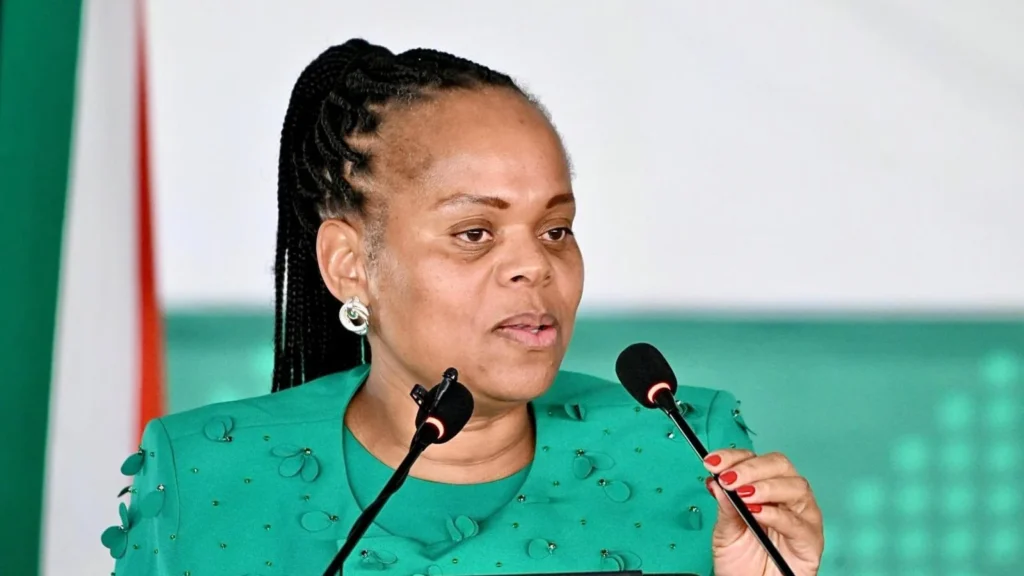
Now to the part the Premier would prefer we skip. She is not a commentator. She is not a columnist, an analyst or a concerned bystander with a podcast. She is the Premier. She leads the provincial executive, sits at the head of the table where the departments answer to her, and holds the authority to convene, to instruct, to demand reports and to knock on the doors of national departments, water boards and mining houses and refuse to leave until someone gives her a date.
That is the job. It is a job with power in it, and power does not come with a pointing finger as standard equipment.
If the pipeline is stuck, the Premier can find out why and say so publicly. If a mine is ignoring its Social and Labour Plan, she can put the question to the people who regulate it. If investors are nervous, she can sit down with them, ask what they actually need, and then go and fix it. Every one of those things is within reach of the office she holds. Standing in front of cameras and suggesting that the residents are the problem requires no power at all. Anyone can do that. It is what you do when you would rather describe a problem than own it.
Because here is the uncomfortable arithmetic. When a Premier blames the community, she is quietly confessing that she has not used her own authority. A leader who says ‘they are driving investors away’ is also saying ‘I could not or would not do anything about it.’ Neither admission is flattering, and neither belongs in the mouth of someone elected to make things work.
The solution is not to hush the residents. It is transparent engagement, lawful mining, public institutions that answer for themselves, and commitments with teeth. Where there is criminal conduct, investigate it. Where infrastructure is delayed, explain why. Where companies fall short of their obligations, enforce the law. And where allegations are levelled at communities, substantiate them, in public, with evidence.
That brings me to what the Bolsheviks Party of South Africa, which I have the honour to lead, is demanding from the provincial government, and it is hardly a radical shopping list. Show us the documented investor withdrawals or cancelled projects in Sekhukhune, with the reasons given. Show us the progress on delivering De Hoop water to the people it was meant for. Show us the local recruitment and skills outcomes in the mining sector. Show us the implementation of mining Social and Labour Plans. Show us the public infrastructure commitments, the expenditure and the work still outstanding. And show us how legitimate community concerns will be answered without being lumped in with illegal activity.
That’s it. Answers. The kind any functioning government should be able to produce on a slow Tuesday.
What the people of Sekhukhune will not accept is a story in which ordinary residents carry the burden of explaining development failures, while those responsible for public infrastructure, mining regulation and economic development are never asked to account for their own performance. That arrangement has a name, and it is not leadership.
De Hoop Dam, the mineral wealth and the communities are not three separate topics to be handled in three separate press statements. They are one conversation. Water must reach people. Mining must create real opportunities. Public money must produce results. Investment must serve sustainable local development, not merely pass through it.
Madam Premier, the power is yours. So is the accountability. Use the first, and stop dodging the second.
Sekhukhune does not need scapegoats. It needs answers, accountability and tangible development.
Forward ever, backwards never.
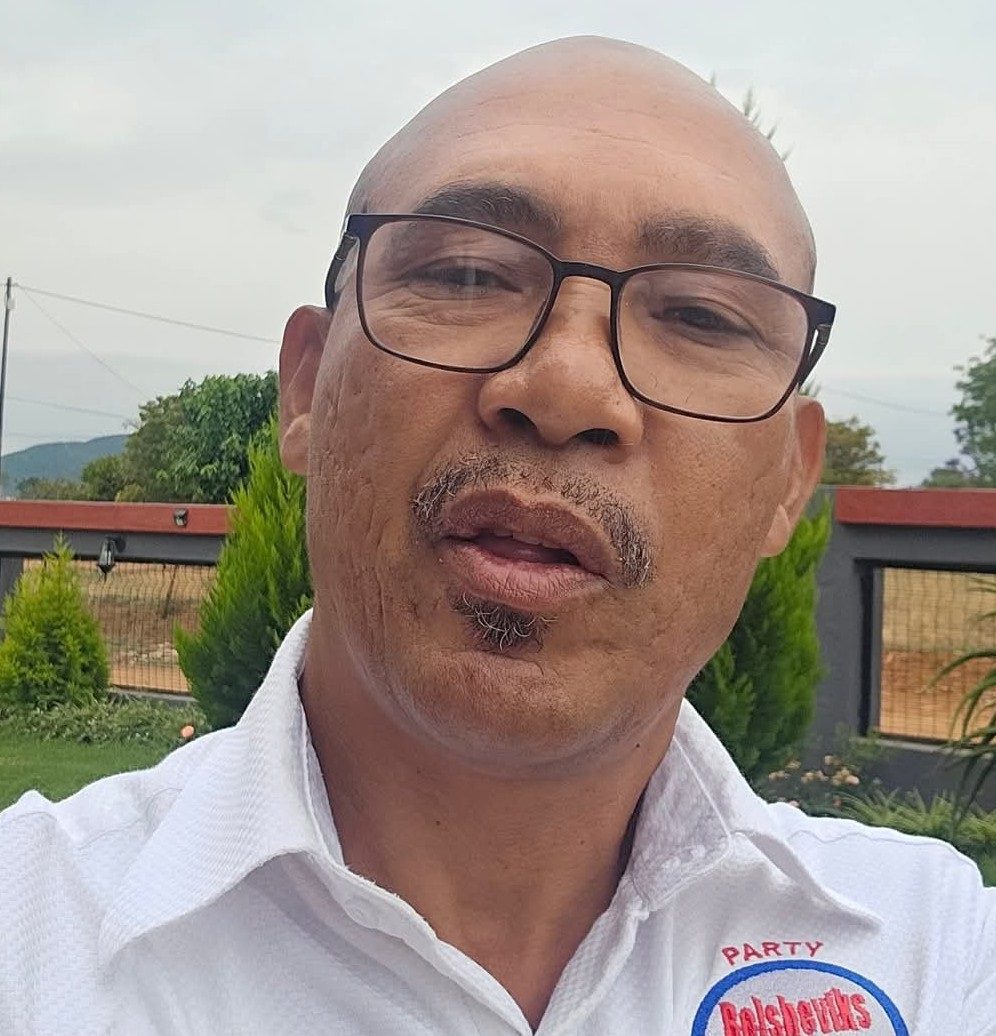
Seun Mogotji is General Secretary of the Bolsheviks Party of South Africa (BPSA).
Get the morning briefing
Our editors’ choice of the day’s stories, in your inbox at six.




Comments
No comments yet.