
By Gogo Bathini Mbatha
There is a tavern I will not name, at the end of a road where the streetlights gave up long ago.
The floor was sticky under my shoes. The music pressed against my ribs like a second heartbeat, and the air tasted of spilt beer, cigarette smoke and other people’s sweat. Men with hard eyes watched from the corners, and I walked in as if I owned the place.
Other people avoided that tavern after dark. I went in with my wallet open and my dignity already somewhere behind me.
That was who I was. I would go inside the most notorious taverns just to get my drink. I would travel very far for my thirst, across town and past the point where sense says go home. I would pay any amount for what I called my fun.
Fuel money, rent money, the money that was meant for something better: all of it became noise and laughter and a blur I could not repeat to you the next morning.
And I did all of it in public.
That is the part I need you to understand. Many people drink in secret, behind curtains, with the bottle hidden in a cupboard. I did not have that mercy. I was a public alcoholic. Everything I did, I did under the open sky and in front of every pair of eyes that happened to be there. I cannot recall one moment when I was drinking and glanced over my shoulder to see who was watching.
There was never a pause in which I wondered who heard me speaking nonsense, or who saw me acting like a child who had never been taught better. I did not care. I did not even wonder how deeply I was denting my reputation, one night at a time, like a car left to rust in the rain.
Then came the mornings that told the truth my nights refused to tell.
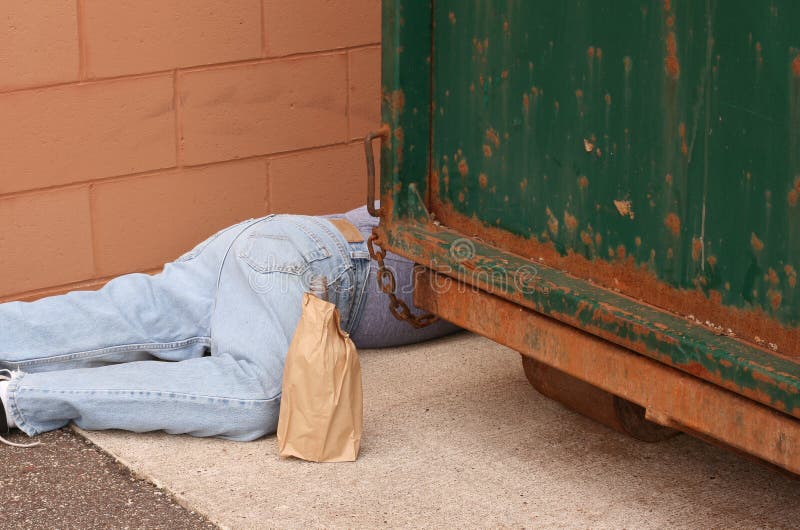
I slept on a chair, upright and broken, as people stepped around me. I vomited in public, on the pavement and in the open, with strangers looking away because looking would have been unbearable. I slept inside my car at the traffic lights, my head against the glass, while the light turned green and then red and then green again, and the drivers behind me hooted. I fell asleep on the bus and woke up to an empty seat beside me, kilometres past my stop. I would sit there in the grey light, with a dry mouth and a pounding skull, and feel the shame crawl up my neck. Then, by afternoon, I would start again.
The things I did, said and thought when I was drunk made me shameless. I say that word on purpose. Shame is a muscle. It tells a person to stop, to cover up, to go home. Mine had gone slack from lack of use. I had stretched it so thin that I could walk through my own humiliation and keep smiling.
All along I had my reasons. When I was sad, I drank. When I was happy, I drank. When I was lonely, I drank. Do you see how complete that is? There was no emotion left over, no weather in me that did not end at a bottle.
I had a reason for every season, and I defended those reasons like a soldier defends a border. Alcohol was my friend, my comfort, my celebration. I would have fought anyone who suggested otherwise.
It took me a long time to see that I was not a man with many reasons to drink. I was a man with one disease, wearing many costumes.
The word is alcoholism. When I finally said it out loud, it felt like setting down a stone I had carried for years without knowing it was a stone. It is a disease. It is not a moral failure that I could have fixed with better manners, and it is not weakness of character. It had a grip on me that no amount of promising, bargaining or morning-after regret could loosen.
Once I understood that, the sentence changed. I stopped asking “What is wrong with me?” and started asking “What do I need to get well?”
The answer was other people.
Now I sit in a recovery fellowship, in a circle of chairs, with men and women who have walked the same dark road I walked. Nobody there needs me to explain the shame, because they carry their own. When one of them tells a story about waking up in a place they cannot remember, I nod, because I have woken up in those places too.
For the first time in my adult life, I am not performing. I am not defending a border. I am simply sitting among people who understand, and I can see the light.
I know what the tradition says about anonymity, and I respect those who choose it. It protects many people, and it has saved many lives. But I made my decision, and I stand by it. I refuse to recover anonymously. I was a public alcoholic. I fell down in front of everyone, and so I will get up in front of everyone. It would feel dishonest to hide my recovery after being so loud about my ruin.
If my disease was on display, my healing should be as well, so that someone else who is still sleeping at the traffic lights can see that a way out exists.
So I speak. I speak publicly about the disease of alcoholism because I do not wish it on anyone, not even my worst enemy. I would not wish those mornings on the people who hurt me. I would not wish that slow erasure of self on a stranger.
And I look at the world around me, and I am troubled. Alcohol is advertised as the best drink ever. It sings to us on the radio. It glows on television, smiles at us from social media, and towers over our roads on big billboards and hides on small ones. We are living in a world where a deadly poison is sold to the public legally, wrapped in glamour and set to a catchy tune. Nobody puts a picture of a man asleep at a traffic light on the billboard. Nobody advertises the vomit, the lost jobs, the broken trust or the mornings of shame. The bottle is sold without the truth that comes after it.
That is why I feel it is my responsibility to tell that truth. I cannot rewrite what I did, but I can use the painful experience of my alcoholism to educate the public. If my story saves one person from my chair, my car, my bus seat, then every humiliating morning was worth something.
To anyone who is suffering from this disease, here is the best advice I have. Find a fellowship of people who struggle with the same condition. Do not try to fight it alone, because alone is where the disease is strongest. In a room full of people who understand, you will stop being the problem and become a person who has a problem, and that difference is everything.
And be honest with yourself about this, as I had to be: there is no cure for alcoholism, except to abstain from it.
There is no clever trick and no special quantity that is safe. There is only the choice, made again each morning, to stay away from the first drink.
I made that choice a year ago, and I have made it again every morning since. I have made it in public, with my head up and my eyes open, looking over my shoulder at last. And what I have seen there is not shame. It is a line of people behind me, still waiting for someone to show them the way out.
Get the morning briefing
Our editors’ choice of the day’s stories, in your inbox at six.




Comments
No comments yet.