By Themba Khumalo
Black. Commercial. Farmer.
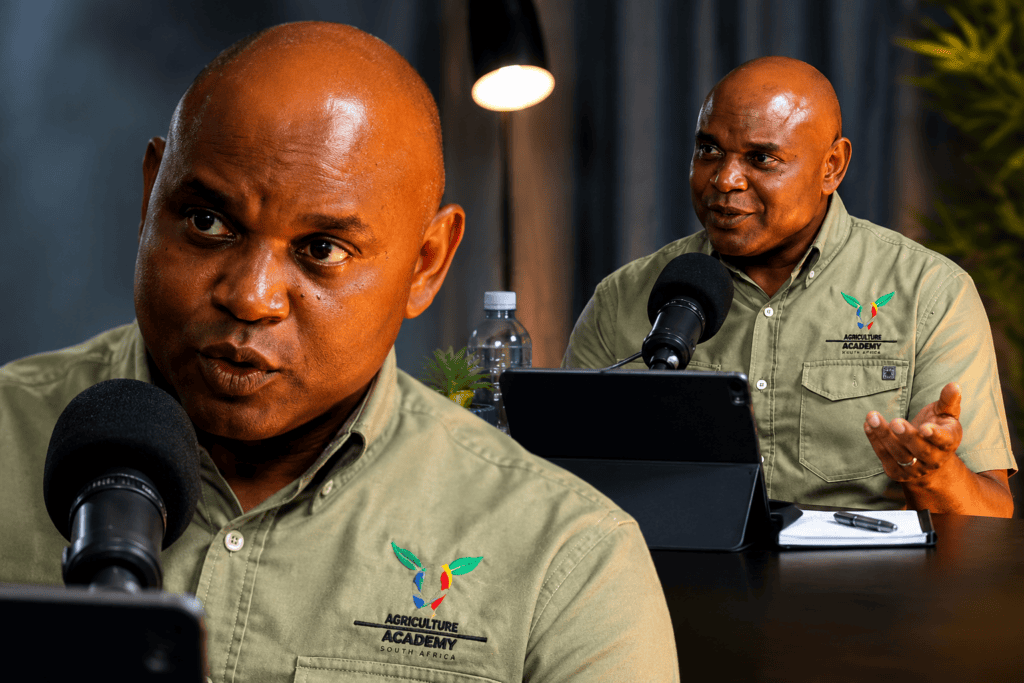
Say the three words slowly, because everything that follows depends on them. David Lupafya is a ‘black’ commercial grain farmer, working at scale in one of our economy’s most unforgiving sectors.
He sat down with Penuel The Black Pen Mlotshwa on The Penuel Show and told a story that has followed me around over the past few days.
It is not a story from the margins of agriculture. It is about a Black commercial farmer doing the hard, daily work of farming, and about the neighbours who walk beside him. Nobody makes a grand declaration, and no politician stands under a flag to tell us how far we have come. There is a farmer, a season to get through, and neighbours who could have left him to his troubles but chose not to.
It is South Africa at its most quietly compelling. It is also exactly the kind of story that cannot compete with the lucrative business of racial outrage.
Penuel began with a plain question. How has the reception been from white Afrikaners in the space? David answered that it had been good, and then he did what people do when the truth is on their side. He did not argue. He told a story.
His lands were prepared and the season was bearing down, but he had no money to plant them. None of the banks would give him anything. In the usual telling, this is where the grievance begins, and sometimes it begins with good reason. Access to finance in this country is a serious matter, and nobody should wave it away.
Here the story turned. David went to a good mate of his, a big farmer and a neighbour, and told him he did not know what to do. The mate is JP Meintjes, and his farm covers 23,000 hectares. Penuel admitted he could not picture that, and I could not either, until David mentioned that Steyn City sits on about 600. Nearly forty of those would fit on JP’s land.
JP called his wife in, and the two of them talked it over in Afrikaans while David waited. Then came the offer, and it was beautifully simple. David would buy a planter. JP would supply all the inputs. When the season ended, two of JP’s machines would come and harvest. The costs would be deducted, and whatever remained would go into David’s pocket.
It was sealed with a handshake.
There are people who will read that and see nothing worth lingering over. They will go hunting for the catch, the hidden agenda, the familiar arsenal of suspicion. Here is what actually happened. A farmer who could not get money from formal institutions was backed by a much bigger farmer who chose to extend trust and accept the risk that comes with someone else’s attempt to succeed.
JP had no guarantee of kind weather or a harvest big enough to settle the account, and he did it anyway.
That is what makes this story human. It does not rest on a sentimental belief that everybody gets along. It rests on the practical decision to give a relationship a chance to work.
The handshake was only the beginning of what JP did.
David farms a rented property, and the owners sold its transformer, which left him unable to pump water. A man in that position can be undone in a single season. Instead, JP told him to come and get his water for his sprayers from his own supply. David has now done that for four seasons. Four seasons of an open gate.
Water is not an abstract resource in a policy document. It is the difference between a crop getting what it needs and a man watching his investment wither. JP could have treated David’s predicament as somebody else’s misfortune. He made his water available instead, and he kept it available.
Then came the detail that has stayed with me longest. When David wanted to know how far off his production costs were, JP did not offer a friendly word and a vague answer. His operation is large enough to employ a full-time accountant, and he called that accountant in and said, Please open our books; let us go line by line.
A neighbour can lend you diesel or help you get a broken machine running. A man who lays his own ledgers on the table so that you can understand your margins is doing something deeper. He is investing in your ability to stand on your own.
JP was not alone. When David had no diesel, white farmers told him to put in what he needed and pay them back when his cash came. When his equipment broke, it was fixed, and he was told to pay when he could. Across his farming journey, the farmers around him walk beside him.
None of this makes David’s difficulties disappear. Access to finance is still not fair, opportunity is still not evenly spread, and the bitter arguments over land and ownership have not been settled by a few acts of neighbourly kindness. Those are serious issues, and they deserve serious attention. But it would be just as dishonest to insist that racial hostility is the only truth South Africa has to offer. A loud and profitable corner of our politics insists on exactly that.
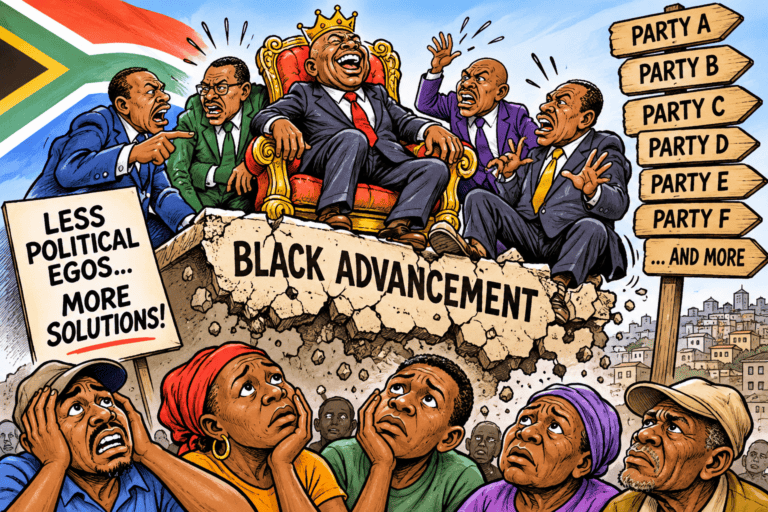
This is where the story becomes an indictment of the hysterical politics that now dominate so much of the international conversation about our country. Certain right-wing lobby groups have built a business out of presenting South Africa to foreign audiences through the language of persecution, racial grievance and impending catastrophe. They carry that message to conservative media and to political figures such as Donald Trump. In that story, every complication becomes proof of national calamity, and every failure is drafted into the argument that the country is beyond redemption.
Claims like these must be tested against the evidence, not accepted because they are repeated loudly or delivered with theatrical indignation.
So what happens when ordinary life refuses to follow the script? What does one do with a Black commercial farmer whose account includes an Afrikaner neighbour who backed him when the banks would not? Where do four seasons of shared water fit in a narrative that insists racial antagonism is the defining relationship between South Africans?
One could dismiss all of it as the exception. I do not think it is. What is rare is the attention such stories receive. We should still be honest that a single podcast cannot measure how common such cooperation is across South African agriculture. But a story does not need to be rare to be worth telling.
The grievance industry thrives on the idea that the country can be understood through its worst moments alone. Its loudest voices need people to believe that hatred is inevitable, that suspicion is sensible, and that cooperation is naive. Every act of solidarity becomes an inconvenience, because it introduces a human complication into a story that depends on keeping people locked inside their racial identities.
David himself was fair enough to say that the distortion runs both ways. In his words, the narrative coming from the far right, on the Black side and on the white side, is not fair, and it is nowhere near the reality of what is happening. Each camp needs the other to keep shouting, because the shouting is the business.
There is a reason stories of conflict travel so easily. Anger is immediate. Fear demands attention. A claim of persecution fits neatly into a headline and crosses into a foreign political arena with little room for the messy detail of everyday life. Stories like David’s, meanwhile, are a dime a dozen in this country.
They happen quietly, season after season, and almost none of them are told. They do not sell newspapers. They do not push up television viewership. They do not attract clicks, and they do not collect likes and shares on social media.
A farmer sharing water with a neighbour arrives with no ready-made drama, no villain to parade before the cameras and no enemy to blame. In an economy that runs on attention, the stories that do the most good are often the ones that pay the least.
The triumph is quieter. A crop gets planted. A machine gets repaired. A farmer learns more about his costs. Another season becomes possible.
And yet, what could be more consequential than that?
Agriculture is one of the places where the cost of racial division can be counted in the plainest terms. A farm cannot survive on slogans, and a broken machine does not repair itself because its owner found the perfect argument on social media. The crop does not wait for a nation to finish fighting about its past. That relentless practicality builds relationships out of shared interests and mutual dependence.
Such relationships do not erase historical injustice, but they show that the future need not be held prisoner by the ugliest readings of the past.
There is a cruel irony in the politics of racial grievance. The people who insist most loudly that South Africans are destined to stay divided can end up making that division harder to escape. Give rage a permanent home in the national conversation, and trust begins to look like foolishness.
But nobody is condemned to live by somebody else’s script.
The farmer who offers inputs on a handshake makes a choice. The farmer who opens his water supply to a neighbour makes a choice. The farmer who lets his accountant help another man scrutinise his production costs makes a choice. None of these is a grand political gesture. Their significance lies in their ordinariness, in decisions that leave room for trust where suspicion might have taken hold.
Nor should we romanticise these farmers. They are not saints, and their story is not a prescription for a country wrestling with land, inequality and economic power. It is evidence of people making cooperation work in a sector where failure has real consequences. It does not absolve South Africa of its failures. It simply refuses to reduce the country to them.
A handshake between farmers will not send shock waves through a foreign news cycle. But the absence of spectacle does not diminish the importance of what happens.
South Africa does not need another sermon about unity from a podium. It needs the conditions in which cooperation can become common, the courage to confront injustice without turning every neighbour into an enemy, and the imagination to see that people can inherit a divided past without surrendering their future to division.
On The Penuel Show, David Lupafya offered a glimpse of that future. He did not promise that racial hostility will disappear. He showed that even in a country where race remains a powerful fault line, a Black commercial farmer and the neighbours around him can build relationships that serve something larger than their own grievances.
The rage merchants may keep their audiences, their foreign allies and their carefully packaged tales of a country coming apart. But there is another South Africa, less theatrical and less profitable to those who trade in division, where a neighbour’s difficulty becomes an occasion for solidarity rather than suspicion.
This other South Africa is not perfect, and it is certainly not finished. It rarely makes the headlines. But it is real, and it is worth fighting for: a country in which a farmer can extend a hand across a racial divide and find another hand waiting, in which the work of feeding a nation reminds us of our shared stake in its future, and in which rage does not get the final word.
Sometimes the most powerful answer to those who insist that we cannot live together is not another argument.
It is a crop that gets planted because somebody chose to help.
Get the morning briefing
Our editors’ choice of the day’s stories, in your inbox at six.



Comments
No comments yet.