By Themba Khumalo
A patient’s heart stops in a chaotic emergency room. Doctors rush in, and a desperate shock of electricity forces a weak, erratic flutter back into the chest.
The patient remains completely unconscious, kept alive only by a breathing tube and hanging on by a thread. Yet, the lead doctor steps into the waiting room, flashes a triumphant smile, and declares a medical miracle simply because the body has not been wheeled to the morgue.
In the theatre of South African public administration, this is precisely what passes for a cure.
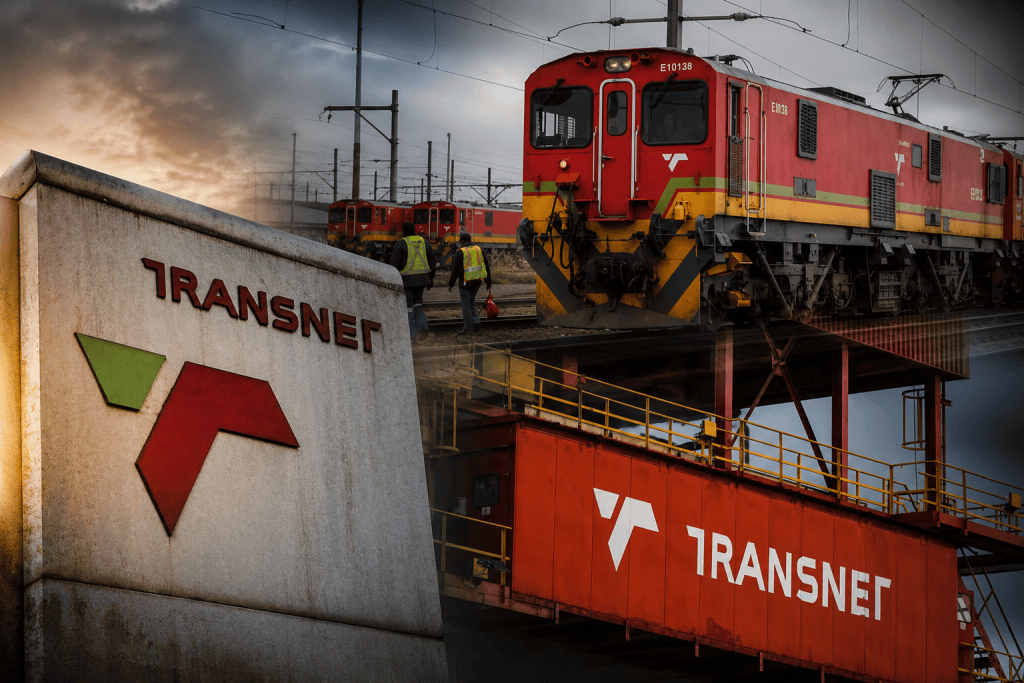
At Transnet, this pathological complacency has been elevated to a corporate strategy.
The current board, led by Dr Andile Sangqu, has spent its tenure celebrating the fact that the state-owned freight logistics utility is no longer actively imploding.
To be fair, this board inherited an institution on the verge of collapse. Freight volumes have improved, losses have narrowed, and some ports have become measurably more efficient. Those gains deserve recognition.
But stabilisation was never the mission. Recovery was.
In mistaking stabilisation for success, the board has presided over a period of stagnation that has cost the national economy billions.
To understand the shortcomings of Transnet’s turnaround strategy is to understand the tragedy of low expectations.
Presenting an expected rail volume of 168 million tonnes as evidence of a successful turnaround only makes sense if one ignores the board’s own objective of 250 million tonnes.
South Africa’s economy requires the capacity to move minerals to ports, manufacturers to markets and agricultural exports to international customers.
The gap of more than 80 million tonnes is not a marginal operational variance. It is a structural deficit that continues to force heavy freight onto deteriorating national roads, constrains exports and is estimated to shave around 5% off economic output.
By any objective measure, a strategy that leaves the economy short of more than 80 million tonnes of rail capacity cannot reasonably be described as a turnaround. It is, at best, the management of decline.
The Paralysis of Execution: From Locomotive Crises to Port Deadlocks
The board’s shortcomings are most visible where strategic ambition collided with operational reality.
The long-running dispute with the Chinese state-owned manufacturer CRRC over the controversial “1064” locomotive contract remains unresolved. More than 200 locomotives continue to stand idle because spare parts cannot be secured.
Rather than resolving the underlying commercial and legal impasse, the board opted for a workaround by appointing a local “step-in” supplier to restore part of the fleet. The outcome has been sobering. After months of effort, only one locomotive has returned to service.
That is not evidence of decisive execution. It is evidence of a board still trapped by problems it was appointed to solve.
A similar inertia has characterised port reform.
The concessioning of Durban Container Terminal Pier 2 to International Container Terminal Services Inc. was presented as the flagship example of private-sector participation. Yet the transaction remains mired in implementation delays and legal processes, postponing one of the most important logistics reforms in democratic South Africa.
The July 2026 Rail Access Dispute
If the operational shortcomings raise questions about execution, the events of July 2026 raise questions about judgement.
The revised Rail Access Agreement had precisely the effect the government’s reform programme was supposed to avoid. Whether by design or institutional instinct, it erected barriers that would have discouraged private operators and undermined competition.
Instead of creating regulatory certainty for private investment, the revised framework introduced obligations and risks that Transport Minister Barbara Creecy publicly warned could undermine the bankability of South Africa’s R102 billion rail reform programme.
That it required a public ultimatum from the minister before the board withdrew the disputed provisions revealed a worrying disconnect between Transnet’s implementation of reform and the government’s stated policy objectives.
The Six-Month Window
Creecy’s decision to extend the board’s term by six months has inevitably prompted an uncomfortable question.
If the board could not deliver these reforms in three years, why should South Africans believe it will deliver them in six months?
In the world of state-owned enterprises, six-month extensions are rarely votes of confidence. More often, they are administrative holding patterns while the government prepares a transition.
The reality is that the board’s remaining tenure is unlikely to be remembered for strategic breakthroughs. Instead, it should focus on completing the work that remains within its control.
Finalise the Rail Access Framework
The board should remove any remaining regulatory obstacles and leave behind a transparent, bankable Rail Access Agreement fully aligned with national rail policy. Even if private operators only begin running trains during 2027, the legal and regulatory framework should be beyond dispute before this board departs.
Complete the Durban Pier 2 Transaction
The strategic partnership for Durban Container Terminal Pier 2 should be concluded without further delay. South Africa cannot continue postponing one of the most significant infrastructure reforms in its democratic history.
Leave an Orderly Financial and Legal Handover
With debt approaching R150 billion and debt-servicing costs consuming the overwhelming share of available capital expenditure, the board should ensure that outstanding litigation, procurement disputes and legacy corruption matters are handed over in a coherent and manageable state rather than allowing them to become the next board’s inheritance.
The Verdict
This board inherited a utility in crisis and deserves credit for preventing an even deeper collapse.
But preventing collapse was only the beginning.
Three years later, Transnet remains dependent on a R145 billion government guarantee. Rail volumes remain well below target. Hundreds of locomotives remain idle. Key reforms remain incomplete. The country’s logistics network continues to constrain economic growth.
That is not the profile of a completed turnaround.
It is the profile of an institution that has been stabilised but not yet restored.
Six more months may help complete unfinished administrative work. They will not rewrite three years of mixed results.
The real question is not whether the board deserves another six months. It is whether those six months will achieve what the past thirty-six did not.
Get the morning briefing
Our editors’ choice of the day’s stories, in your inbox at six.



Comments
No comments yet.