
By Staff Reporter
Here is a number every South African citizen, lawmaker, and policy analyst ought to know: 99 per cent.
That is the overwhelming share of firearm-related murders committed with illegal, unlicensed weapons across South Africa over the past four financial years.
The figures come directly from official parliamentary data released by Acting Minister of Police, Professor Firoz Cachalia, in response to formal written questions submitted by Freedom Front Plus (FF+) Member of Parliament, Wouter Wessels.

The numbers present a stark portrait of lethal violence in South Africa, offering clear evidence that challenges long-standing policy debates over gun control.
Breakdown of the Official Data
Between the 2022/23 and 2025/26 financial years, a total of 41,297 people were murdered with illegal firearms across the country. In that same four-year period, legally licensed firearms were linked to 393 deaths.
Put into plain terms, for every single murder involving a legally registered firearm, roughly 105 were committed using an illicit, unlicensed weapon.
The breakdown across the four financial years illustrates the consistency of this pattern:
2022/23: 10,613 murders with illegal firearms; 120 with licensed firearms.
2023/24: 10,911 murders with illegal firearms; 90 with licensed firearms.
2024/25: 10,450 murders with illegal firearms; 108 with licensed firearms.
2025/26: 9,323 murders with illegal firearms; 75 with licensed firearms.
Legal analysts also point out an important procedural detail regarding the 393 deaths linked to licensed firearms.
Under South African police procedures, when a law-abiding citizen shoots an attacker in self-defence, the incident is initially logged under an inquest docket or a murder investigation until formal court clearance is given.
Consequently, a notable portion of those 393 cases involved justifiable self-defence, meaning the actual number of unlawful murders committed by licensed gun owners is even lower.
State Armouries Under the Spotlight
The parliamentary disclosure revealed a second critical metric: over the same four-year period, 142 people were murdered with firearms that had previously belonged to the South African Police Service (SAPS).
Weapons originally bought and issued to protect the public ended up turned against it.
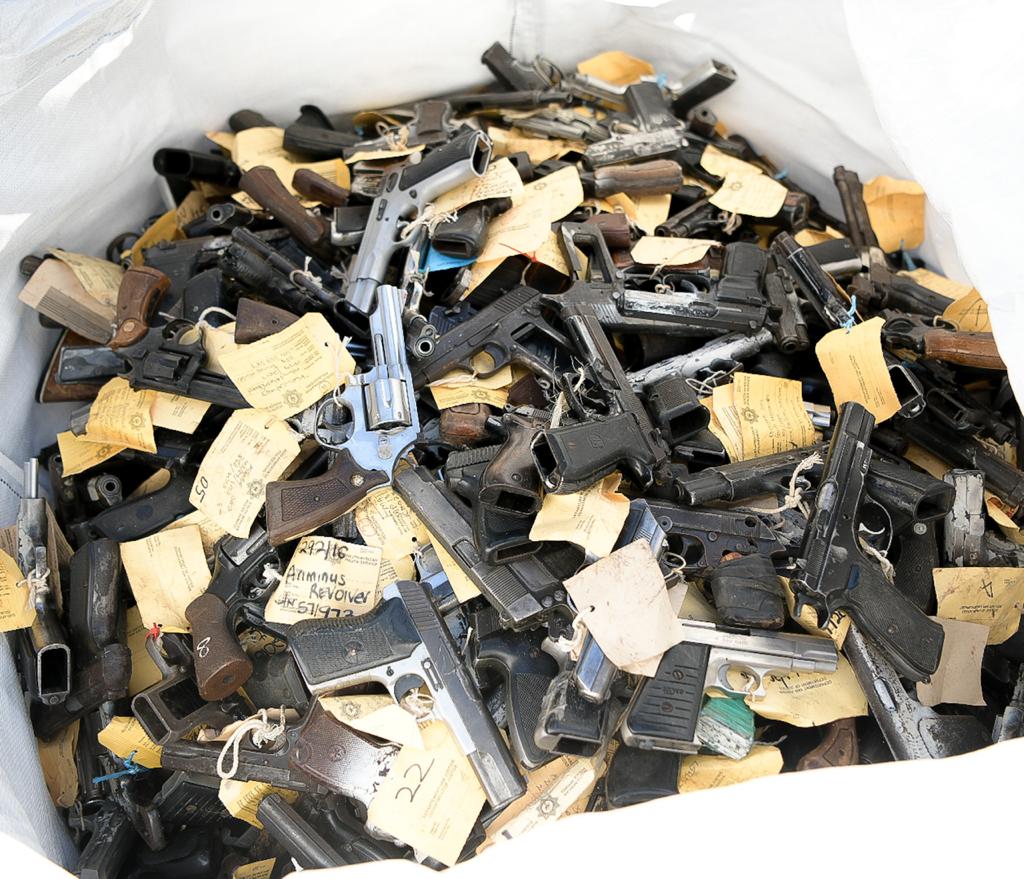
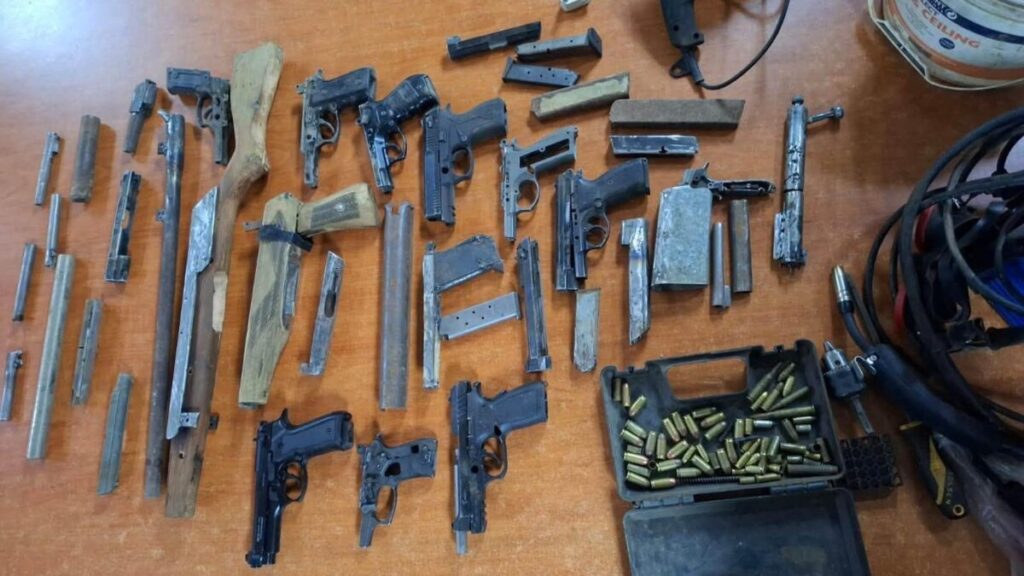
Crime experts have long highlighted that illegal firearms do not simply appear out of thin air.
While cross-border smuggling accounts for part of the supply, thousands of state-owned service pistols, confiscated evidence weapons, and police store items systematically leak into criminal hands through internal corruption, theft, and poor inventory management at police stations and evidence facilities.
Reactions to the police figures were swift, with political figures and civil rights advocates calling for an immediate shift in government strategy.
“The government should stop attempting to disarm honest citizens,” stated the Freedom Front Plus following the release of the data. “The real problem is sitting in criminal hands and, increasingly, in guns that walked out of police stores. That is where the focus belongs.”
Jonathan Deal, Founder and National Co-ordinator of civil rights group Safe Citizen, echoed these concerns, arguing that state policy has targeted the wrong group for years.
“For years, government policy and anti-gun rhetoric have operated on the false premise that legal firearm owners are the root cause of violent crime in South Africa,” said Deal. “These numbers from the Police Ministry completely shatter that narrative. Law-abiding citizens who undergo months of background checks, competency training, and administrative hurdles are not the problem. The problem is the flood of illegal weapons on our streets, fed by criminal syndicates and the failure of police to secure their own armouries.”
Deal further emphasised that disarming law-abiding South Africans leaves vulnerable communities defenceless against violent crime.
“Violence in South Africa will not be solved by disarming honest people. When the state is incapable of protecting its citizens, attempting to strip away their legal means of self-defence simply hands a legal monopoly on force to violent criminals. The police must focus their energy on disarming gang syndicates and plugging the leaks in their own inventory rather than persecuting licence holders.”
What the Data Means for Policy
For millions of South Africans who have navigated the rigorous process of legal gun ownership—enduring extensive background vetting, competency training, mental health screening, and severe administrative delays at the Central Firearms Register—the empirical data offers definitive confirmation: lawful owners are not driving the country’s murder rate.
As Parliament considers future security measures and police oversight, these figures make one point clear. Real crime reduction requires strict enforcement against illicit black-market weapons, tight security over state armouries, and an end to administrative burdens on citizens seeking to protect themselves within the bounds of the law.
Get the morning briefing
Our editors’ choice of the day’s stories, in your inbox at six.




Comments
No comments yet.