

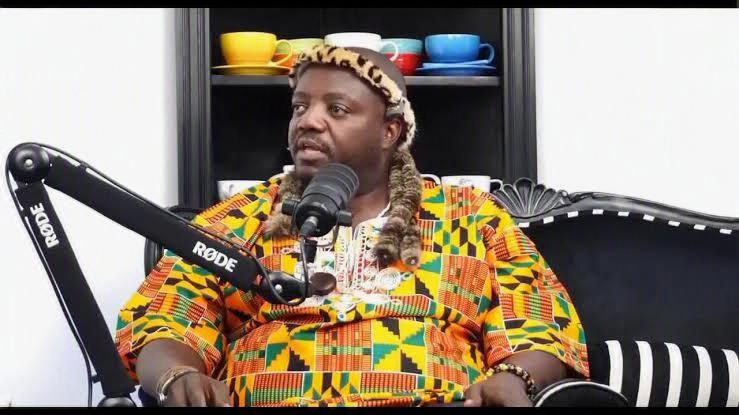
Three bottles of whisky a day. Blackouts. Hospital admissions. A body beginning to fail. Gogo Bathini knows the cost of alcohol because he has paid it himself. His journey from destructive drinking to sobriety has given him a new purpose: helping South Africans question a culture that too often celebrates the bottle.
By Themba Khumalo
There was a time when Bathini Mbatha could drink more than three bottles of whisky in a single day.
Not at a party. Not surrounded by friends. Alone.
The KwaZulu-Natal traditional healer, widely known by his ancestral title, Gogo Bathini, had reached a point where alcohol was no longer something he drank for pleasure or in company. It had become part of the fabric of his everyday existence.

“I could drink three bottles of whisky a day,” Mbatha says. “I was drinking heavily on my own. There were times when I would black out. I was in and out of hospital.”
He pauses when he speaks about those days.
There is no bravado in the recollection—no attempt to dress it up as an extraordinary drinking feat.
What once might have sounded like a boast is now a reminder of just how far his life had slipped.
His body was beginning to pay the price.
He was diagnosed with fatty liver disease, an enlarged heart, diabetes and gout. The hospital visits became part of a life that was increasingly being shaped by the consequences of drinking.
“Alcohol created so many problems that I never had,” he says.
That sentence perhaps explains his journey better than any medical diagnosis could.
His drinking had started when he was young. Like so many people, he says, it began socially. There was nothing in the early days to suggest where it would eventually take him.
But gradually, the drinking changed.
And so did he.
By the time he was consuming bottles of whisky on his own, alcohol was no longer something that fitted into his life. His life was increasingly being fitted around alcohol.
Then, in 2025, his mother died.
Her death became the moment when Mbatha decided he had to stop drinking.
But deciding to stop and actually living without alcohol were two very different things.
“I stopped drinking, but it was not easy,” he says. “I struggled with withdrawal. I had to learn how to stay sober.”
In February 2026, he found his way to Alcoholics Anonymous (AA).
A meeting with a man who had been sober for 37 years had a profound effect on him.
For Mbatha, the significance was not simply that the man had stopped drinking. It was that he had remained sober for decades and had built a life beyond alcohol.
Mbatha attended his first AA meeting on 25 February.
Since then, he has attended meetings almost every day.
Those meetings became part of his new life — a place where he could speak openly, listen to others and understand that sobriety was not simply about putting down a bottle. It was about rebuilding a life.
“Now I have got my life back,” he says.
It is from that experience that Sober Beings was born.
Mbatha founded the movement with an idea that goes beyond helping people who are already struggling with alcohol dependence. He wants to change the way South Africans think about drinking before it becomes destructive.
“Why should someone have to lose everything before discovering the value of a sober life?” he asks.
It is a question that sits uneasily against South Africa’s drinking culture, where alcohol is woven into celebrations, social gatherings, relationships and even ideas about success and masculinity.
According to World Health Organisation (WHO) data, South Africa recorded an estimated total alcohol consumption of 8.8 litres of pure alcohol per person aged 15 and older in 2019, compared with a global average of 5.4 litres.
That put South Africa’s consumption roughly 63% above the global average.
The South African Medical Research Council (SAMRC) has previously estimated that alcohol was responsible for between 27,000 and 103,000 deaths in South Africa in 2015 alone.
But Mbatha does not need statistics to understand the damage.
He has lived it.
He has seen what alcohol did to his own health. He has felt the consequences of losing control. He has experienced the difficult, often lonely process of trying to rebuild a life without the substance that once dominated it.
And that is why he does not want sobriety to be presented simply as the destination at the end of an addiction story.
He wants people to see it as a life in its own right.
Sober Beings is not a rehabilitation centre or treatment programme. It does not seek to replace healthcare professionals, rehabilitation facilities or addiction specialists.
Instead, Mbatha describes it as companionship — a community where people who choose sobriety can find encouragement, accountability and social connection.
He wants to create spaces where people can socialise without alcohol, celebrate without it and discover that choosing not to drink does not mean choosing to withdraw from life.
The message is particularly important for young people, he believes.
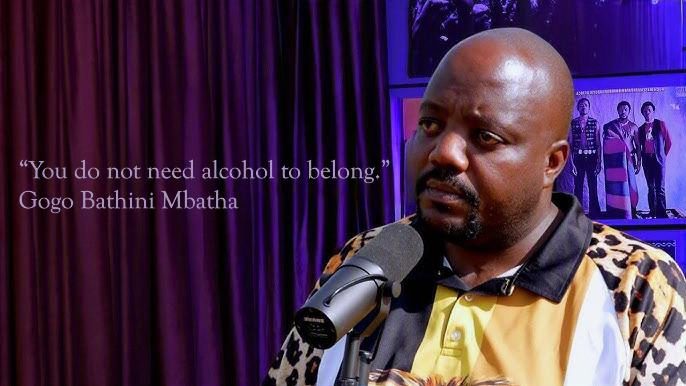
“You do not need alcohol to belong,” he says. “You do not need alcohol to celebrate. You can build a successful life without it.”
Sober Beings plans to promote sober social activities and non-alcoholic events while working with communities, schools, workplaces, faith organisations, traditional leaders and civic groups.
But Mbatha’s ambition is ultimately more personal than institutional.
He wants to reach people while they still have something to lose.
He wants them to discover what sobriety can offer before they find themselves sitting in a hospital bed, looking back at years they cannot get back.
There is also something striking about the way he talks about his own sobriety.
He does not speak as a man who has conquered alcohol once and for all.
He speaks as someone who knows that staying sober is a daily choice.
His life is no longer measured by how much whisky is left in a bottle.
It is measured by what he has regained.
“Now I have got my life back,” he says.
For Mbatha, that is the real promise of sobriety: not a life without something, but a life in which there is room for something else.
A life in which the bottle no longer gets the final word.
And perhaps that is the question he wants South Africa to confront.
What if people started discovering the value of sobriety before alcohol forced them to discover it the hard way?