By Themba Khumalo
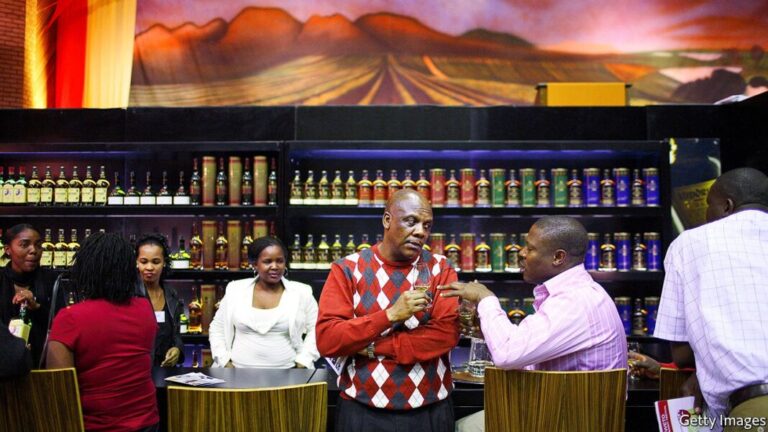
Not all pleasures can be as satisfying as pouring a smoky single malt into a heavy glass and letting it sit for a moment.
You do not rush it. You let it breathe, allowing the first aromas to rise slowly: peat smoke, warm oak, dried fruit and spices, perhaps a faint sweetness beneath the earthiness.
Then, as you taste it, the whisky gradually reveals itself, its character shaped by years of patience, craft and discipline. Nothing about it needs to shout. Its integrity is in the making, and its beauty is in what it has become.
Jazz has much the same soul. A great saxophone note can hang in the air with the warmth of old wood and the melancholy of a memory, while a pianist can sometimes say more through restraint than another musician can manage with an orchestra.
What sounds effortless is often the product of years spent mastering the instrument, learning when to play, when to hold back and when to allow a single note to breathe. The improvisation may be spontaneous, but the discipline beneath it is anything but.
There is freedom in great jazz, but it is the freedom that comes from knowing the rules well enough to transcend them.
Perhaps that is why good whisky and good jazz command such respect. Neither can be hurried into greatness, and neither can be dressed up to conceal an absence of substance. Both ask something of the person encountering them: patience, attention and discernment.
Given enough time, each reveals what it is. You cannot manufacture the depth of an old whisky or the soul of a great musician through presentation alone.
Politics, particularly as an election approaches, has learnt to imitate almost everything except this.
Its version of craftsmanship is the immaculate suit; its version of aroma is the carefully rehearsed promise; its version of soul is a microphone, a camera and a politician suddenly discovering an extraordinary love for people whose addresses have apparently been missing from his memory for four years.
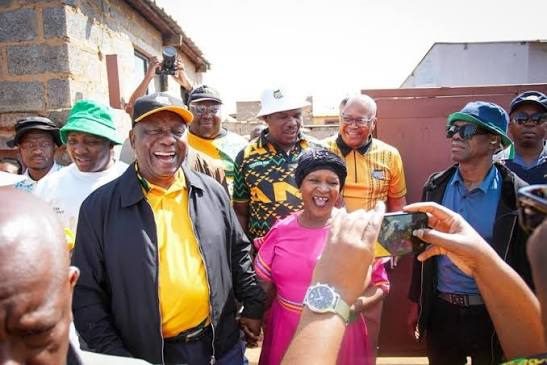
The convoy arrives first, a procession of immaculate, blacked-out SUVs easing through streets so riddled with potholes that ordinary motorists would require a suspension specialist afterwards. The politicians, however, glide through the devastation with the serene confidence of people who know that the road was not repaired for them because they were never expected to stay long enough to need it.
Then comes the grand entrance. Out steps the candidate in a designer suit so perfectly pressed that it appears to have been ironed with a moral compass, accompanied by aides carrying phones, cameras, clipboards and the unmistakable expressions of people documenting compassion for later use. The candidate smiles at residents with the warm, practised affection of someone greeting relatives whom he has not seen since the last election, which is, inconveniently, precisely when he last saw them.
He has arrived to perform concern.
He is not there because the water has been running brown for months, nor because the local school has fewer textbooks than a dentist’s waiting room, or because children are sitting in classrooms where the windows have been broken for so long that fresh air has become part of the curriculum.
He has not come to investigate why elderly residents spend hours queuing for services that should take minutes, why unemployed young people have become fixtures on street corners, or why the municipality seems to regard basic maintenance as an optional hobby. He has arrived because the electoral season has begun, and desperation is once again in season.
This is where political theatre reveals its peculiar genius. It understands that human beings are drawn to beauty, rhythm, ceremony and the possibility of transformation, and it takes those instincts and puts them to work. The banners rise, the music plays, the loudspeakers crackle, the politician takes the microphone, and the promises begin to flow.
Yet behind those promises there is no cask of patient years, no disciplined craft and no painstaking maturation. There is no substance acquired through the long and often unglamorous process of becoming worthy of the thing being offered. There is only the performance, and the performance depends upon our willingness to confuse appearance with character.
Politicians have a curious relationship with neglected communities. They ignore them for years, then rediscover them with the emotional urgency of a long-lost lover who suddenly remembers exactly where they live. The same neighbourhood that could not get a pothole repaired becomes, during campaign season, a sacred site of democratic engagement.
The same residents whose complaints disappeared into bureaucratic black holes are suddenly addressed by their first names, while the same broken infrastructure that attracted nobody’s attention for four years is photographed from twelve different angles in the space of twenty minutes.
It would be touching if it were not so shameless.
To imagine that politicians descend upon impoverished communities out of the goodness of their hearts is to believe that the fox has volunteered to supervise the henhouse because he has developed concerns about poultry welfare.
They come because poverty has political value. They come because frustration can be harvested, anger can be organised, and desperation can be converted into votes with astonishing efficiency.
Your suffering becomes campaign material, your leaking roof becomes a backdrop, your unemployed sons and daughters become anecdotes, your grandmother’s empty refrigerator becomes a photograph, and your child’s hunger becomes a line in a speech about dignity.
A community’s neglect, after years of being treated as an administrative inconvenience, suddenly becomes an irresistible opportunity for someone to demonstrate how deeply they care.
And what a performance they put on.
The politician points solemnly at the broken road and blames the opposition, gestures towards the overflowing drain and blames the previous administration, then shakes his head gravely at the state of the school and blames corruption, incompetence, sabotage, apartheid, the coalition partners, the national government, the provincial government or some other convenient villain whose absence from the stage makes him wonderfully easy to accuse.
By the time the speech is finished, responsibility has been passed around so enthusiastically that nobody is quite sure who was actually elected to govern the place.
This is the great magic trick of electoral politics: responsibility disappears while applause continues.
The politician does not need you to remember who failed; he needs you to remember who arrived with a microphone. He does not need you to inspect the record; he needs you to watch the spectacle. He does not need to repair the problem before the election; he needs the problem to remain emotionally useful until the election is over.
There is something almost offensive about the comparison with things made properly. A master distiller cannot bluff a whisky into maturity. Time cannot be bribed, and oak cannot be persuaded to surrender its character because an election is approaching. You cannot pour ambition into a cask and call it age. The spirit either has the depth, or it does not. In much the same way, a jazz musician cannot manufacture soul by announcing that he has it. Years of practice live in the fingers, the breath, the restraint and the instinct, and when the first note is played, the audience hears the difference.
Yet politics has perfected an extraordinary substitute for substance: spectacle.
A politician can spend years presiding over a system that leaves people hungry, unemployed and forgotten, then appear shortly before an election carrying a parcel of food and receive the gratitude normally reserved for someone who has performed a rescue. We have become so accustomed to political theatre that the presence of the person holding the bucket is enough to make us forget who allowed the house to burn in the first place. The cameras arrive, the smiles appear, the politician embraces the residents and, almost imperceptibly, presentation becomes performance, performance becomes compassion and compassion becomes votes.
And this is where the political illusion becomes almost complete. The politician has not created prosperity; he has created a moment that can be photographed, circulated and remembered long enough to serve its purpose. He has not repaired the water system, but has appeared beside it with solemn concern; he has not transformed the school, but has stood in front of its broken windows and spoken eloquently about its future; he has not changed the life of the hungry family, but has placed a parcel in its hands and allowed the cameras to capture the gratitude.
The distinction is everything, because in the strange theatre of election season, being seen beside a problem has somehow become a substitute for solving it.
It is difficult to imagine a more successful inversion of accountability. The people who have endured the consequences of political failure are expected to celebrate the people who arrive late to photograph themselves beside those consequences. A broken water pipe becomes an opportunity for a photograph, a struggling family becomes a backdrop for a speech, a food parcel becomes proof of compassion and a promise to investigate a crisis that has existed for years is presented as though the promise itself were a solution.
We participate because desperation has a way of making even crumbs look like a feast. There is nothing shameful about being grateful when someone finally brings food to a hungry family; that gratitude is human. What is cynical is the machinery surrounding it, the understanding that genuine gratitude can be captured, packaged and converted into electoral loyalty.
The politician understands the audience and knows the room, just as a musician understands when to let a note linger and when to bring in the rhythm. But where jazz uses discipline to create freedom, political theatre often uses freedom from accountability to create the illusion of discipline. The melody is familiar, yet the arrangement changes with every election. The old promises are given new lyrics, the slogans acquire new colours and the same failures are rediscovered with theatrical astonishment, until repetition itself begins to feel like renewal.
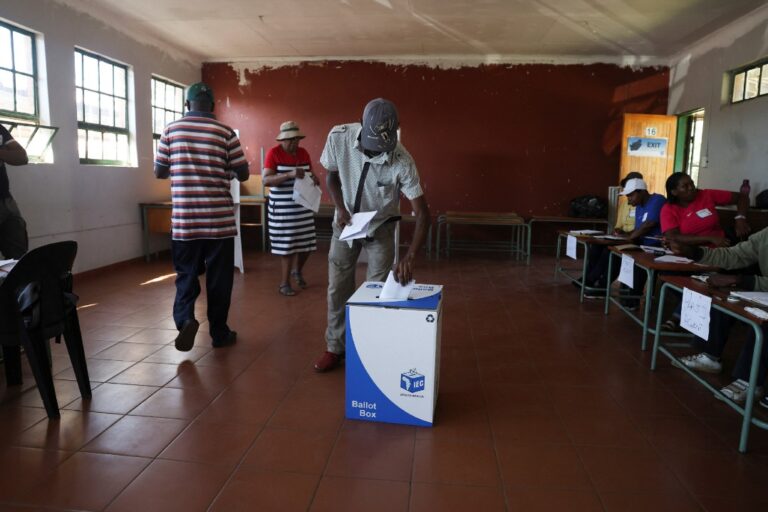
Then the votes are counted, and the convoy disappears back towards the suburbs where the roads mysteriously improve, the water runs properly and the security gates close with reassuring efficiency. The residents are left with the potholes, the broken pipes, the empty classrooms and the fading campaign posters until the next election, when the musicians return to play another arrangement of the same old song.
We should perhaps stop pretending that we do not understand what is happening. The political transaction is not complicated. They arrive carrying promises because we are carrying desperation. They require our votes, and we require the hope that things might finally improve. Somewhere between those two needs, an entire industry has been built around selling hope without necessarily delivering results.
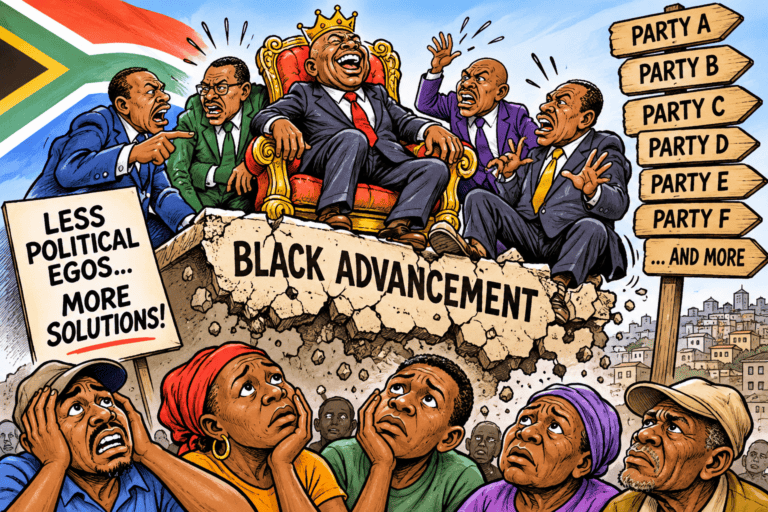
And we keep buying. We buy the T-shirts, repeat the slogans, defend the indefensible and turn politicians into celebrities and parties into football clubs, cheering for our side while the stadium itself collapses around us. We forgive failures that would get an ordinary employee fired and then become outraged when somebody dares to suggest that perhaps the person responsible should actually be held responsible.
This is how the farce survives: not because politicians are uniquely clever, but because political theatre works best when the audience becomes emotionally invested in the actors.
So perhaps we should approach elections with something of the discernment we bring to a good whisky or a piece of great jazz. We should be willing to let the performance breathe long enough for its character to reveal itself, to look beyond the aroma of promises and ask what has actually matured with time. We should listen beyond the volume of the campaign and hear whether there is any discipline, competence or integrity beneath the noise.
Because the finest whisky leaves a warmth that lingers long after the glass has been emptied, and the finest jazz leaves something resonating long after the final note. Both have earned their depth. Neither needs to pretend.
Politics should be held to the same standard.
After all, when the cameras disappear and the convoy leaves, there is no flattering light, no microphone and no applause to hide behind. There is only the work, and work has a stubborn way of revealing character.
In the end, you cannot fake what time, discipline and integrity are supposed to produce. Not in a whisky. Not in jazz. And certainly not in leadership.
Get the morning briefing
Our editors’ choice of the day’s stories, in your inbox at six.

Comments
No comments yet.