By Seun Fanie Mogotji
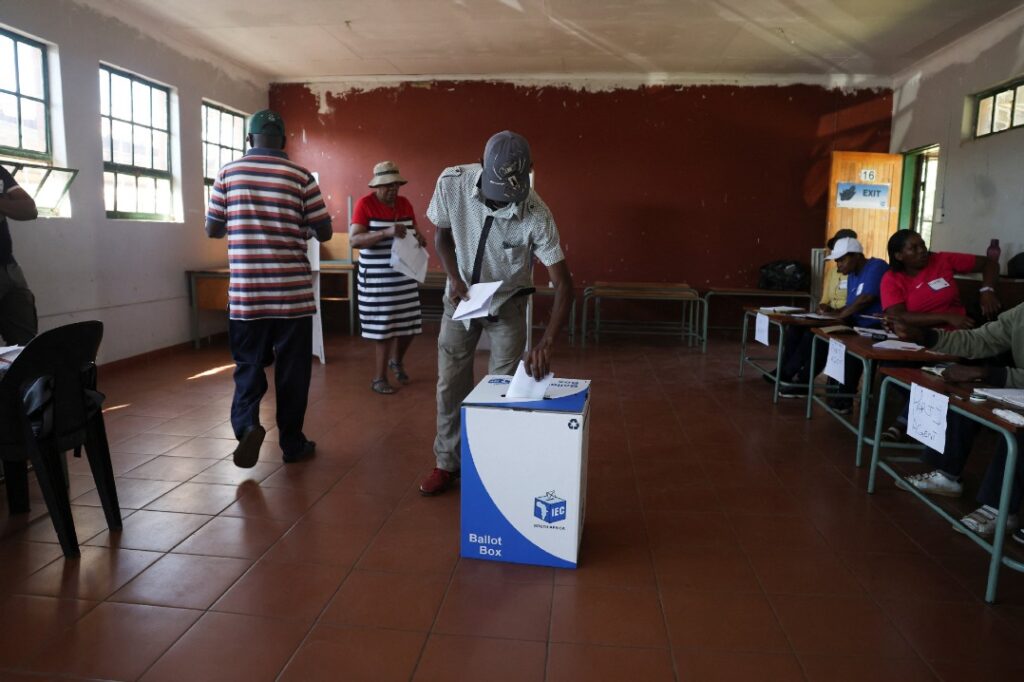
Whenever election results are announced, a familiar narrative emerges from sections of the media, political commentators and political elites.
Wealthier, educated urban voters are often described as sophisticated or “clever voters” because they support opposition parties, while working-class and rural communities are sometimes portrayed as uninformed, politically dependent or incapable of making independent electoral decisions.
This narrative deserves serious scrutiny.
From Sekhukhune’s perspective, this classification is profoundly misleading. It reflects a deeper problem in how South Africa understands political intelligence. It assumes that education, income and geographical location determine a person’s political awareness.
We reject this assumption.
A university qualification does not automatically make someone politically conscious, just as poverty does not make someone politically ignorant. Political intelligence cannot be measured by the size of one’s bank account, the suburb in which one lives or the political organisation one supports.
The people of Sekhukhune understand their circumstances. They understand the consequences of political decisions because they experience those consequences every day.
However, respecting the democratic choices of our communities must not prevent us from asking difficult questions about the political, economic and social conditions in which those choices are made.
The False Division Between “Clever” and Poor Voters
The tendency to describe certain sections of society as clever voters while questioning the political judgement of rural and working-class communities exposes an unequal understanding of democracy.
Middle- and upper-income communities often experience municipal government differently from poorer rural communities. Where municipal services fail, wealthier households may have access to private security, alternative water supplies, solar energy, private healthcare and other resources that help them manage the consequences of public-sector failures.
For many working-class households in Sekhukhune, these alternatives are financially inaccessible.
Access to clean water, electricity, roads, sanitation, land, education, healthcare and employment is not an abstract political discussion. These are everyday necessities.
Consequently, voting decisions in rural communities must be understood within their historical, economic and social circumstances.
A resident who considers access to social protection, community infrastructure and employment opportunities when deciding how to vote is exercising democratic judgement. That decision should not be dismissed as ignorance simply because it differs from the preferences of wealthier urban voters.
Poverty is an economic condition, not an intellectual disability.
The Mainstream Opposition and the Question of Rural Development
Political organisations seeking support from working-class communities must explain how their economic programmes will address the material conditions of those communities.
It is insufficient to campaign on administrative efficiency, fiscal discipline and promises of improved municipal management without explaining how rural economies will be transformed.
The working class requires more than efficient municipal accounts. It requires sustainable employment, productive industries, economic participation and access to essential services.
Market-driven development models, privatisation proposals and austerity measures must therefore be examined according to their actual consequences for ordinary people.
The central questions are:
- How will rural communities benefit from the mineral wealth extracted from their land?
- How will local industries be established to create sustainable employment?
- How will young people gain access to technical education and productive economic opportunities?
- How will public infrastructure be expanded without making essential services inaccessible to poor households?
- How will communities participate in decisions concerning their land and natural resources?
These questions cannot be answered through political slogans or urban-centred policy discussions.
Sekhukhune must not be treated as a secondary development area. Its people deserve meaningful participation in the economic future of South Africa.
Historical Loyalty Cannot Replace Material Transformation
Equally important is the question of historical political loyalty.
The ruling party has historically drawn support from liberation credentials and the political history of South Africa’s democratic transition. That history remains part of our political landscape.
However, historical achievements cannot permanently replace the obligation to deliver meaningful social and economic transformation.
The democratic right to social assistance must never be confused with political generosity. Social grants are rights established within South Africa’s constitutional and legislative framework; they are not personal gifts from political office-bearers.
A society cannot claim to have achieved economic liberation while communities remain trapped in unemployment, inadequate infrastructure, weak local economies and dependence on temporary relief programmes.
The distribution of limited assistance cannot become a substitute for structural economic development.
Liberation must be measured not only by political representation but also by the material improvements experienced by ordinary people.
It must be reflected in productive industries, decent employment, accessible education, functioning infrastructure, land justice and economic ownership.
The challenge is therefore not simply to change political representatives. It is to transform the economic and social conditions that continue to reproduce inequality.
The Educational Crisis: When a School Records Zero Per Cent
Perhaps nothing illustrates the seriousness of our educational challenges more painfully than the experience of schools that produce no matric passes.
In the 2025 National Senior Certificate examinations, Naledi Ya Meso High School in Dikgalaopeng, within Sekhukhune South, reportedly recorded a 0% pass rate. All 15 candidates who wrote the examinations failed.
This is not merely a statistic to be discussed during political debates. Behind that percentage are young people whose educational aspirations and future opportunities have been placed in jeopardy.
A zero per cent matric pass rate demands serious questions about school management, teacher availability, educational resources, departmental supervision and the support provided to learners.
Where was the necessary intervention? What happened to the monitoring and accountability mechanisms? What corrective measures were implemented to prevent another generation from experiencing the same outcome?
We cannot celebrate improvements in overall provincial matric performance while overlooking schools and communities experiencing devastating educational outcomes.
Education is supposed to be one of the principal instruments through which poor communities escape poverty and participate meaningfully in the economy.
When that instrument fails, the consequences extend far beyond the classroom.
It affects employment opportunities, household income, social mobility and the future economic prospects of entire communities.
Sekhukhune cannot afford to normalise educational failure.
Youth Unemployment and the Electoral Paradox
The educational challenges of our communities are closely connected to another serious concern: youth unemployment.
Young people complete matric, obtain qualifications and remain at home without meaningful employment opportunities. Others leave school without the necessary educational foundation to access further training or productive economic participation.
The result is a generation confronted by limited opportunities and uncertainty about its future.
This brings us to one of the most uncomfortable political questions confronting Sekhukhune.
How is it possible for a region experiencing persistent educational challenges, severe youth unemployment and inadequate development to continue demonstrating substantial electoral loyalty to the same ruling party, irrespective of its performance?
This question must not be interpreted as an accusation against the voters.
It is a question about historical loyalty, political accountability, electoral behaviour and the relationship between political support and service delivery.
We must be able to examine the contradiction between the conditions in which people live and the political outcomes they repeatedly produce without insulting their intelligence or questioning their constitutional rights.
A political mandate is not a permanent certificate of approval. It is a responsibility that must be evaluated through performance, accountability and measurable improvements in people’s lives.
Historical liberation credentials and political loyalty cannot become permanent substitutes for development.
The people of Sekhukhune must be able to ask their political representatives difficult questions without being accused of betraying history or undermining democracy.
Why are so many young people struggling to find employment? Why do some schools produce no matric passes? Why are rural economic opportunities limited? Why must communities repeatedly mobilise around basic services?
These questions deserve answers regardless of which political organisation holds office.
The ballot box must never become a mechanism through which political loyalty is separated from political accountability.
Respecting the voters does not mean exempting those who govern from scrutiny.
The BPSA and the Grassroots Socialist Alternative
The Bolsheviks Party of South Africa (BPSA), founded in Ntwane, emerged from a political and historical context in which working-class communities demanded an organisation rooted in their everyday struggles.
Our political foundation is informed by Marxism-Leninism, working-class organisation, egalitarian principles and the struggle against racial and economic inequality.
We recognise that rural communities cannot achieve meaningful emancipation through electoral participation alone.
Democratic participation must be accompanied by organisation, political education, community mobilisation and economic transformation.
Our approach places emphasis on:
Community ownership and economic participation: Local communities must have meaningful opportunities to participate in economic activities generated by the natural and productive resources within their areas.
Mineral beneficiation: Sekhukhune’s mineral resources must contribute to local industrial development, skills transfer, employment and community advancement.
Land and agricultural development: Rural land must become a foundation for productive agriculture, agro-processing and local economic participation.
Public services and accountability: Water, roads, sanitation, electricity and other essential services must be treated as public responsibilities requiring transparent governance and continuous community oversight.
Education and youth development: Young people must have access to quality education, technical institutions, mathematics and science programmes, apprenticeships, entrepreneurship opportunities and sustainable employment.
Local economic transformation: Public procurement, infrastructure investment and economic development must create meaningful opportunities for local businesses, cooperatives and working-class communities.
For the BPSA, political organisation must extend beyond election campaigns. It must remain connected to the daily struggles of the people.
Our understanding of socialism is not simply about criticising existing political arrangements. It is about building an alternative development framework that places working-class interests, public resources and economic justice at the centre of decision-making.
Rural Communities Are Political Participants, Not Political Subjects
There is a fundamental difference between respecting the democratic choices of rural communities and assuming that those choices must be explained by poverty, dependency or historical loyalty.
Rural residents are not passive spectators in South African democracy.
They debate political issues, assess candidates, evaluate government performance and consider the consequences of different political programmes.
Their political decisions may be influenced by local experiences, historical relationships, economic realities, ideological convictions and expectations of development.
That complexity deserves recognition.
The democratic right to choose must also include the right to question, reject, support or change political representation without being subjected to intellectual judgement by commentators who may have little direct experience of the conditions being discussed.
No community should have to prove its intelligence by voting according to the expectations of the political or media establishment.
The real measure of democracy is not simply the announcement of election results. It is whether democratic participation translates into meaningful improvements in people’s lives.
Respect the Voters, Demand Accountability
Political intelligence is not the exclusive property of university graduates, wealthy households or residents of major metropolitan centres.
It is demonstrated through political awareness, critical thinking, community organisation, democratic participation and the ability to demand accountability from those entrusted with public power.
The people of Sekhukhune do not need political approval from suburban commentators to validate their democratic choices.
However, neither should our communities be discouraged from questioning political leadership, examining electoral patterns and demanding better outcomes.
When schools produce zero per cent matric passes, when young people struggle to find employment and when rural communities remain economically marginalised, these realities must become central to our national political conversation.
We cannot continue celebrating electoral victories while treating the socioeconomic conditions of the electorate as secondary matters.
The real question should never be whether poor people are clever enough to vote.
The real question is whether those who receive their votes are fulfilling the responsibilities entrusted to them.
Sekhukhune deserves quality education, decent employment, functioning infrastructure, economic ownership and genuine development.
The working class must not be spoken about as though it lacks political intelligence. It must be recognised as an active force in shaping the country’s democratic and economic future.
Respect the voters. Question those who govern. Measure political leadership by the material conditions of the people.
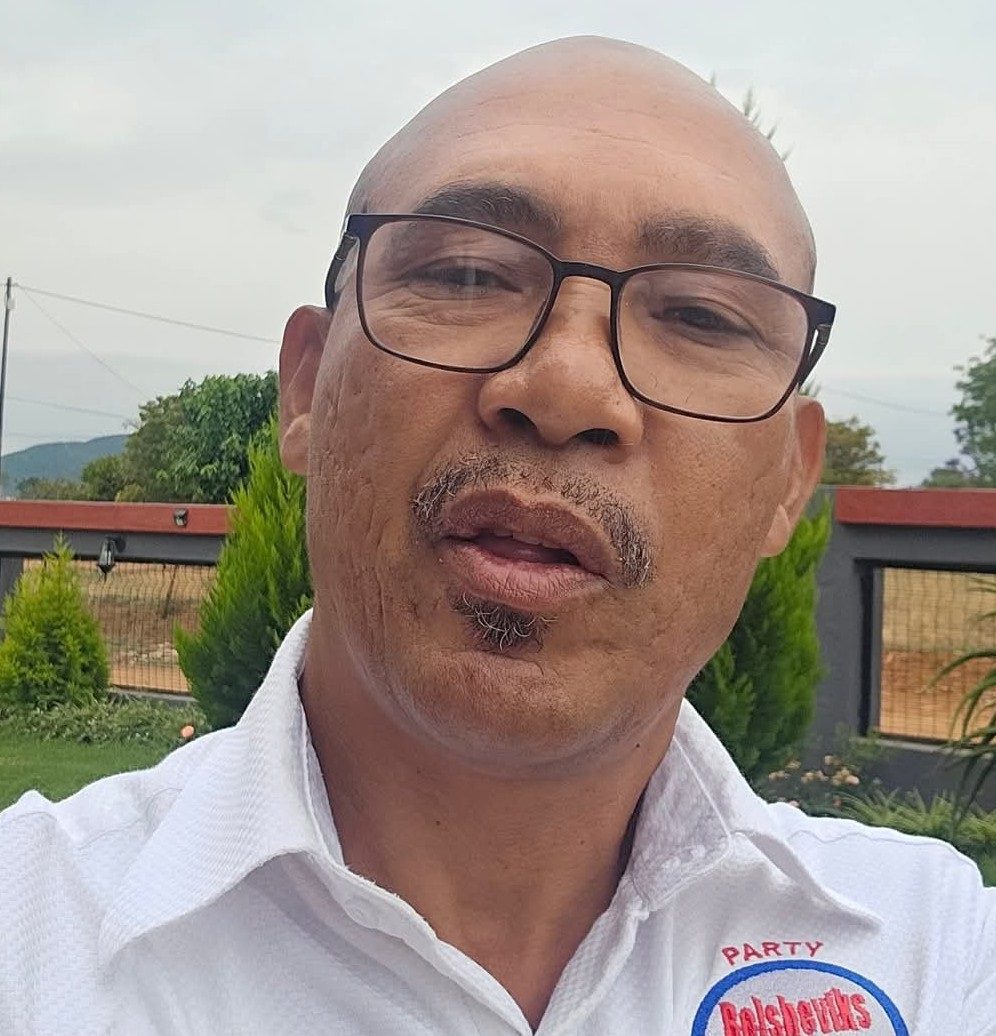
Seun Fanie Mogotji is the General Secretary of the Bolsheviks Party of South Africa (BPSA).
Get the morning briefing
Our editors’ choice of the day’s stories, in your inbox at six.



Comments
No comments yet.