By Themba Khumalo
There is a goal that every South African over the age of twenty five can replay with their eyes closed. Siphiwe Tshabalala, left foot, the FNB Stadium roof lifting off, the first goal of the first World Cup ever played on African soil.
For a fleeting moment, an entire country forgot to be cynical. We believed we were the kind of nation that could stand before the planet and be exactly as good as we claimed.
Then the vuvuzelas went quiet, the stadiums stayed behind, and the conviction went somewhere to die.
I was reminded of all this watching Dr Sizwe Mpofu-Walsh’s SMWX podcast, which broadcast the panel he hosted at Brand South Africa’s Nation Brand Forum. There he sat down with Tshabalala, Joel Chikapa-Phiri, Thato Moraka and Dr Caroline Azionya to ask what football, film, culture and storytelling might still do for this country’s future.
They talked about the World Cup’s legacy and the youth we failed to develop.
They talked about rebuilding the SABC, about the barriers that lock young creatives out of education, about who gets to own our story on the world stage. It was a conversation full of intelligence and love.
It was also, if you listened closely, a conversation full of grief for everything we have been too slow, too sleepy and too bureaucratic to claim.
And then Joel Chikapa-Phiri spoke, and I hit pause and played it back.
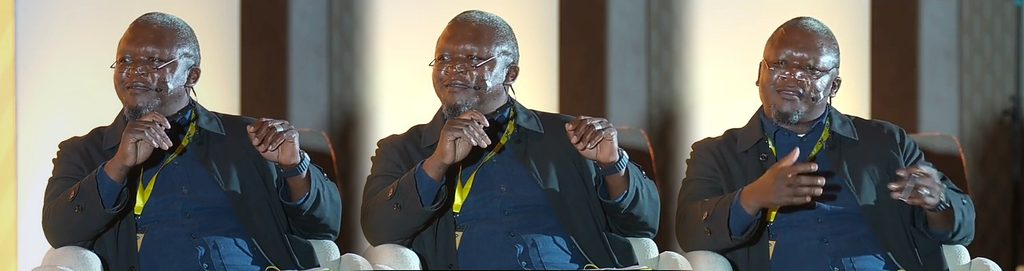
As a prominent South African film producer, entrepreneur, and chairman of the Known Associates Group with an extensive career spanning over three decades in the local and international media industries, Phiri occupies a front-row seat to the evolution of our creative economy.
When he surveyed the landscape, his conviction was absolute: “South Africa is the best country to make films in the world.”
Not one of the best. The best. And he was not boasting. He was reporting. We can shoot London. We can shoot New York. We can shoot Lagos, and the backyards of Australia, and build the sets for all of them.
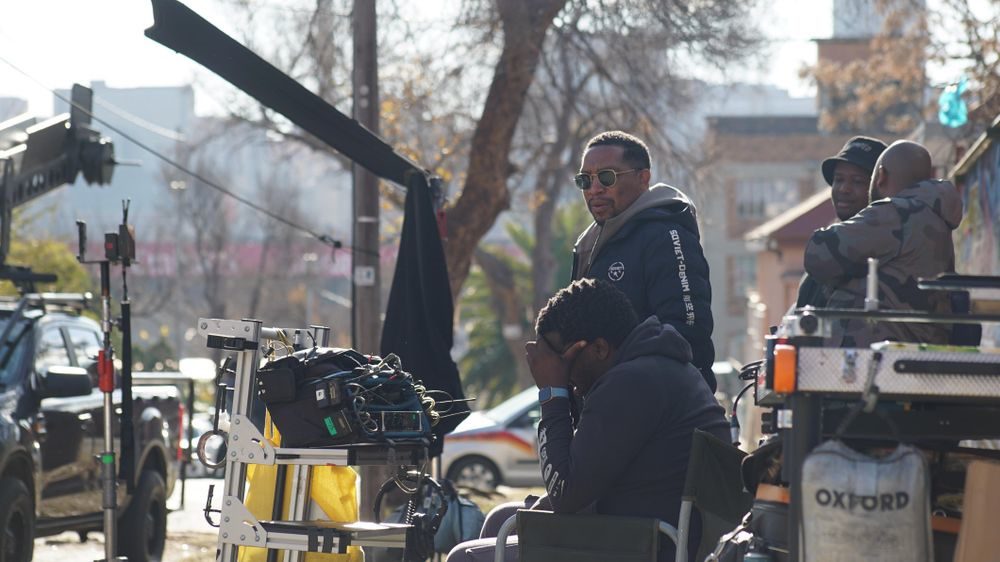
We have crews and technicians the world over would kill for: not merely people who carry cable, but heads of department who can break down a script and build a world from it. We made Mission: Impossible and 1923. We made Children of Blood and Bone last year.
We make hundred-million-dollar films here, on our soil, with our people.
Sit with that. Hundred-million-dollar productions, made here, with our people. And the one thing standing between us and more productions is a rebate the state cannot pay on time.
Because here is the part Phiri said almost politely, the way people speak when they still need something from the people they are describing. Foreign producers come to us for the talent, the locations and the craft, and for the incentive. And the incentive, the DTIC rebate that makes the whole arithmetic work, has been in trouble for the last twenty-four months.
Twenty-four months. Two years. In film time, that is an epoch. Productions are greenlit and financed on the strength of a promise, and when that promise arrives late, arrives short or does not arrive at all, a producer in Los Angeles does not write a stern letter. He picks up the phone and calls Budapest, or Sydney, or Vancouver.
Those places are not better than us. They are merely reliable.
That is the whole tragedy in one sentence: we lose the world’s work not because we are not good enough, but because we are not organised enough.
I want to be fair, because depth demands it. Rebates are complicated. Audits matter. Public money must be accounted for, and nobody sensible wants a free-for-all. But there is a vast difference between rigour and rot. Rigour pays the claim in a defined window after proper verification. Rot sits on the file for twenty-four months while crews go unpaid, vendors go under, and a once-hungry industry learns to fear the very programme designed to feed it.
Ask the caterer, the grip, the costume maker, the location owner in Cape Town or Johannesburg or the Eastern Cape what the difference is. They will tell you in rent they cannot pay.
And what is the Department of Trade, Industry and Competition’s answer? Meetings. Task teams. Assurances that it is “being worked on.” The language of a civil service that treats a cultural and economic revolution as an administrative inconvenience.
Nor does the Department of Sport, Arts and Culture get to sit this one out. A ministry with “arts and culture” in its very name has watched the most bankable creative export this country possesses wobble on a technicality, and its contribution has been the polite murmur of a bystander. Where is the fire? Where is the minister who storms into Treasury and the DTIC and says, this industry employs thousands, earns foreign currency, exports our image to billions of people, and you will fix it by the end of the quarter?
Culture is not the garnish on the national plate. Done properly, it is the plate.
Now consider the clock, because this is where Phiri’s testimony turned from lament into alarm. Next year, the Berlin Film Festival names South Africa its country of focus.
Read that again slowly. The entire global film industry, the buyers, the financiers, the distributors, the critics, will descend on Berlin and, for the length of the festival, look at us. This is not a courtesy. It is an invitation to the front of the room.
And Phiri’s point, the one that should be tattooed on the wrist of every director-general in Pretoria, is that this cannot be only about film. Germany is one of our largest trading partners. So build a Berlin week. Bring the hydrogen people. Bring agriculture. Bring the winemakers.
Let the cinema be the front door and the economy the house behind it. Every filmmaker in that city is a walking advertisement for a country; give them a country worth advertising and a trade delegation to follow.
But opportunities like this do not execute themselves. They arrive with a deadline, and an expiry date, and the graveyard of South African promise is thick with moments we were handed and quietly fumbled. We held the World Cup, and what did we build on it? We have the youth, and where is the pipeline? We have the stories, and who is funding the schools that teach people to tell them?
Phiri put the alternative with brutal clarity: if the state does nothing, then a handful filmmakers will go to Berlin, and they will be the ones who saved South Africa, while everyone else sits at home having done nothing. The private sector and the creatives will rescue the moment, and the government will arrive late to the photograph, smiling, taking credit.
I am tired of that photograph.
Let me say what I believe, plainly. South Africa does not have a talent problem. We have never had a talent problem. We have an ambition-of-the-state problem. The people are world-class. The crews are world-class.
The stories, God, the stories, from the townships, the farms, the mines, the shebeens, the shifting borders of a rainbow nation still arguing about its own colours, are a gold seam nobody has finished mining.
Tshabalala proved on one winter evening that a South African can strike the ball and the whole world will roar. Film is the same goal, scored again and again, in ten thousand frames, for decades.
What we lack is a midfield. The administrators, the policy-makers, the rebate-processors, the people whose entire job is to pass the ball to the people who can score. And right now they are standing in the centre circle examining the ball, drafting a memorandum about its provenance.
So here is the demand, and it is not complicated:
Fix the incentive. Pay what is owed, on time, with transparent timelines and a named official who answers for delays. A rebate that is unreliable is not an incentive; it is a gamble, and global capital does not gamble on jurisdictions that can stand it up.
Rebuild the SABC. A thriving public broadcaster is the first buyer, the first stage and the first training ground for a homegrown industry. Let it commission, nurture and show our own stories, so that we are not forever auditioning for approval from abroad.
Open the doors to creative education. Talent without access is just wasted potential with a good accent. Bursaries, workshops, regional film schools, apprenticeships on those hundred-million-dollar sets. The next Tshabalala is somewhere in a township right now, and she holds a camera instead of a ball.
Treat Berlin as a national project. Not a junket, not a ribbon-cutting, but a coordinated campaign across film, trade, agriculture, energy and tourism, with a budget, a lead and a plan finalised months before the red carpet is unrolled.
None of this is exotic. Other countries do it before breakfast. The only thing missing is the will, and will, unlike money, cannot be blamed on the Treasury.
We are the best place on earth to make a film. That is not my claim; it is the claim of a man who has done it at the highest level, saying it plainly to anyone with the power to act on it.
The sets are built. The crews are ready. The world has been calling for years. And the DTIC and the DSAC are still on page one, rewriting a script that was greenlit long ago.
Roll camera.
Get the morning briefing
Our editors’ choice of the day’s stories, in your inbox at six.




Comments
No comments yet.