By Themba Khumalo
There are few pleasures I trust more than the slow uncorking of a good bottle of whisky.
Before the first sip, there is that small ceremony of anticipation: the soft release of the cork, the amber glow catching the light, the glass warming between the fingers. Bring it close enough, and the whisky begins to introduce itself long before it reaches the tongue.
There might be oak and vanilla, dried fruit and spice, smoke, honey or something faintly medicinal lurking beneath it all. A good whisky carries its history in its aroma.
That is what makes whisky such an instructive thing. It is not simply liquid in a bottle. It is agriculture, craftsmanship, chemistry, time, geography, branding, storytelling and cultural memory distilled into something that can travel thousands of kilometres and persuade a stranger to part with money for a taste of somewhere they may never have visited.
The bottle sells the drink, certainly. But the story sells the bottle.
A country that understands this understands something profoundly important about the creative and cultural industries. A country that does not will continue to mistake artists for entertainers, culture for decoration and creativity for an indulgence to be funded when there is a little money left over after the supposedly serious business of running the country has been attended to.
That is an astonishingly primitive way to think about national power.
Artists, filmmakers, musicians, writers, actors, designers, photographers, fashion creators and other cultural practitioners do something governments routinely spend fortunes trying to accomplish: they make people feel something about a country. They give a nation a voice, a face, a soundtrack, a texture and, sometimes, a smell that lingers long after the encounter has ended.
This is where South Africa needs to have a rather uncomfortable conversation with itself.
We have an extraordinary cultural inheritance and an abundance of creative talent, yet we continue to treat much of the creative economy as though it were an ornamental attachment to the real economy.
We talk enthusiastically about tourism, investment, international relations and the national brand, while failing to appreciate that some of the most persuasive salesmen for South Africa have never sat behind a government desk or carried a diplomatic passport.
They have stood on a stage, sung, acted, written, painted, designed, made films and told our stories in ways that have persuaded audiences beyond our borders to listen, to look again and, sometimes, to become curious about the country from which those stories came.
That is not sentimentality. It is economics, diplomacy, national identity and soft power working simultaneously.
Consider what happens when a country produces a cultural phenomenon that captures international attention. The effect rarely stops at the theatre, concert hall, streaming platform, gallery or record shop.
A successful film can create interest in the places where it was made. A musician can introduce millions of listeners to a language, rhythm or cultural tradition they had never previously encountered. A television series can turn an unfamiliar city into a destination.
A designer can make a country’s aesthetic language desirable in markets thousands of kilometres away. A writer can force outsiders to reconsider assumptions about a society they thought they understood.
The cultural product becomes the front door through which people enter the country.
This is why the creative economy deserves to be discussed in the same breath as tourism, manufacturing, technology, agriculture and other productive sectors of the economy. It creates employment and intellectual property, stimulates advertising and broadcasting, fills hotels and restaurants, supports venues and transport, generates exportable products and services, and creates commercial opportunities that extend far beyond the individual artist.
The mistake is to look at an actor and see an actor. The serious question is what economic ecosystem that actor activates.
The same applies to a musician. Around a successful musician are producers, engineers, instrumentalists, dancers, choreographers, photographers, stylists, publicists, promoters, venues, broadcasters, streaming platforms, transport companies, hotels, caterers, designers and countless other people whose livelihoods are connected to the creative process.
The song may be three minutes long, but the economic chain behind it can be remarkably long.
The same whisky analogy applies.
Nobody looks at a bottle of an exceptional whisky and imagines that the price reflects only the liquid. The consumer is buying the accumulated labour of farmers, distillers, coopers, blenders, designers, marketers, distributors and generations of accumulated knowledge. They are also buying the story of a place and the promise of an experience.
Culture operates in precisely the same territory.
A country does not sell itself solely through brochures, embassies and investment conferences. It sells itself through the stories people encounter when they are not consciously being sold anything. That is the extraordinary power of culture. It slips past the defences of advertising because people consume it for pleasure, curiosity, entertainment or enlightenment, only to discover that along the way they have formed an impression of the society that produced it.
The USA understood this a long time ago. Hollywood became far more than an entertainment industry; it became one of the country’s most effective instruments of cultural influence.
South Korea has demonstrated the extraordinary commercial and diplomatic reach of popular culture through its music, television, film, fashion and food.
India has used its enormous film and music industries to make its culture instantly recognisable in places where Indian political messaging might have little reach.
None of this happened because somebody in a ministry decided to make culture fashionable for a year.
It happened because creative industries were capable of becoming industries.
South Africa has no shortage of material with which to do the same.
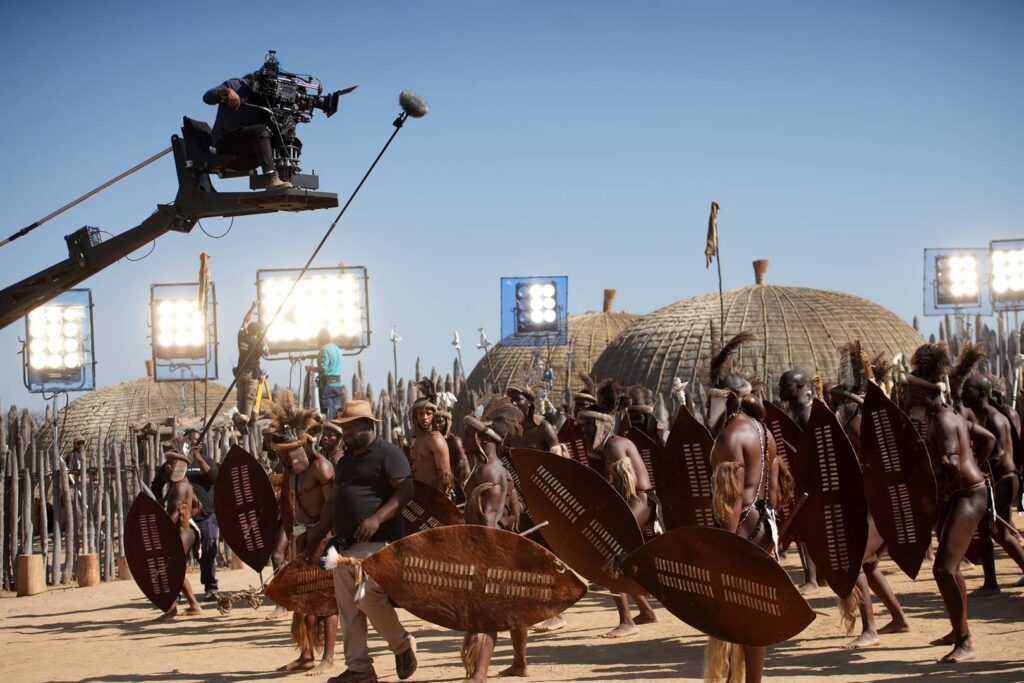
We have languages, music, literature, fashion, cuisine, architecture, history, landscapes, urban cultures and stories of extraordinary human resilience. We have produced artists whose names are recognised far beyond our borders. Miriam Makeba and Hugh Masekela did not need to be appointed cultural ambassadors to carry South African identity into international spaces.
Ladysmith Black Mambazo made the sound of South Africa recognisable to audiences who could not necessarily locate the country on a map.
Artists of different generations have repeatedly demonstrated that culture can cross borders with a speed and intimacy that official diplomacy often cannot match.
This is soft power in its most compelling form.
It is influence without coercion. It is persuasion without a lectern. It is a country becoming interesting to the rest of the world because somebody has created something beautiful, provocative, entertaining or unforgettable.
Yet there is another dimension to the importance of artists that governments and bureaucracies routinely underestimate.
Artists do not only sell countries to foreigners. They explain countries to themselves.
A society as complicated as South Africa needs people who can interpret its contradictions. We need writers who can make sense of our history, filmmakers who can examine our wounds without turning them into propaganda, musicians who can give expression to emotions that ordinary political language cannot accommodate, photographers who can preserve disappearing communities, designers who can translate heritage into contemporary forms, actors who can inhabit experiences different from their own and visual artists who can challenge the comfortable assumptions of the powerful.
The artist is often the person willing to look at society without the protective clothing worn by institutions.
That makes artists inconvenient, but inconvenience is not a weakness of culture. It is one of its functions.
A healthy creative sector should make politicians uncomfortable from time to time. It should make citizens reconsider what they believe. It should preserve memories that some would prefer forgotten and question narratives that have become too convenient to challenge. It should allow a country to laugh at itself, mourn itself, celebrate itself and, when necessary, condemn itself.
That is not an indulgence.
It is part of the machinery of a functioning society.
Culture also has the remarkable capacity to construct national identity without requiring everybody to agree on what that identity means. South Africa is not one story. It is a collection of histories, languages, communities, memories and competing interpretations of belonging. The arts provide a space in which those different experiences can encounter one another without necessarily having to be reduced to a single official narrative.
This matters enormously in a country still negotiating the meaning of its past and the possibilities of its future.
It also matters commercially.
The world economy increasingly competes for attention. Countries compete for tourists, investors, students, consumers, talent, international events and global recognition. In such an environment, being invisible is expensive. A country can have minerals, infrastructure, beautiful scenery and investment opportunities, but if nobody is paying attention, those assets become considerably harder to market.
Culture captures attention.
The photograph, the film, the song, the novel, the fashion collection and the television drama can make somebody thousands of kilometres away stop scrolling and ask: Where is that? Who made this? What is that music? What is this place?
That moment of curiosity has economic value.
Tourism authorities understand this intuitively when they use images, films, music and cultural experiences to persuade visitors to come. Investment agencies understand the importance of national reputation. Diplomats understand the value of cultural exchanges. Corporations understand the commercial power of association with artists.
So why does the state so often behave as though the people producing the very culture that gives the country character are peripheral to the national project?
Perhaps because bureaucracies are particularly good at counting things that fit neatly into spreadsheets. They understand infrastructure. They understand procurement. They understand buildings. They understand budgets. Creativity is less obedient. Its returns are sometimes indirect, cumulative and difficult to measure in the crude language of quarterly accounting.
That does not make those returns imaginary.
It means the people responsible for economic and cultural policy need a more sophisticated understanding of value.
The answer is not to throw money at artists and congratulate ourselves for having done something noble. Artists do not need to be treated as helpless recipients of state generosity. They need functioning markets, intellectual-property protection, access to finance, professional management, export opportunities, appropriate infrastructure, serious broadcasting and distribution channels, credible institutions and policies that allow creative businesses to grow.
The state should create conditions in which talent can become an industry.
That distinction matters.
An artist who produces internationally competitive work should not have to spend half a career pleading for recognition from officials who would not recognise commercial potential if it arrived carrying a neon sign. A filmmaker should be able to build a production company. A musician should be able to own and monetise their intellectual property. A designer should be able to export. A writer should be able to reach international markets. A young creative should be able to see a future in which talent is not simply something to be admired but something from which a sustainable livelihood can be built.
There is also a generational argument.
Young South Africans live in an economy in which traditional employment cannot absorb everybody entering the labour market. The creative industries cannot solve unemployment, but neither should they be treated as though they have nothing meaningful to contribute to solving it. They offer pathways into entrepreneurship, freelancing, digital production, entertainment, design, technology and international markets that did not exist in anything like their current form a generation ago.
The smartphone in a young person’s hand can be a cinema, recording studio, publishing house, broadcasting station, design studio, and international shopfront.
What that young person needs is not a lecture about getting a “real job”. What he or she needs is an ecosystem capable of turning creativity into economic participation.
And this is where artists themselves become important beyond their individual careers.
When an artist succeeds internationally, they do not travel alone. They carry a cultural ecosystem with them. Their success can create opportunities for collaborators, producers, writers, designers, photographers, technicians and other artists. They create networks. They establish relationships. They introduce audiences to other work. They make it easier for the next South African artist to enter a room that previously had no reason to open its door.
This is how cultural influence compounds.
One artist becomes a door through which another can enter. One successful production demonstrates that another is possible. One international collaboration creates another. Over time, an industry emerges.
That is precisely why dismissing artists as people who “entertain us” is such a profound misunderstanding.
They are doing considerably more than entertaining us.
They are creating intellectual property. They are preserving memory. They are shaping identity. They are generating economic activity. They are influencing international perceptions. They are attracting attention. They are opening markets. They are challenging power. They are documenting the present for the people who will one day call it history.
And sometimes, without anybody commissioning them to do so, they sell the country.
The irony is that South Africa already understands the language of branding. We understand that a strong national reputation can attract visitors and investment. We understand that international perception matters. We understand that a country’s image can influence how people treat it.
What we have not yet fully understood is that the people who create that image cannot sensibly be treated as an afterthought.
A country that neglects its artists while obsessively worrying about its national brand has misunderstood how branding actually works.
You cannot manufacture cultural authenticity in a boardroom.
You cannot order national identity through a tender.
You cannot procure international affection.
And you certainly cannot build soft power while treating the people capable of generating it as troublesome recipients of occasional patronage.
The whisky bottle offers one final lesson.
Its contents may be excellent, but excellence alone does not guarantee that anybody will discover it. Someone has to make the bottle. Someone has to tell its story. Someone has to design its label. Someone has to distribute it. Someone has to persuade the world that what is inside is worth tasting.
Countries are not so different.
South Africa has extraordinary content. What we continue to lack is the seriousness with which we package, protect, promote and export our cultural wealth.
Our artists are not ornaments on the national Christmas tree. They are among the people who give the country its voice and make that voice audible beyond its borders. They are part of the economy, part of our diplomacy, part of our history and part of the country’s ability to imagine itself differently.
The tragedy would be to discover all of this only after another country has learnt how to commercialise what we were too complacent to value.
So the next time somebody dismisses the creative and cultural industries as peripheral, perhaps offer them a whisky and ask them to smell it before they taste it.
Ask them what they can detect.
The oak came from somewhere. The grain came from somewhere. The water came from somewhere. The craftsmanship came from somewhere. The story came from somewhere.
And without the story, it is only whisky in a bottle.
A country without a serious cultural industry risks becoming something equally difficult to market: a place with extraordinary assets that has forgotten how to tell the world why they matter.
Get the morning briefing
Our editors’ choice of the day’s stories, in your inbox at six.

Comments
No comments yet.