By Sandile Memela
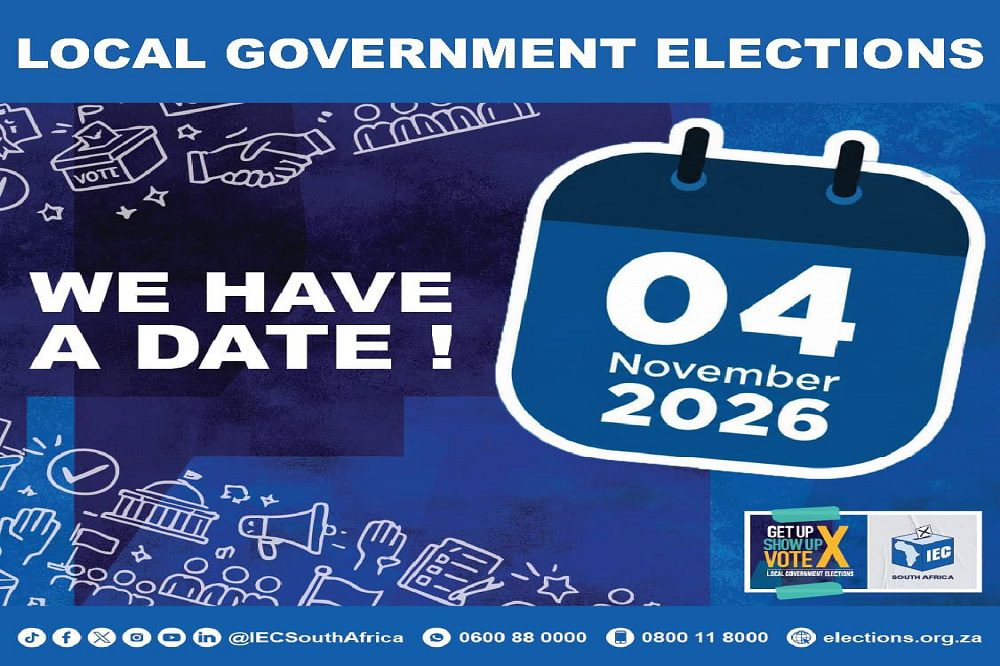
A new kind of candidate is walking the streets of the townships in 2026.
No motorcade. No party T-shirt. No handler with a clipboard. Just a person in worn shoes, knocking on a gate.
They are the disillusioned sons and grandsons of struggle veterans. Men and women who grew up hearing stories of jail, of exile, of funerals that became rallies.
Men and women who were told: “We fought so you could have better.”
They witnessed the dawn of democracy. And they looked around. They saw the same broken houses. They heard the same empty promises—the same potholes from 1994.
So they made a choice that shocked the old guard. They broke away from party ranks.
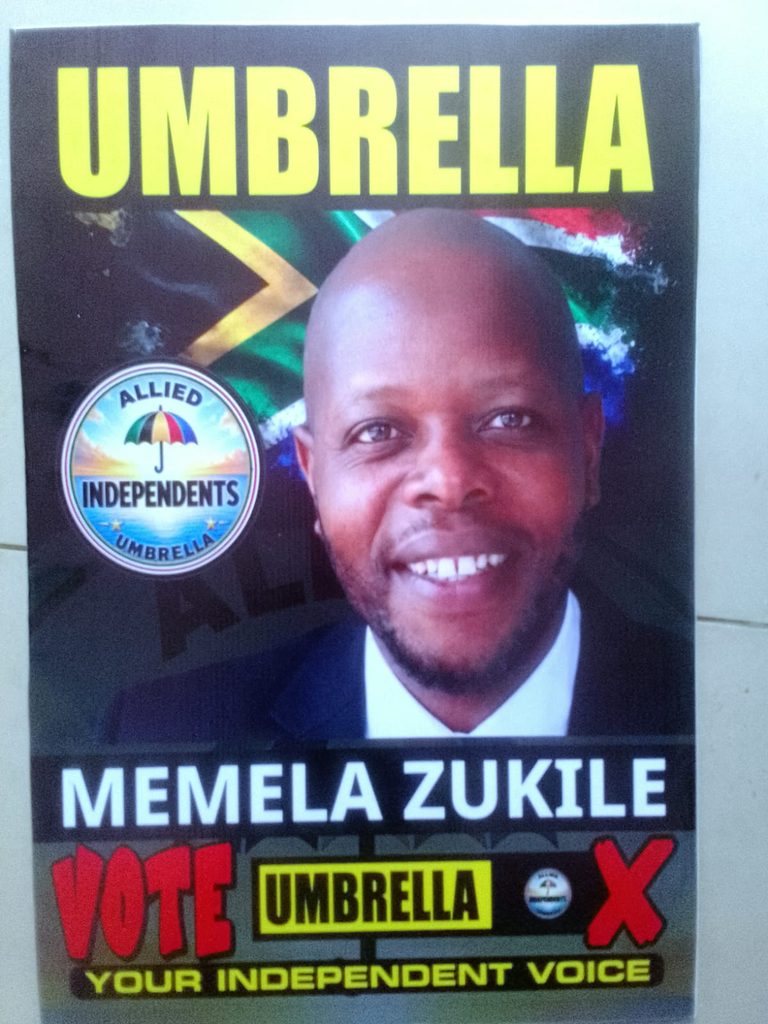
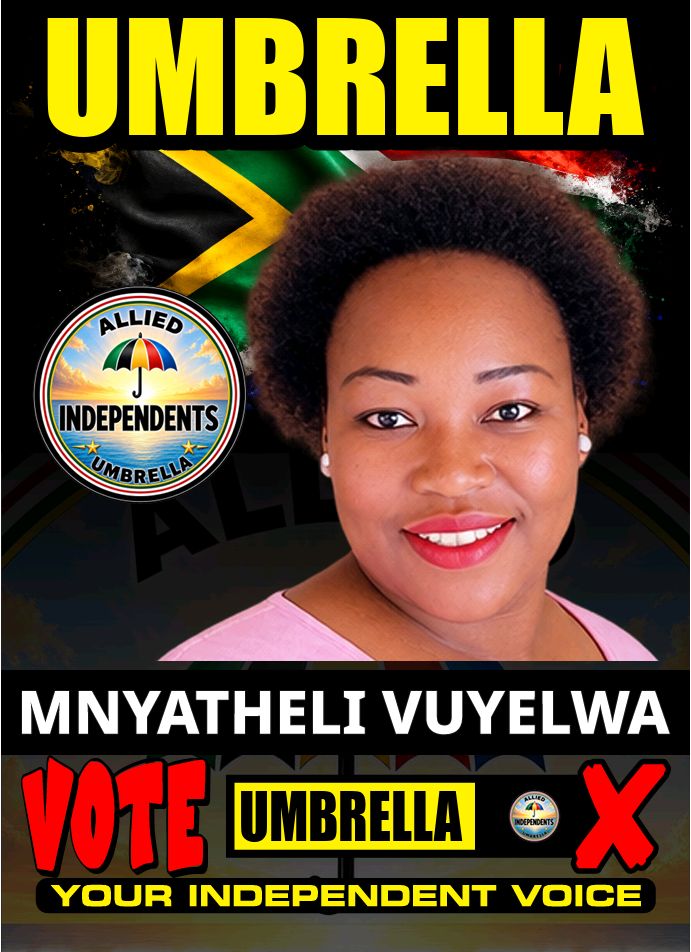
They chose to stand as independents. To avoid party control and manipulation. To become agents of what they wish to see happen.
This is not about one Mmusi Maimane or Lakona Mnguni. This is about a generation that decided the liberation project was not finished; it was hijacked. Nay, it was betrayed. Sold out.
They Did Not Come With Struggle Credentials. They Came With Scars.
You will not find a PhD on their CVs Not many of them belong to the educated class.
You will not find a master’s degree on their walls. Some come from shebeens and drinking sessions. Or the Church.
Many have never set foot on a university campus.
Instead, they come from the school of hard knocks. Life was the lecture hall. Struggle was the syllabus. Above all, the real politics of self-determination.
That school does not give certificates. It gives calluses. It teaches you at 5 am when the taxi doesn’t come, and you must walk 12 km to look for work. It teaches you that your PhD has turned you into a bag carrier for an uneducated politician. It teaches you that your high qualifications have turned you into a voluntary corporate slave. It teaches you what happens when a man loses his job, and there is nothing to put on the table. It teaches you when your gogo’s grant is late, and the cupboards are empty.
It teaches you when you return home and have to sleep on the floor or turn a garage into a home. It teaches you when you knock on the doors of 10 comrades for a job and all 10 doors close. Nobody answers except with empty promises.
And yet they are here. Still standing. They are rising.
They are living proof that active citizenry is not about academic qualifications.
It is about showing up. For the people. To some degree, for self-advancement. It is about knowing the name of the gogo on the corner. And her knowing you, too. It is about knowing which streetlight has been out for eight months. And doing something about it. It is about knowing that a degree cannot unblock a drain, but a person who cares can. Your Harvard or Yale degree is irrelevant here.
The township does not need another speech. Or another person boasting about qualifications. It needs a neighbour who is willing to be accountable. To hold the sham political leadership accountable.
That is the redefinition of a pathfinder in the new struggle.
Action Over Talk: The Volunteers Who Refused To Wait
Many of them were raised in politically conscious homes. Grandmothers who hid comrades. Fathers who were beaten at protests. Uncles who never came back.
They inherited the language of liberation. They could have used it to argue online. They could have used family networks to get an office job and forget the street. They could have joined a party and climbed the ranks to access tenders. But they chose action. They question too much. They chose to break away.
For decades, we have discussed the national question over drinks. At workshops and conferences. We have long identified the problem. We know the devastating impact of apartheid. The community is condemned to what apartheid built: self-hate, betrayal, joblessness, poverty, poor education, crime and corruption.
That is the inheritance. The fruits of the liberation struggle. Broken houses, broken schools, broken trust. Defeated people.
Looking at that inheritance, at the failure of parts of the liberation project, they said: “Not on my watch.” Things cannot continue this way. This is about the future of our children.
So they became volunteers. Activists. Not just shebeen analysts.
Some Sundays, they stand as guards and protectors of school property. Or speakers at churches.
Think about that. While their peers are at taverns, they stand outside a school that is not theirs, protecting books and chairs that are not theirs, for children who are not theirs. They bring God to hopeless parishioners.
Why? Because they decided the future is theirs, too. The old guard is exhausted and round at the waist.
That is what leadership looks like before it has a badge. Like these late-30-year-olds.
Before it has a salary.
Before it has a party structure to approve it.
They Challenge Power, So Power Called Them Spies And Sell-Outs
When they stepped up to community structures, they did the dangerous thing.
They asked authorities to be at the service of the people. They demanded accountability from so-called leadership.
They didn’t shout. They didn’t burn tyres. They went into offices. They attended the meetings.
They asked questions. They kept minutes. They followed up.
“Where is the patrol van?”
“Why did that case disappear?”
“Who is protecting the elderly at night?”
“Why is that criminal still walking the streets?”
“Where is the clinic? The bridge? The tarred road?”
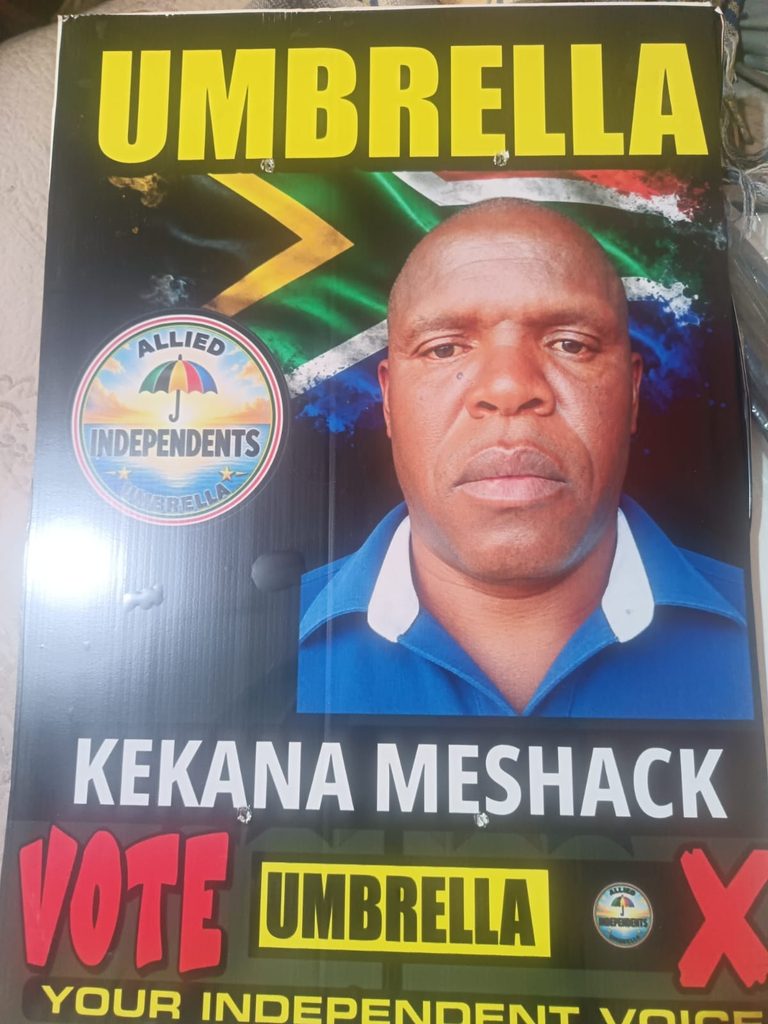
And for that, they are perceived as a threat and marginalised by some people in authority. They are called spies. Sponsored agents.
Of course, they are not ‘bloody agents’. They are committed activists. Highly principled.
Corrupt leaders and organisations that have betrayed the aspirations of the people do not like mirrors.
And these independents are mirrors. They reflect what those in power don’t want to see: that the work is not being done. The corruption. The betrayal.
Parties want councillors who nod.
These people ask.
Parties want voters who are quiet during the four years between elections.
These people want answers every month. That is why they are pushed to the side. Because people who serve scare people who rule. Because people who cannot be bought cannot be controlled.
This Run Is About Reclaiming People’s Power
This is the most important part. This is not about getting a seat, a driver or security.
This campaign and the build-up to 2027 mark a deep commitment to helping people reclaim their power.
Power to say no to a contractor who does a bad job and disappears. Power to say no to a leader who only comes at election time. We have seen that pattern for 33 years. Power to now say: “This ward belongs to us, not to a party, not to a tender.”
For too long, people have been told:
“Wait for us.”
“We will deliver.”
“Trust the process.”
“We know what is best for you.”
And 33 years later, the process has delivered potholes, dry taps and empty promises.
The independents are saying something different:
“Let’s do it ourselves. Let’s watch. Let’s demand. Let’s build.”
The people must demand accountability. It is their right.
That is what it means to oust corruption. Not with slogans. With presence.
Not with manifestos. With minutes, photos and follow-ups.
With eyeball-to-eyeball stand-offs. No guns.
They have chosen independence specifically to avoid party control and manipulation.
No whip telling them how to vote. No regional chairperson telling them which contractor to use. No head office deciding which community issue is “political” enough to care about.
Just the ward. Just the people. Just the problem.
The Cost Of Standing Alone
It will be hard. Anyone who says otherwise is lying. They will be called names. They will be told they have no qualifications. Or that they are overqualified. They will be left out of meetings. They will be accused of being spies, of being bought, of destroying the so-called liberation heritage. They will be isolated because a person who cannot be bought is dangerous to a system built on buying.
But they remain focused and dedicated to being agents of the change they want to see. They are the change agents we have been waiting for.
That is rare.

Most people want change until change asks them to sacrifice a Sunday.
Most people want change until change asks them to stand alone in a hostile meeting.
Many want change but prefer late-night drinking sessions to early-morning clean-ups.
Many want change but do not turn up at the polls.
The independents are still standing. They must stand.
Not because it is easy. Because the alternative is to accept defeat.
What Voters May Get If They Choose Them
If a community chooses an independent, here is what it gets: It gets a representative who knows the difference between a report and a result. It gets a representative who will sit in a dirty drain with the workers until it’s fixed. It gets a representative who will answer the phone on a Saturday when the water is off. It gets a representative who will say “I don’t know” instead of lying. It gets a representative who remembers being a volunteer and so treats other volunteers like gold.
They will not fix 120 years of neglect in five years. No one can.
But they will prove that one person can make the machine move an inch.
And one inch, repeated every month, becomes a road. Becomes a light. Becomes trust.
The point is not to replace one party with one person. Frankly, there is no difference between the ANC, the DA or the EFF, for that matter.
The point is to break the idea that only parties can govern.
To prove that accountability is possible without a logo.
They Are Grandsons Of The Struggle
This matters because of history.
Their grandfathers marched so that power would return to the people.
Not to a party. To the people.
Their fathers buried friends so that children could speak freely. Not so that children could be silenced by a different kind of boss.
There is a deep betrayal felt in these homes. Not at the idea of freedom. At the practice of it.
At watching the language of liberation used to justify new forms of exclusion. At watching money meant for houses disappear while the old houses still leak.
So the grandsons stand.
Not to reject the struggle. To finish it. To redefine its meaning and purpose.
To take it out of boardrooms and put it back in the street.
The Bigger Picture: A Democracy Growing Up
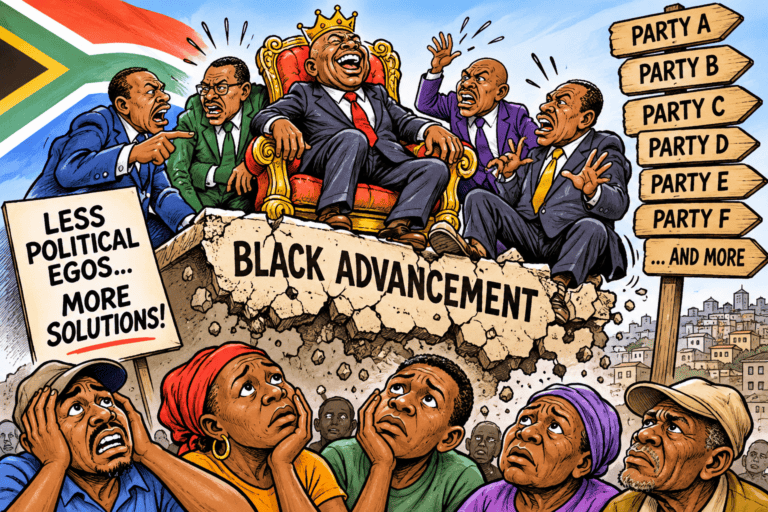
Yes, there are far too many political parties, close to 500, they say. But this independent wave is not chaos. It is maturity.
A young democracy was supposed to grow beyond slogans. It was supposed to produce citizens who think, not cadres who obey. It was supposed to produce leaders who serve, not leaders who are served.
When people stand as independents, they are testing that.
They are saying: “Judge me by what I do in this street, not by which colour I wear.”
That is uncomfortable for parties.
But it is healthy for democracy.
Because democracy dies when there is only one way to participate.
Raise Your Clenched Fists Again
To every son and grandson who has raised his hand: thank you. Hold up that Black Power salute. The clenched fist pointing at the heavens.
Thank you for refusing to believe the lie that only people with struggle credentials and degrees can lead.
Thank you for refusing to believe the lie that someone else will do it.
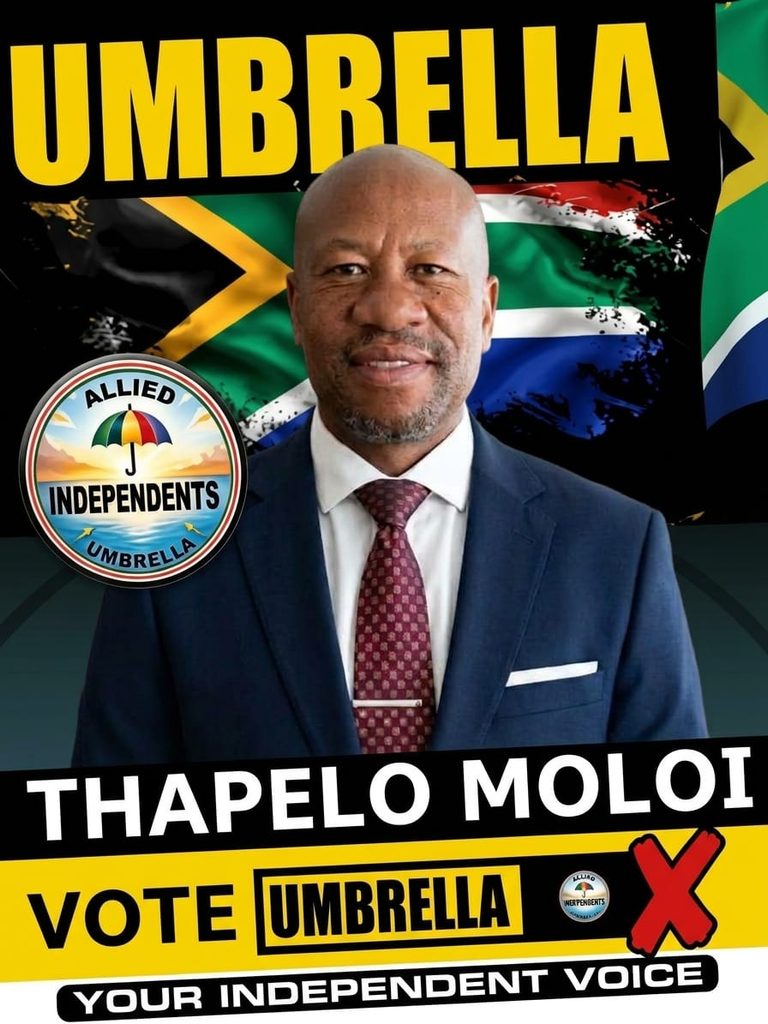
Thank you for refusing to become bitter even when you are marginalised.
Thank you for seeing the betrayal and choosing to build anyway.
The township has been judged by its outside for too long. Now it needs to be judged by the content of its character. And your character is showing up.
So keep guarding the schools on Sundays. Address churches in the mornings.
Keep chairing that community meeting even when only three people come.
Keep knocking on doors. Keep using political knowledge for action, not for arguments.
The ancestors who built these townships with their hands are watching. The children who walk past those schools are watching. And the country is watching.
You are not running to become important, a VVIP with bodyguards in a black car. You are running because you already are important to the people you serve.
Raise your hand again on voting day.
And let’s see what happens when people from the school of hard knocks are given the chalk.
You are not alone.
The work is not finished.
And the people must show up for themselves. After all, no one is coming to save us. We must save ourselves.
And the power is in our hands.
Get the morning briefing
Our editors’ choice of the day’s stories, in your inbox at six.

Comments
No comments yet.