By Themba Khumalo
Every time someone tells me life was better under apartheid, I feel the words like a slap across the face. My blood boils, my jaw tightens, and I have to fight the urge to ask what kind of historical amnesia makes a person polish the boots that once stood on our necks.
But when those words come from people who claim they fought for liberation, the betrayal cuts deeper. These are people who know what apartheid did. They know the bodies it buried, the families it shattered and the lives it crushed. They know what freedom cost. Yet here they are, rummaging through the rubbish heap of history, picking out the old chains and calling them jewellery.
What exactly are you remembering with such affection? The passbook arrests? The forced removals? The police torture chambers? The mothers who waited for sons who never came home? Or have the years of disappointment under democracy made the past look so attractive that you have forgotten what it felt like to live beneath its boot?
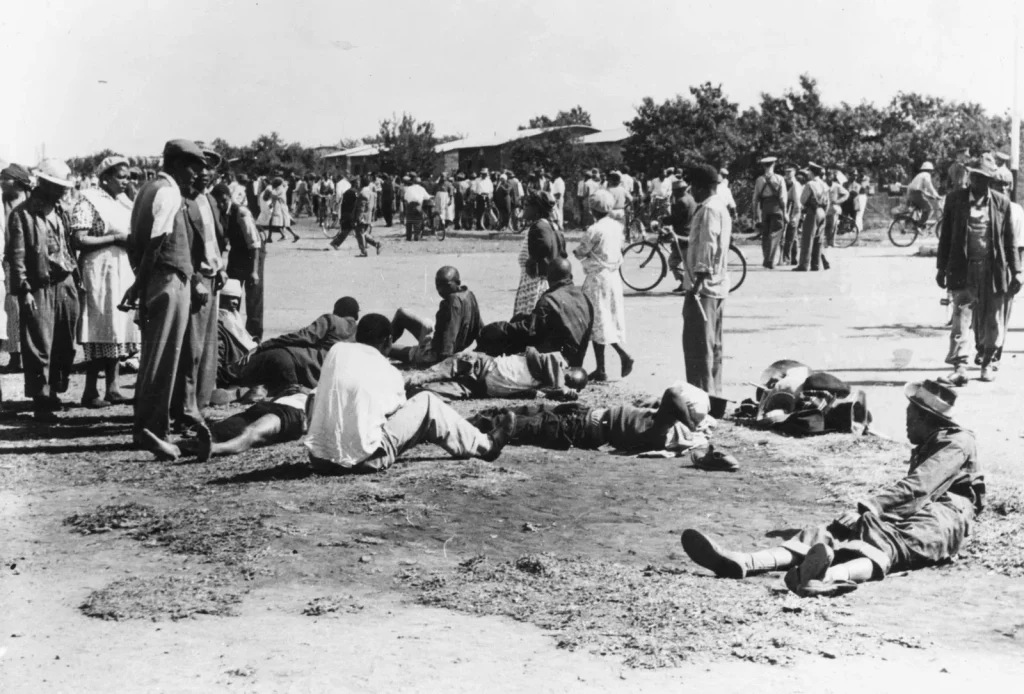
The wounded being tended to after police opened fire on an anti-apartheid demonstration in Sharpeville, 1960. – Photo: Central Press/Hulton Archive/Getty Images
Pray tell, if apartheid was so good, why did you take up arms?
I think, up to a limit, I understand the frustration. I can make some sense of the anger. South Africa’s democracy has left too many people struggling to survive in a country that promised them a better life. The corruption is sickening. The unemployment is brutal. Poverty continues to grind people into the dust, while inequality stretches its jaws wider and wider. Politicians make promises with the enthusiasm of travelling salesmen and deliver excuses with the regularity of a broken clock. Those who stole the people’s money often sleep comfortably while the people they robbed lie awake wondering where the next meal will come from.
For millions, freedom has arrived without the economic security they were promised. The right to vote does not put food on the table. A Constitution cannot, by itself, pay school fees, create a job or put a roof over a family’s head. There are people who have spent three decades in democracy waiting for a decent life, and their patience is wearing thin.
Their anger is justified. Their disappointment is understandable. But the conclusion that apartheid was better is where frustration begins to betray history. A failed democracy does not make oppression a success. A corrupt government does not turn a racist state into a decent one.
We must stop confusing the failure of those who inherited freedom with the virtues of those who denied it.
Apartheid was not a government that occasionally got things wrong. It was a system built to ensure that one racial group enjoyed the privileges of citizenship while another was denied the basic rights of a human being. Its cruelty was not an unfortunate side effect. It was written into the law, enforced by the police and defended by the courts.
Look at what the law actually did.
The 1913 Natives Land Act barred Black people from buying or renting land in most parts of South Africa. The 1936 Native Trust and Land Act expanded the designated areas, but Black people still remained confined to a fraction of the country’s land. Families were uprooted, livelihoods destroyed and generations pushed towards overcrowded reserves and townships. People who had farmed their land were turned into labourers on land they no longer owned. The dispossession was not an accident of history. It was organised and given the protection of the law.
Then came the Population Registration Act of 1950, which classified people by race, and the Group Areas Act of the same year, which gave the state the power to determine where people could live and own property. Families were driven from homes and neighbourhoods where they had put down roots. Communities were broken up because the colour of their inhabitants offended the racial order of the state.
Imagine being told that the home where your children were born was no longer yours to occupy because the government had decided that your race did not belong there. Imagine watching your house demolished, your neighbours scattered and the life you had built reduced to rubble. That was not a bad municipal decision. It was the machinery of racial domination at work.
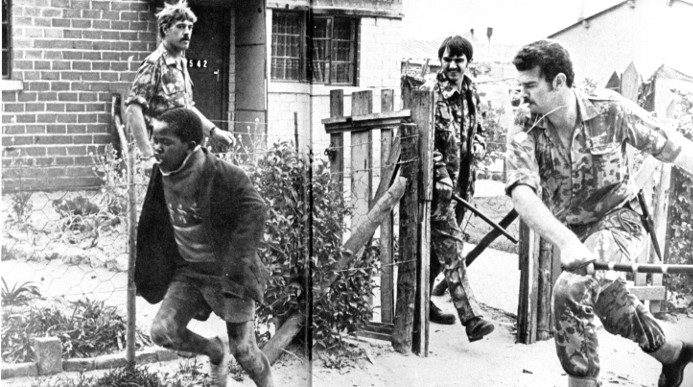
The pass laws went further. A Black person could be stopped and arrested for failing to produce the required documents. The state made a man’s freedom of movement conditional on paperwork and official permission. Where he could live, whether he could remain in a city and whether he could seek work were matters the white government claimed the power to decide.
A Black man could work in Johannesburg, help build its buildings, clean its offices and keep its industries running, yet his right to remain in the city was restricted by the very government whose economy depended on his labour. He was welcome when his hands were needed and unwanted when he wanted to bring his family home.
What kind of country treats a grown man as a trespasser in the land of his birth?
The Bantu Education Act of 1953 entrenched an education system designed to prepare Black children for a subordinate place in society. Black education was not organised around giving children the same opportunities as their white counterparts. It was shaped by a political order that wanted to keep Black people in positions of servitude and deny them equal access to opportunity.
Think about the cruelty of that. A child is born with talent, intelligence and dreams, but the state decides that the colour of that child’s skin should determine the quality of education available to them and the horizons they are permitted to reach.
A white child and a Black child could possess the same ability, the same hunger to learn and the same determination to succeed. The system did not care. One was raised in a society designed to expand his opportunities; the other was educated under a system that restricted them.
And then we are asked to remember apartheid fondly because certain things appeared to work better?
Work better for whom?
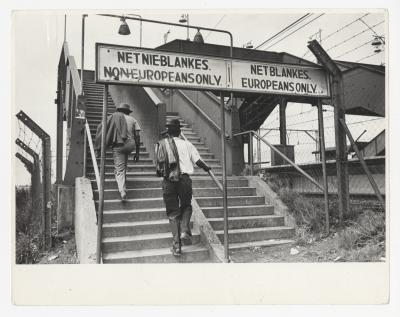
The Reservation of Separate Amenities Act of 1953 entrenched racial segregation in public facilities. Separate entrances, benches, waiting rooms and other public amenities were among the everyday reminders that Black people were not considered equal. The indignity was deliberate. It was meant to teach Black people their supposed place in society and remind white people that the state stood behind their privilege.
Apartheid did not need to announce every morning that Black people were inferior. It communicated that message through the benches people were permitted to occupy, the schools they attended, the neighbourhoods in which they could live and the doors through which they were allowed to enter.
This is what people conveniently forget when they romanticise the past. They remember a familiar routine and mistake it for a good life. They remember the price of a loaf of bread but forget the price a Black person paid for daring to challenge the system. They remember the orderliness of certain streets but ignore the violence required to keep millions of people in their designated places.
And when people resisted, the state showed them what its version of order meant.
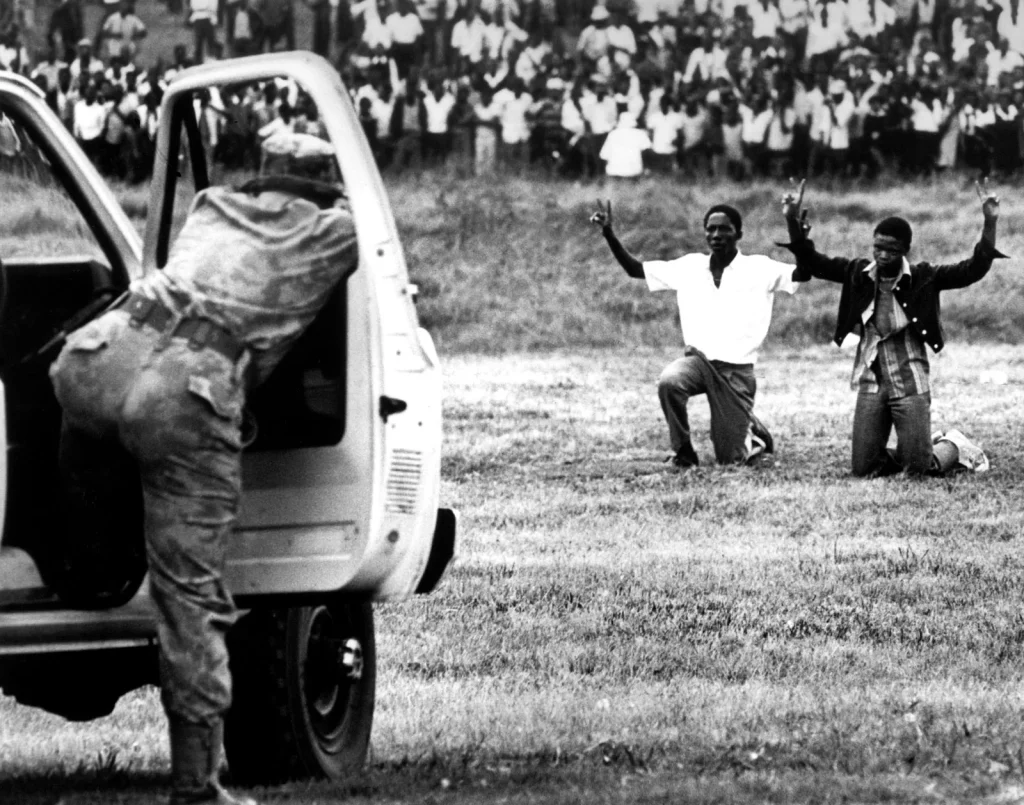
On 21 March 1960, police opened fire on protesters in Sharpeville who had gathered in opposition to the pass laws. At least 69 people were killed, and many more were wounded. The victims were not an invading army. They were people challenging a law that controlled their movement and humiliated them in their own country.
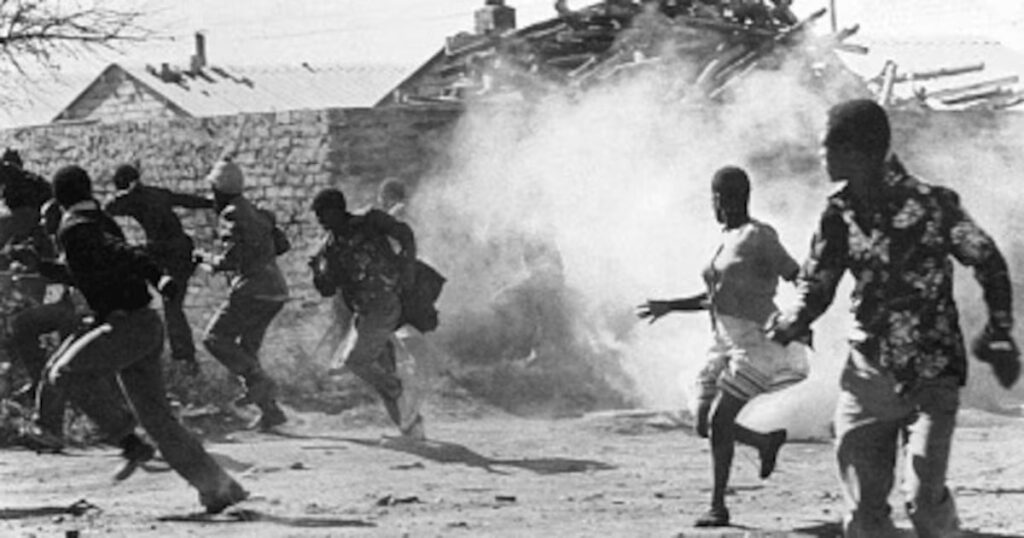
On 16 June 1976, schoolchildren in Soweto rose against the imposition of Afrikaans as a medium of instruction. The uprising was met with state violence, and children were among those shot dead. One of the most enduring images of that day is the sight of a wounded Hector Pieterson being carried away by another young person.
These were children. Their offence was resistance to a system that sought to dictate the terms of their education and their future.
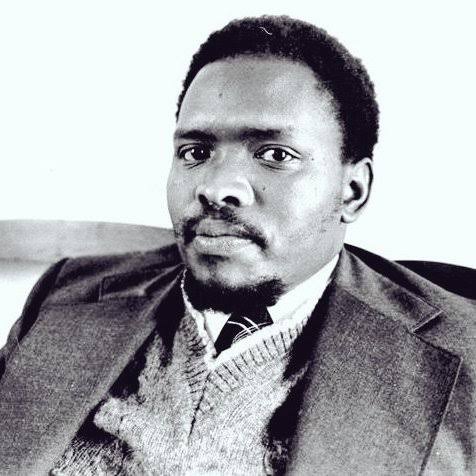
Steve Biko, the Black Consciousness leader, died in police custody in September 1977 after being detained and assaulted by security police. His death became another terrible reminder of what the apartheid state could do to those who challenged its authority.
This was the country some people now remember as better.
Better for whom? Better in what sense? Better because the state could silence opposition through detention, banning orders and imprisonment? Better because people could be uprooted from their homes, separated from their families and treated as criminals for violating laws designed to keep them subordinate?
We should not have to remind anyone that a country cannot be judged only by the convenience it offers those who enjoy its privileges. A society must also be judged by how it treats those over whom it exercises power.
For Black South Africans, apartheid was a daily assault on dignity. It told them where they could live, where they could work, which schools they could attend, which facilities they could use and what political rights they could exercise. It sought to control their bodies, their movement, their labour and their future.
Black people were not literally outside the law. They were trapped inside a legal system that assigned rights according to race and protected a structure of white domination. That is what made apartheid so vicious: it dressed injustice in the respectable clothes of legislation.
The courts, the police and the bureaucracy were not neutral observers of this arrangement. They were instruments through which it operated. The law became a fence around privilege and a weapon against those who demanded equality.
So when somebody says apartheid was better, I want to know whether they have forgotten what it meant to live under a government that did not recognise them as political equals. Have they forgotten that the majority of the population could not elect the government that ruled them? Have they forgotten the forced removals, the pass raids, the racial classifications and the fear that accompanied resistance?
Or has the misery of the present become so unbearable that the past has acquired a flattering glow?
There is a reason this happens. Human beings often compare what they know with what they are experiencing now. When the present hurts, the past can become a refuge, even when that past was cruel. Familiarity can masquerade as comfort. A person may remember the predictability of a routine without remembering the injustice that shaped it.
But memory without honesty becomes a dangerous thing.
We must also confront another failure: generations of South Africans have been left with too little room to imagine a society organised differently from the systems they inherited. Colonialism and apartheid did not only dispossess African people of land and wealth. They undermined African institutions, marginalised indigenous knowledge and imposed political and economic arrangements designed around white power and privilege.
The damage was not confined to the years in which those systems operated. Their consequences survived in patterns of land ownership, economic opportunity, education and social inequality. The end of apartheid did not automatically dismantle every structure it had built.
Yet the answer is not to surrender to the idea that we have only two choices: the oppression of yesterday or the disappointment of today.
That is a false choice.
We do not have to defend the present simply because it replaced apartheid. Nor do we have to rehabilitate apartheid because the present has failed us. We can condemn the corruption of our democracy without pretending that racial domination was an acceptable alternative. We can demand competent government, jobs, functioning municipalities, safe communities and an economy that gives ordinary people a fair chance without surrendering our understanding of what freedom means.
Democracy is not a gift that exempts those in power from criticism. It is a system in which the people have the right to demand answers, remove leaders and insist that public institutions serve them. When those institutions fail, the task is to confront that failure, not to romanticise a government that denied the majority those rights in the first place.
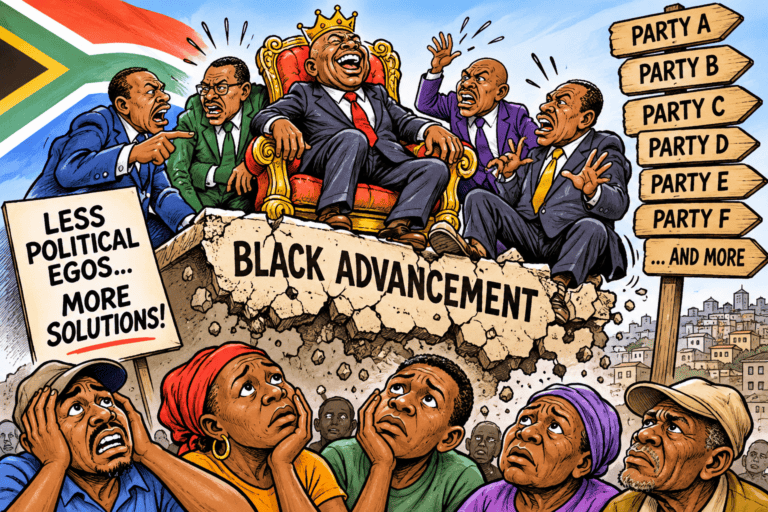
The real challenge is to imagine more than a change of faces at the top. It is to ask what kind of economy can provide decent work, what kind of education can release the potential of every child, what kind of public institutions can be trusted with public money and what kind of society can restore the dignity that centuries of dispossession tried to destroy.
We must question what we inherited. We must examine the systems that continue to shape our lives. We must recover the histories, knowledge and traditions that colonial rule tried to push to the margins. And we must build institutions that serve the people rather than a small circle of political and economic insiders.
That is not a call to return to some romanticised precolonial past, nor is it an argument for replacing one form of domination with another. It is a demand that we stop treating the arrangements handed down by history as the limits of what South Africa can become.
The greatest victory of colonialism and apartheid may yet be that, long after their laws have been repealed, we find ourselves arguing over which of their consequences we should learn to live with.
That is the trap we must escape.
The struggle for liberation was not fought so that Black people could exchange political exclusion for economic desperation and then be told to be grateful. Nor was it fought so that the failures of a democratic government could be used to wash the blood from the hands of the apartheid state.
People fought because they wanted to live as human beings in their own country, with the right to determine their own future. They wanted land, dignity, political freedom and a fair chance for their children. Those demands have not become less legitimate because the government elected to fulfil them has disappointed millions.
If democracy has failed to deliver the life people deserve, then democracy must be made to work. If the economy continues to reproduce poverty and inequality, then that economy must be challenged. If leaders steal from the public, they must answer for it. None of these tasks requires us to lie about the past.
We cannot repair the present by making peace with the lie that apartheid was better. The people who fought for liberation did not risk everything because they wanted a more comfortable version of oppression. They fought because oppression itself was intolerable.
We owe them the honesty to remember that. More importantly, we owe it to the children who will inherit this country to stop confusing the failure of freedom’s custodians with the failure of freedom itself.
Apartheid was not better. It was a system that denied the majority their land, their political voice and their equal humanity. Democracy has not yet delivered everything it promised, but its failures are not an argument for restoring the injustice it replaced.
The answer is neither nostalgia nor resignation. It is the unfinished work of building a country in which no one’s dignity depends on the colour of their skin, their wealth or their proximity to power.
We must demand more from the present without surrendering the truth about the past. And we must dare to imagine a future that is not a choice between two forms of misery, but something better than either.
Get the morning briefing
Our editors’ choice of the day’s stories, in your inbox at six.



Comments
No comments yet.