
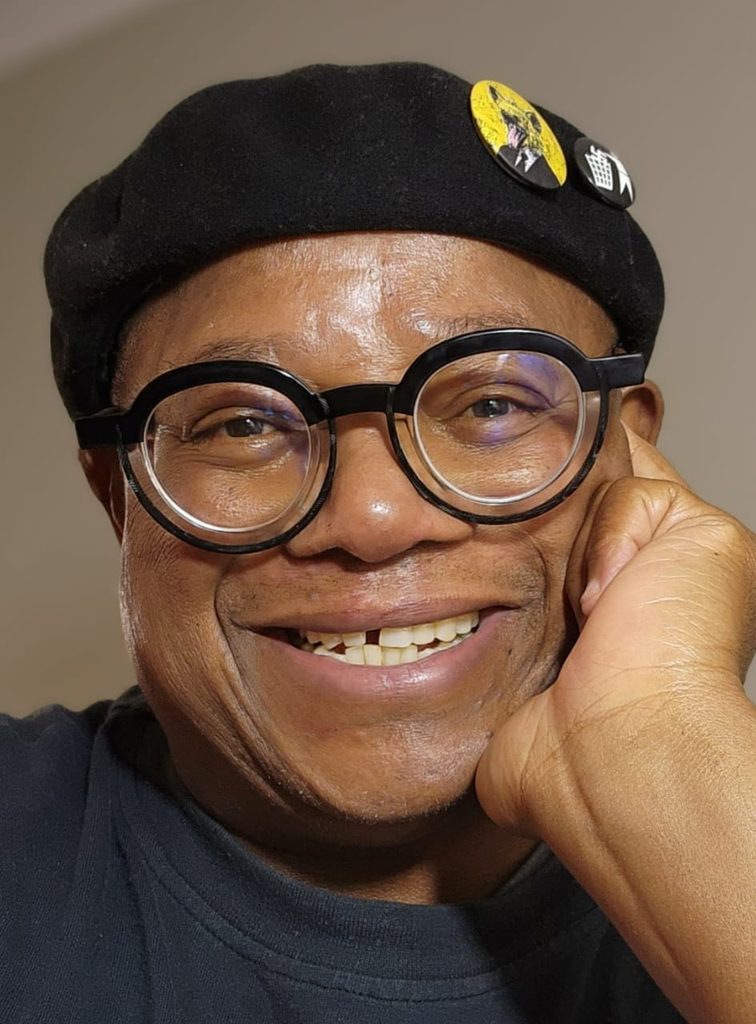
By Sandile Memela
A lie is told in the township to make children feel better about failing. The lie goes like this: “Speaking good English does not equal intelligence.”
It is a comforting lie. It is a dangerous lie. And it is why township students perform at 30%.
I have spent 40 years in newsrooms, in government, in publishing. Let me tell you what I have seen: When you are a great reader who understands and commands English, people think you are smarter. And it is not because they are fooled. It is because you are smarter.
Even Oprah Winfrey believes this. Oprah, who grew up in poverty in rural Mississippi, built a billion-dollar empire on one insight: reading leads to good English and the ability to command language in a manner that others cannot. That is why she started Oprah’s Book Club. That is why she says, “Books were my pass to personal freedom.”
She knew that if you can read, you can think. And you can speak. If you can speak, you can persuade. If you can persuade, you can lead.
Reading and good English are not decorations. They are keys to success. And township thinking that tries to separate the two is mistaken and misleading.
English Is Not Just A Language. It Is Power
We must stop lying to our children and other black people.
In South Africa, English is the language of the Constitution, of the court, of the tender document, of the university exam, of the job interview, of the bank loan, of the internet, of science. You can hate that fact. You can call it colonial. But you cannot pay rent with your hatred of it.
To say “English is not intelligence” while your child writes matric in English, studies medicine in English, and applies for a job at Monopoly Capital in English, is cruelty. You are preparing him for a world that does not exist.
Intelligence is the ability to solve problems in the world you actually live in. In the world we live in, the problem is presented in English. If you cannot decode it, you cannot solve it. Therefore, your intelligence cannot show.
A child who knows the answer in Sepedi but cannot express it in English in the exam room will get 30%. Not because he is stupid, but because he is not equipped. The system will record him as stupid. The 30% will follow him for life.
Reading English Is How The Brain Learns To Think
People think reading is about books. It is not. Reading is about training the brain.
A great reader does three things that a non-reader cannot do:
First, he accumulates vocabulary. Every time you read a word you do not know and you look it up, you buy a new tool. A child with 500 words can describe his anger as “I am angry.” A child with 5,000 words can say “I am frustrated, disappointed, marginalised.”
The second child will be heard. The first child will be ignored. Both are angry. Only one can command attention.
Second, reading teaches logic. A sentence has a subject, a verb, an object. A paragraph has an argument, evidence, conclusion. A book has chapters that build. When you read, you internalise structure. When you speak, you reproduce structure. That is why people think readers are smarter. Because they speak in paragraphs, not in slogans. They argue sequentially. They do not jump.
Third, reading gives you other people’s memories. If you have never been to Parliament but you have read 20 books about politics, you can debate a minister. If you have never left Soweto but you have read about Singapore, you can imagine a better Soweto.
This is what Oprah understood. Reading is more than just about English. It is about commanding reality.
The 30% Problem Is An English Reading Problem.
Go to any township high school in the late afternoon. Ask a Grade 11 learner: When last did you read a book that was not prescribed? He will laugh. Ask: When you find a word you don’t understand, do you look it up in a dictionary? He will look at you as if you are crazy. Ask: How many pages do you read a day? Zero.
Then we act shocked when that child gets 30% in Life Sciences, 30% in Maths, 30% in History. We blame the teacher. We blame apartheid. We blame Bantu Education.
But the truth is simple: He neither reads nor looks up words he does not understand. He does not have a dictionary.
You cannot pass Life Sciences or History if you cannot read the question: “Explain the process of photosynthesis and its significance for food security.” If you do not know what “process” means, what “significance” means, what “security” means, you have already failed before you start writing. You will write two lines and stop.
Township students do not fail because they are less intelligent than Model C students or those who actively learn English. They fail because Model C students read three books a month and they read zero. Over 12 years, that is a gap of 400 books. That is not an intelligence gap. That is a mileage gap.
Serious Model C parents know this. That is why there is a bookshelf at home, a dictionary on the table, a library card. In the township, we have removed the bookshelf and replaced it with a 75-inch TV playing Uzalo. Then we say English is not intelligence.
The Comforting Lie Must End.
I understand why we say “English does not equal intelligence.” We say it to protect our pride. To hide an inferiority complex. Or to feel superior because you speak an indigenous language.
We were told our languages are inferior, so we defend them by attacking English. It is understandable. But it is self-sabotage.
We can love our languages and master English. One does not cancel the other. Steve Biko spoke isiXhosa perfectly and English perfectly. He knew that to fight the oppressor you must command his language better than him.
To tell a child that English does not matter is to lock him out of the very room where decisions about his life are made. It is not Pan-African. It is anti-child.
Let us be honest: When you stand up at a community meeting, and you command English, clear and fluent, with precise words, people listen. They think you are educated, serious, leadership material. When you stand up and fumble, searching for words, mixing, saying “Eh, you know, that thing”, people dismiss you. Not because they are colonised. Because command of language is a proxy for command of thought.
If you cannot command words, how will you command a project, a budget, a staff?
The Key Is In Your Hand
Success in modern South Africa has a very simple formula, whether we like it or not: Read + Look up words + Practise speaking = Command English = People trust you with opportunity.
It is not magic. It is mileage.
Every township home must have a small dictionary, even a R50 one from Shoprite. Every child must be told: If you meet a word you do not know, stop. Write it down. Look it up. Use it three times today. That is how Oprah became Oprah. Not by saying English does not matter.
Township thinking that English does not equal intelligence is mistaken and misleading because it confuses pride with preparation. You can be proud of who you are and still understand that the gate to success is guarded by a language.
You can either learn the password or stand outside shouting that the gate is unjust.
The gate will not open because you are angry. It will open because you have the key.
And the key is reading and commanding English. It does not mean abandoning African languages.
Get the morning briefing
Our editors’ choice of the day’s stories, in your inbox at six.




Comments
No comments yet.