By Themba Khumalo
For months we have sat through the full pageant. There were rallies where the sound system was louder than any idea on the stage.
Manifesto launches took place in local stadiums, with the stands dressed in party colours, songs and chants rolling down the terraces, and speeches long enough to outlast the singing, thick with adjectives.
There were stunts, too. We watched Helen Zille roll into a DA rally in a BMW 3 Series.
There were debates in which the candidates, sweating and hoarse, howled over one another like drunks in a crowded shebeen, each one mistaking volume for argument and interruption for wit.
Cheap T-shirts came by the thousand and shrank in the first wash, unlike the lofty promises that came with them, which only swelled. And every party made the same promise in a different, cleverly tailored vocabulary.
One called it “service delivery”, another “infrastructure renewal”, a third “a capable and caring municipality”, and every last one of them meant the same thing: the tap will run, the pothole will close, and the sewage will go back underground. Same sums, different suits.
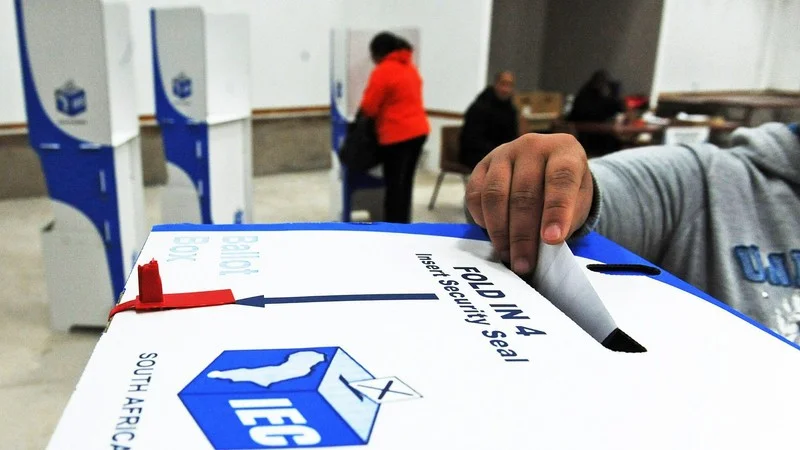
Now the circus strikes its tent, and what remains is the only thing that was ever truly ours: a pencil on a string and a ballot paper.
Tomorrow, thousands of council seats go up for grabs, and the country walks to the polls in a mood that polite people call anger and the rest of us call by its proper name. We are sick to the back teeth. We have been promised in every register and billed in all of them.
You know why. You have lived it. The tap coughs, spits and gives up. Sewage finds its own way down your street as if it holds the title deed. The pothole outside your gate has grown from an irritation into a feature of the landscape, a small crater with its own weather. The refuse sits on the corner until it develops a personality. All the while, the municipal purse is emptied by people who treat the ratepayer’s money as a buffet, or by people so incompetent that the difference is academic.
Fury, then. Of course. You were robbed in daylight and sent the invoice, and the anger is all that is left in your pocket. But fury has a way of moving the polls, so let us see what it has done to them.
The polls are a fog bank with a few lighthouses poking through, and the brightest one is a lamp nobody else has seen. The DA’s own private numbers, never revealed to the public, have it ahead in six of the eight metros, and ahead in Johannesburg by a distance that would make a boxing referee stop the fight. Forgive me if I wait for the independent evidence.
The more sober surveys tell a humbler story. The DA leads in Johannesburg and Tshwane, but by roughly a third of the vote, a lead you could lose in a bad week. In Ekurhuleni and Nelson Mandela Bay, the DA and the ANC are separated by less than the margin of error, which is a polite way of saying nobody knows. Nationally, the ANC still limps ahead of the DA, 32 per cent to 26, and other surveys find the same tangle in several more cities.
Here is my reading of the tea leaves. Cape Town will almost certainly stay blue, and Tshwane might tip that way. Everywhere else the DA will need friends, and friends in politics come with invoices.
The ANC is about to take the worst beating it has yet suffered in the metros, and it will have earned every bruise. Voters punish hardest where a party has governed longest, and the ANC has governed most cities into the ground. But anyone who writes its obituary has not driven through the districts and the small towns, where the party’s roots still grip the soil like couch grass. Count it out, and it will be back at the table on Thursday morning.
Down in eThekwini, the MK Party is polling somewhere between 43 and 55 per cent, a range wide enough to park a taxi rank in. The EFF has lost some of its bluster, though the youngest voters are still flocking to it, and ActionSA is polling in double digits across the Gauteng metros. Put it all together, and you get councils where nobody holds a majority and everybody holds a grudge.
The real winners may be the small parties that scrape home with a seat or two and find themselves holding the casting vote like a loaded gun.
So can this election rescue our failing municipalities? On its own, no. I take no pleasure in saying so.
The rot goes deeper than whoever wears the mayoral chain. The Auditor-General found that only about 15 per cent of municipalities managed a clean audit. Fifteen. More than 100 of them keep passing budgets with no money behind them, year after year, like a man writing cheques on a closed bank account.
Nobody is made to answer for anything. Critical posts sit vacant for years while the work they were meant to do rots in a drawer. These are failures of skill, administration and accountability, and no new mayor can fix them before the year is over, however loudly they promise.
The likeliest result makes matters worse. Hung councils are coming almost everywhere, and we know exactly how that film ends, because Johannesburg has been screening it on a loop. Seven mayors since 2021. Seven. A coalition stitched together over the spoils of office, rather than a shared programme, comes apart at the first budget vote. Then the city manager goes, the tenders are reset, the repair plans are binned, and residents are back to queueing at the water tanker.
You could vote for change tomorrow and find yourself ruled by chaos by next Easter.
What, then, would make this vote count?
Parties must sign written coalition agreements with real targets, with numbers and dates, rather than a carve-up of portfolios and cars.
Parliament must move quickly on the Municipal Structures Amendment Bill, so that coalition councils stop collapsing every time somebody sulks.
Municipal managers and chief financial officers must be appointed for what they can do, not for whom they owe.
And you, the citizen, must keep up the pressure long after the ballot box is packed away.
That last duty is the one most of us drop. The ballot is a mighty instrument, but it is a tool and not a builder. It cannot renovate a broken town while you sleep. Tomorrow can open the door to a municipality that works, and what comes through that door depends on you.
So when you stand in that booth, do not think about the posters, the T-shirts or the man who promised you the moon. Think about your street, your children walking past the sewage, the smell that no longer shocks you. Then ask which of these people will actually have to answer to you by Easter.
Mark your paper tomorrow. Then spend every day thereafter making sure whoever wins feels that chain for what it is: a leash, with your hand on the other end.
Get the morning briefing
Our editors’ choice of the day’s stories, in your inbox at six.



Comments
No comments yet.