By Staff Reporter
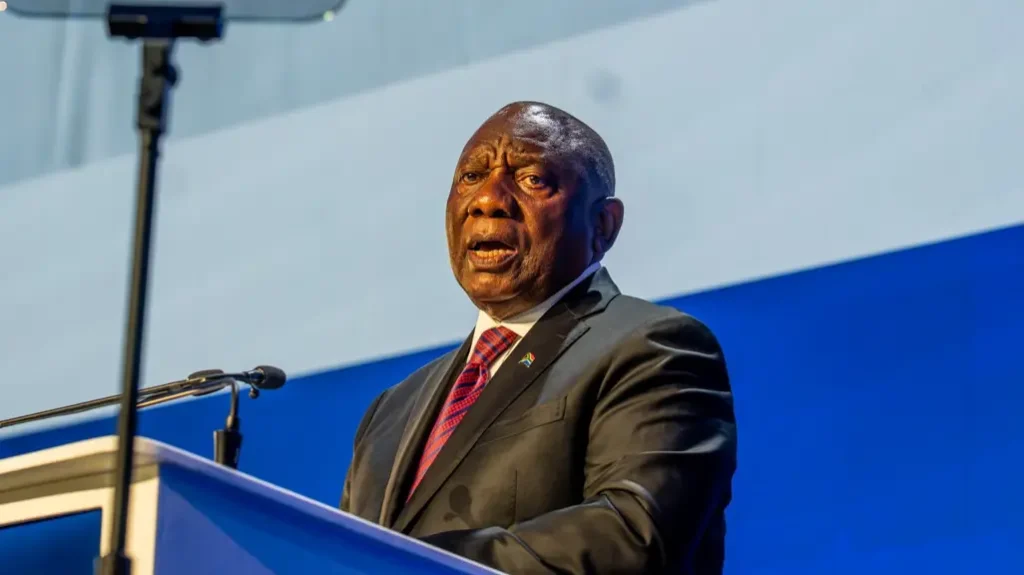
President Cyril Ramaphosa has urged political parties to put service delivery ahead of political power and positions as they negotiate governing arrangements in 139 hung municipal councils following the 2026 Local Government Elections.
Of South Africa’s 213 directly elected municipal councils, only 74 produced outright majorities, leaving nearly two-thirds of municipalities without a single party commanding a majority. The outcome means parties will have to negotiate coalition governments or minority governance agreements to establish political leadership in the affected councils.
KwaZulu-Natal has the highest number of hung councils, with 33 of its 44 municipalities requiring political agreements. The Western Cape has 15 hung councils out of 25, while all nine municipal councils in Gauteng failed to produce outright majorities.

The provincial breakdown also shows 19 hung councils in the Eastern Cape, 16 in the Northern Cape, 14 in the Free State, 12 in Limpopo, 11 in North West and 10 in Mpumalanga.
Addressing the announcement of the final election results at the Independent Electoral Commission’s (IEC) Results Operations Centre in Midrand on Sunday, Ramaphosa warned that political disagreements must not undermine municipal stability or delay essential services.
“In municipalities where no political party has secured an outright majority, the elected representatives will need to find common ground. This is not a weakness of democracy. It is an expression of the choices that the people have made,” he said.
The President cautioned parties against allowing negotiations to become contests over positions, privileges and the distribution of political power at the expense of residents.
“The stability of our municipalities cannot be sacrificed to narrow political interests. The delivery of essential services cannot be held hostage by political disagreements.
“The people did not cast their votes so that their representatives could spend the next five years fighting among themselves. They voted because they expect their lives to improve,” he said.
The African National Congress secured 53 outright municipal majorities, followed by the Democratic Alliance with 12, the Inkatha Freedom Party with five, the uMkhonto weSizwe Party with three and Rise Tsantsabane Communities with one.
The scale of the hung-council outcome places coalition negotiations at the centre of the next phase of local government, with parties required to reach agreements on the election of mayors, speakers and other office-bearers.
Under the Local Government: Municipal Structures Act, the first meeting of a newly elected municipal council must be convened within 14 days after the council has been declared elected. Councillors must use these meetings to elect the office-bearers required to constitute their respective councils.
Ramaphosa called for councils to be constituted without delay, urging political parties to negotiate in good faith and ensure that municipal administrations could begin their work.
He also stressed that municipal budgets had to be passed on time and that elected representatives needed to find common ground despite their political differences.
The President said communities expected functioning councils, capable administrations and responsible leadership, particularly against the backdrop of unemployment, the rising cost of living and inadequate municipal services.

Residents wanted reliable water and electricity, regular refuse collection, maintained public infrastructure and safer streets, he said.
Young people also needed employment and economic opportunities, while businesses required an environment in which they could operate and grow.
Ramaphosa said elected public representatives would be judged by their ability to translate election promises into tangible improvements in people’s daily lives.
He also referred to the revised White Paper on Local Government, which proposes changes to the way municipalities function and are managed.
The framework outlines measures to strengthen municipal finances, direct resources towards infrastructure maintenance and improve the efficiency and reliability of service delivery.
The President congratulated newly elected councillors, reminding them that their responsibilities extended beyond occupying positions in council chambers to listening to residents and responding to their concerns.

He said public office required elected representatives to put the interests of communities ahead of personal ambition and political advantage.
“The election is now over. The work of serving the people must begin,” he said.
The elections took place in a year marking 30 years since the Constitution was signed into law. Ramaphosa noted that more than 540 political parties and nearly 137 000 candidates had participated in the electoral contest.
He said the authority to govern was entrusted by the people to those they elected and had to be exercised in their interests.
“The people have spoken. Their verdict must be respected. Their concerns must be heard. And their expectations must now be met. Let us work together to make local government work for every South African,” he said.
The 2026 Local Government Elections were held on Wednesday, 4 November, with special voting taking place on 2 and 3 November. The IEC announced the final results at the Gallagher Convention Centre in Midrand on Sunday evening.
Get the morning briefing
Our editors’ choice of the day’s stories, in your inbox at six.
Comments
No comments yet.