By Staff Reporter
South Africa is moving towards a complete ban on alcohol in the blood of motorists, with Transport Minister Barbara Creecy signalling that the government wants to remove the legal grey area that currently allows drivers to consume alcohol and remain within the prescribed limit.
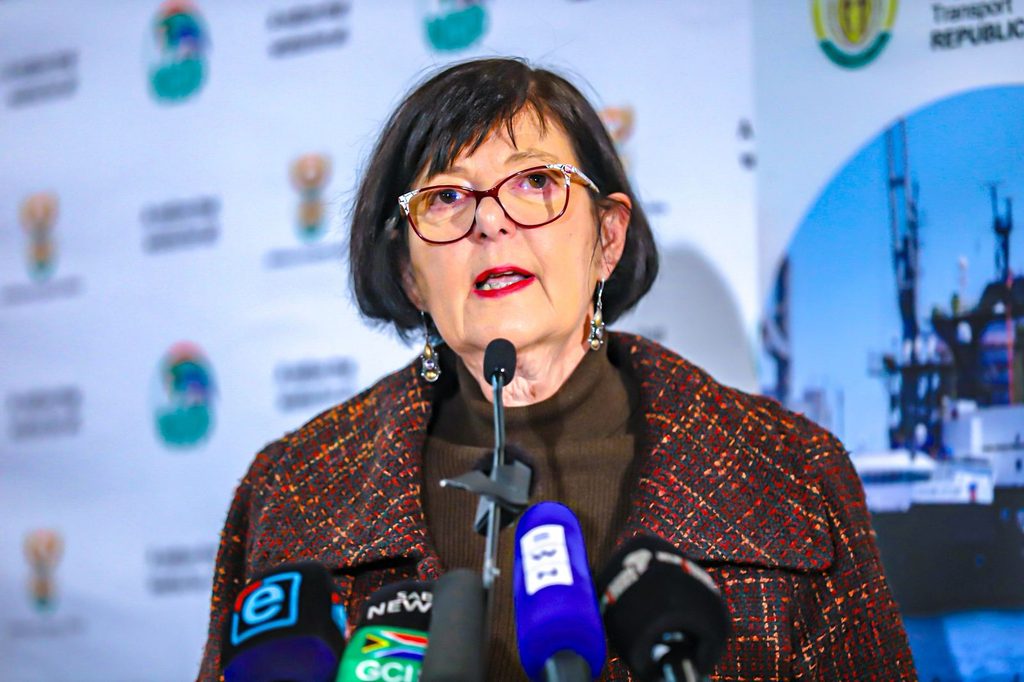
Creecy announced on Wednesday that amendments to Section 65 of the National Road Traffic Act are being prepared to introduce what she described as a “strict zero per cent blood alcohol policy”.
The proposed changes still require approval from the Chief State Law Adviser and the Socio-Economic Impact Assessment System before being taken to Cabinet, with the government hoping to secure Cabinet concurrence by the end of 2026.
“We are in the process of acquiring approval from the Chief State Law Advisor and the Socio-Economic Impact Assessment System (SEIAS) to secure Cabinet concurrence for this amendment by the end of 2026,” Creecy said at the Road Safety Practitioners’ Colloquium in Ekurhuleni.
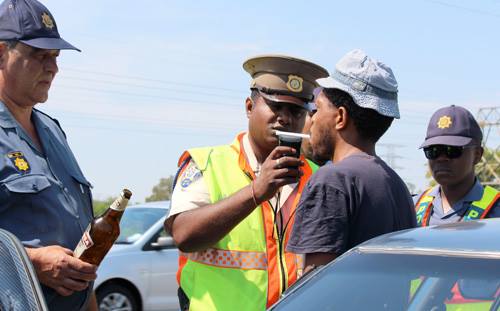
The proposal would represent a significant departure from the law as it stands. Section 65 currently prohibits ordinary motorists from driving with a blood alcohol concentration of 0.05g per 100ml or more, while the limit for professional drivers is 0.02g per 100ml. The corresponding breath-alcohol limits are 0.24mg and 0.10mg per 1,000ml, respectively.
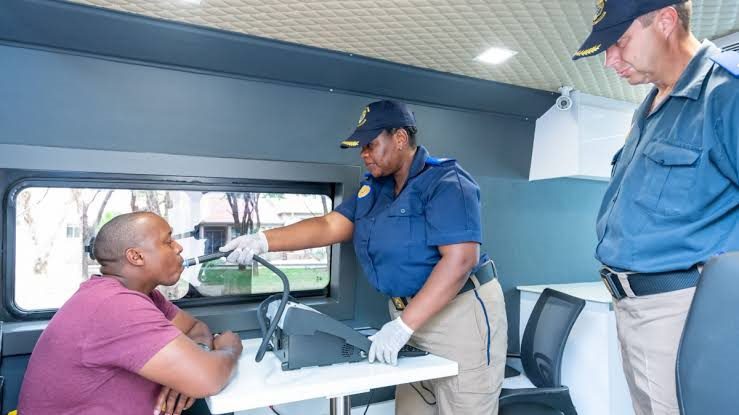
The government’s case is strengthened by the sheer scale of the problem. Creecy said that more than 18,000 people were arrested for drink-driving between March and the end of August this year, accounting for roughly a third of all traffic arrests during that period.
However, the proposed law also raises a more difficult question: will changing the legal limit actually make South Africa’s roads safer if enforcement remains weak and inconsistent?
That question has been raised by road-safety researchers and organisations outside government.
Caro Smit, founder and director of South Africans Against Drunk Driving, takes the opposite view. She supports the principle of a zero limit, arguing that the current system leaves motorists trying to calculate how much they may drink before driving.
“Zero is zero,” Smit said. “So, there’s no excuse for saying, ‘Oh, I didn’t know this would put me over the limit.’”
For Smit, the simplicity of the message is one of the strongest arguments for the proposed change.
“So I think it’s just very simple. It’s very clear,” she said.
But Smit has also identified a weakness that goes beyond the wording of the law: enforcement. She has said that low levels of testing and enforcement remain a major problem, while also pointing to the cost of alternatives such as e-hailing services for large sections of the population.
A peer-reviewed study published in the South African Journal of Science takes a more qualified position. Researchers Anesh Sukhai, Ashley van Niekerk and Mohamed Seedat support a zero-tolerance approach to drinking and driving, but have argued for a 0.02g/100ml threshold for ordinary motorists rather than an absolute zero-blood-alcohol limit.
Their concern is not that drinking and driving should be tolerated. Instead, they have pointed to the practical difficulties associated with an absolute zero threshold and the additional burden that could fall on an already resource-constrained enforcement and prosecution system.
The researchers have also argued for administrative rather than criminal sanctions in the 0.02g to 0.05g/100ml range. They warned that a zero BAC limit could result in greater enforcement, prosecution and legal challenges.
That distinction matters.
A zero-tolerance policy does not necessarily have to mean that every microscopic trace detected by an instrument results in a criminal prosecution. The researchers’ position is that the law should make it unmistakably clear that drinking before driving is unacceptable, while retaining a technically workable threshold for enforcement.
Their research also points to a larger issue: legislation cannot do the job on its own.
There is an important counterargument from the motoring sector.
The Automobile Association has previously warned that simply reducing the legal limit to zero could criminalise motorists without necessarily addressing the behaviour responsible for serious crashes. It raised the possibility of motorists registering small amounts of alcohol after using medication containing alcohol, even though they are not impaired.
“These proposed changes are concerning on a number of levels,” the AA said, arguing that, within the existing enforcement framework, “nothing will change” except that innocent drivers could be criminalised.
The organisation has also questioned whether changing the law will alter behaviour if enforcement does not change with it.
“How will traffic law enforcement change to accommodate this proposed amendment?” the AA asked.
The AA has argued instead for stronger road-safety education, more traffic officers, improved prosecution of existing drink-driving cases and greater police visibility in areas where drinking and driving are known to occur. It supports a 0.02g/100ml limit, describing it as a more effective and appropriate approach within a stronger enforcement framework.
The debate therefore extends beyond whether South Africans should drink and drive. On that point there is little room for argument; alcohol impairs driving ability and increases the danger to everyone sharing the road.
The real test is whether a new law will be accompanied by the enforcement capacity needed to make it meaningful.
South Africa’s existing legislation already prohibits driving while under the influence of alcohol. The problem is not that motorists have been given a legal right to drive while drunk. Instead, the law establishes measurable thresholds at which alcohol concentrations become offences, while the separate offence of driving under the influence addresses impairment.
The country’s road-fatality figures demonstrate why the distinction matters.
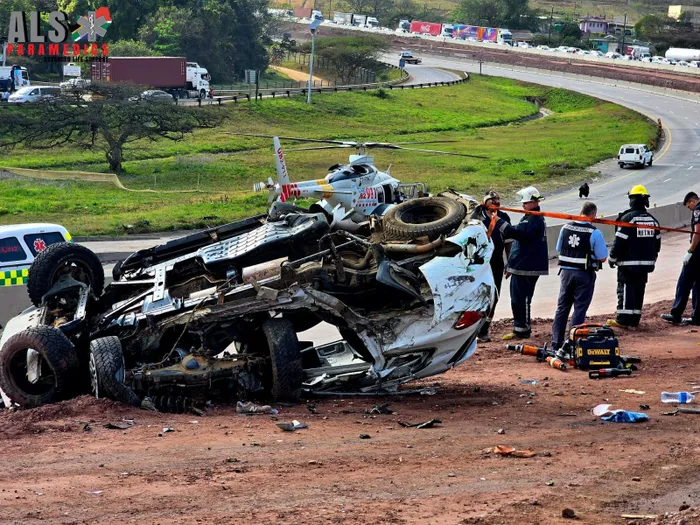
According to Creecy, 6,457 people had died on South African roads between 1 January and 23 August 2026, representing a nine per cent reduction compared with the same period in 2025. Pedestrians accounted for 48 per cent of those deaths, while more than a third occurred in Gauteng and KwaZulu-Natal.
Four provinces — the Eastern Cape, KwaZulu-Natal, Mpumalanga and North West — had met or exceeded the 10 per cent reduction target set for fatalities.
Those improvements are significant, but they do not amount to victory.
South Africa continues to lose close to 12,000 people a year on its roads. Creecy says the government wants to halve annual road deaths by 2030, in line with the United Nations Sustainable Development Goals.
“This is why we have set ourselves the target of halving our number of annual road fatalities by 2030,” Creecy said.
The minister also pointed to a six per cent reduction in crashes and fatalities in 2025 compared with 2024, a five per cent reduction in crashes and fatalities during the 2025/26 festive season, and a 39 per cent decline in fatalities during the 2026 Easter period compared with the peak recorded in 2024.
“While these statistics are commendable, the numbers remain too high,” Creecy said. “Every life lost represents the loss of a loved one, a parent and a breadwinner.”
Yet the pedestrian figures expose the limits of a policy focused primarily on motorists.
Nearly half of those who died during the first eight months of 2026 were pedestrians. The government says it has responded by increasing patrols around highways and entertainment areas and targeting people attempting to cross or walk along major roads.
Independent road-safety research has long identified pedestrians as particularly vulnerable in South Africa, where unsafe pedestrian infrastructure, high levels of exposure to traffic and alcohol-related risk intersect. The Unisa/SAMRC researchers argue that drink-driving legislation needs to form part of a wider road-safety strategy rather than operate as a stand-alone intervention.
The link between alcohol and fatal crashes is nevertheless difficult to dismiss. Previous research cited by the RTMC found driver alcohol intoxication accounted for 27.1 per cent of fatal crashes and estimated the annual economic cost at R18.2 billion.
There is therefore a strong case for tougher action. Even Smit, while backing zero, has acknowledged that enforcement remains critical. The AA, while opposing an absolute zero threshold, similarly insists that motorists who drink and drive must expect to be caught. The researchers, meanwhile, support zero tolerance while arguing for a workable threshold and stronger enforcement.
The disagreement is therefore less about whether drunk driving is dangerous than about what kind of law will actually save lives.
Creecy believes a clear prohibition is necessary.
Smit believes the clarity of “zero is zero” can change behaviour.
The researchers argue that zero tolerance must be backed by a technically workable threshold and adequate resources.
And the AA warns that changing the law without changing enforcement risks producing another statute that looks tougher on paper than it is on the road.
That is the question the government will ultimately have to answer.
South Africa has seen no shortage of laws designed to make roads safer. What motorists and families need now is not another impressive announcement, but a system in which the rules are understood, consistently enforced, and capable of catching dangerous drivers before they kill someone.
Creecy’s proposed amendment could become an important part of that system.
But the measure will ultimately be judged not by how strongly government describes it, nor by how many arrests are announced after roadblocks. It will be judged by whether fewer people die.
Get the morning briefing
Our editors’ choice of the day’s stories, in your inbox at six.



Comments
No comments yet.