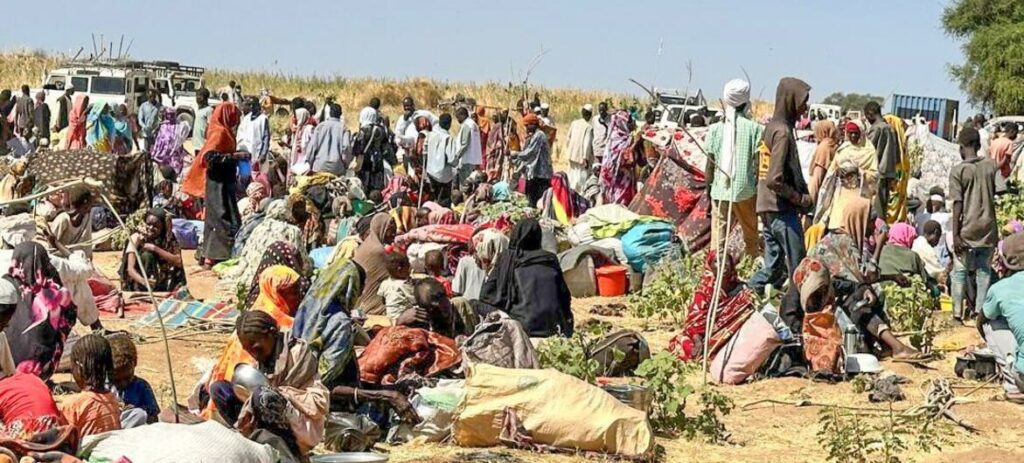
Residents who recently fled El Fasher describe schools turned into prisons, ransoms and forced propaganda, according to new testimony gathered by Amnesty International.
By Staff Reporter
For 18 months, El Fasher, the capital of North Darfur in western Sudan, was under siege. In October 2025, it fell to the Rapid Support Forces, the paramilitary group that has been fighting Sudan’s army since April 2023.
Amnesty International says the RSF’s campaign to take the city amounted to crimes against humanity and ethnic cleansing, and in July it published a report setting out its findings.
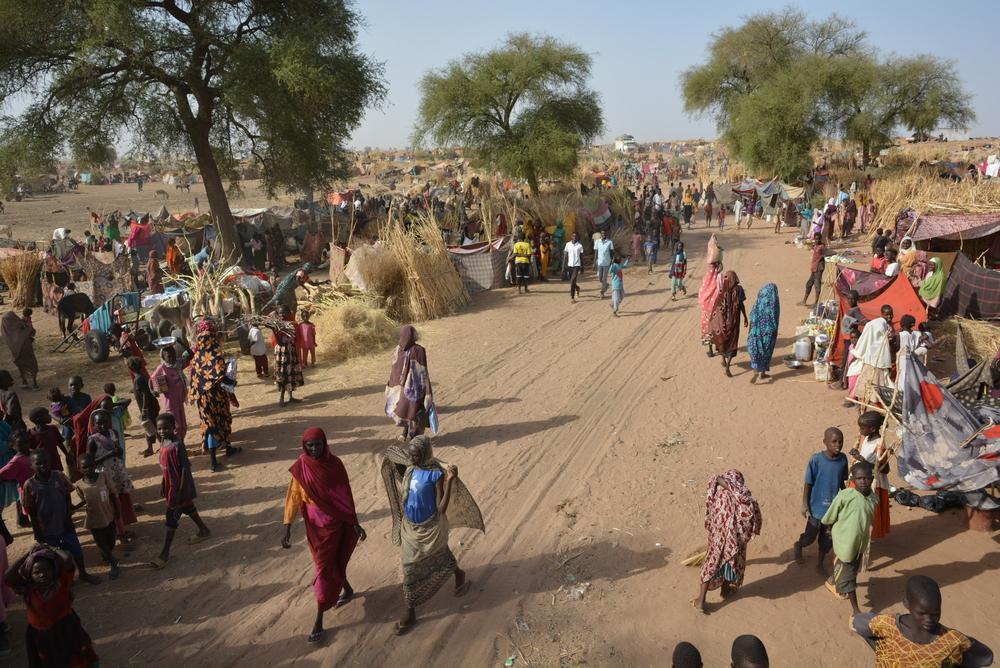
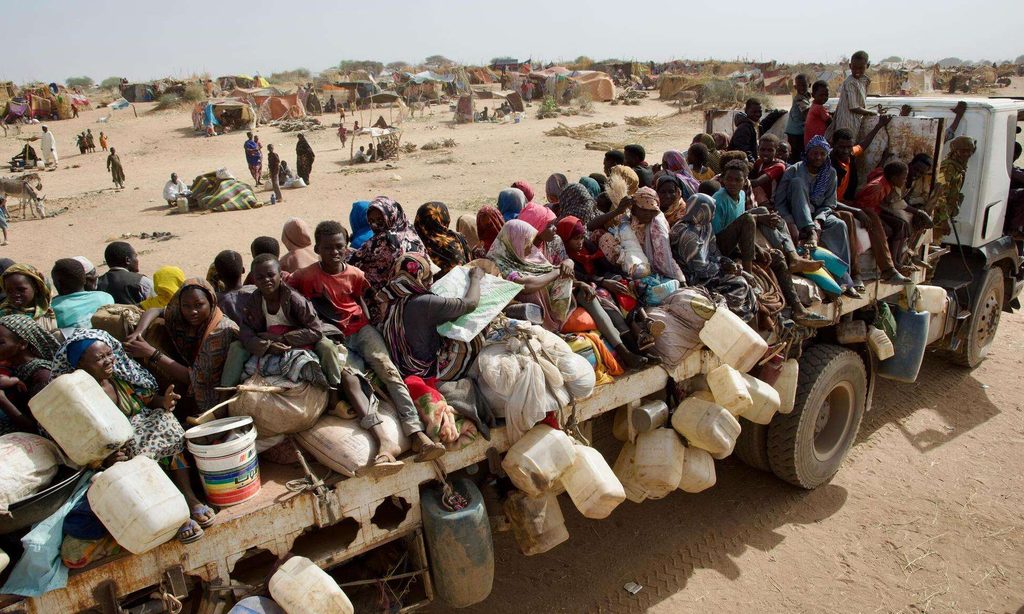
A year on, the question is what life is like for those who remain. Before the war, more than a million people lived in El Fasher. Humanitarian organisations working there now count fewer than 70,000. The RSF insists the city is safe and that civilians should come home.
Those who have recently got out tell a different story. One of them is Modathir, a 29-year-old from the Zaghawa community, one of the ethnic groups that Amnesty says were singled out for abuse. He spent months in Shala prison, one of the RSF’s detention sites, and escaped in July, running from house to house until he reached safety. Like the other civilians quoted here, he is identified only by a changed name.
The guards, he told Amnesty, had a stock phrase for inmates who slept too much. “You want to take a rest? We will give you permanent rest.”
“Torture is something which is permanent in any [RSF] detention,” he said. “They executed people who tried to look at them.”
His account is one of those gathered by the rights group, and it sits starkly against the RSF’s claims.
“The RSF’s claims that El Fasher is safe for civilians to return to after the horrific massacres that took place one year ago could not be further from the truth,” said Agnès Callamard, Amnesty’s Secretary General. “A pervasive pall of fear hangs over El Fasher today.”
An emptied city
Amnesty’s findings rest on interviews carried out in August and September with 25 civilians: 19 residents and six humanitarian workers. Of the residents, 15 left El Fasher between July and August, one was still inside, and three had fled earlier.
Amnesty wrote to the RSF on 9 October to put its findings to the group. It had received no reply by the time it published.
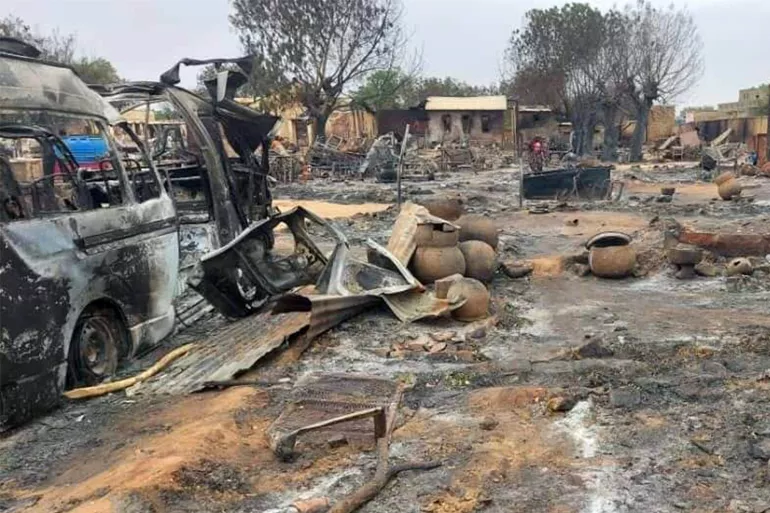
“The El Fasher I knew is gone; it is a completely destroyed city,” one resident who returned in June told Amnesty. “The public infrastructure, the schools, government institutions, hospitals, all are destroyed.”
Prison, beatings and ransom
Seventeen of the 19 residents interviewed had been detained by the RSF. Most were taken into custody during the capture of the city. Several were picked up later, when they went back to collect belongings from their homes or to look for missing relatives. All were held for months.
Men were mostly taken to prisons and detention centres, where they described killings, torture and almost nothing to eat or drink. Several said people from particular ethnic groups, notably the Zaghawa and the Masalit, were more likely to be detained and abused.
Mamoun, 33, also Zaghawa, was held at Shala until July. He said he saw guards shoot prisoners, and watched a man with untreated diabetes die after the guards refused to help him. “They take people out [of the cell] randomly; they accuse you of being with the Joint Forces or the military… And they beat you until you faint,” he said. “Sometimes I was beaten four times a day… It just depends on their mood.”
Every man interviewed got out in one of two ways: a relative paid a ransom, or he escaped. Even the ransom did not guarantee freedom. Musa, 23, said he and his father were detained at El Fasher Children’s Hospital in October 2025 and released more than a month later after paying. They were not allowed to leave the city. Instead, he said, they were taken to a house guarded by the RSF and kept there until about May, when they managed to escape.
During that time, Musa said, the two were made to collect corpses. They were also sometimes made to speak to a camera. “They paraded us inside the city and told us to talk [about how] El Fasher is good and safe,” he said. Amnesty describes this as part of an effort to persuade people to come back.
Schools turned into cells
Women, children and some older or injured men were held somewhere else: in schools that the RSF had turned into detention centres. Amnesty spoke to nine people held in this way. All were freed or escaped by July or August.
Haram, a 45-year-old Zaghawa woman, was held with her young children at a school in the Daraja Oula neighbourhood. Guards beat Zaghawa detainees seemingly at random, she said, and called the women a slur that implies servitude.
Hadia, 30, from the Gimir community, was held at a school with her children and hundreds of other women and children. Her husband had been shot by the RSF when the city fell. Food and water were scarce. Malnourished herself, she could not produce enough breast milk for her youngest child, who was 18 months old.
When she reached Tawila in August, all three of her children were diagnosed with malnutrition, and one was admitted to hospital. “My children were very skinny and weak,” she said.
Aloya, 54, spent several months in a school and never spoke her own language there, afraid that her Zaghawa identity would be discovered. “Daily there were four to five people dying,” she said. “Mostly from lack of food.”
Hatim, 38, a Berti man with a serious shrapnel wound to his jaw, was picked up in spring when he returned to his house for his things. He was held for about four months in a school with an estimated 300 other people, mostly women. He was beaten on his wounds after two escape attempts.
“You could not move freely, you had to stay there,” he said. The third attempt worked.
Amnesty also analysed satellite images of the school sites between October 2025 and September 2026. By September, several showed little daily activity, which suggests they may have been closed. Shala prison and a second facility, Mina al-Bari, still showed significant signs of human activity.
Watched at every turn
A small number of aid organisations are working in El Fasher again, residents said, but under close watch. The RSF follows their movements and stops residents from speaking freely to them.
“There is no complete blockage of [humanitarian] access,” one resident said, “but… when organisations are implementing activities [the RSF] will monitor implementation… There are no pictures, no interviews, no interactions of any kind.” Another said aid workers are given no private space to talk. “Everybody is terrorised.”
Forced labour is another feature of life under the RSF, Amnesty says. Men and women told the group they were made to clear bodies and rubble from the streets, or to cook and clean for RSF fighters without pay.
Misbah, 32, was detained by the RSF in October 2025 and taken to a house in Daraja Oula, where he cooked and cleaned for officers, tied up and barely fed. He said he was beaten every day. “I never thought I would survive,” he said.
Hunger on the horizon
Humanitarian workers told Amnesty they fear for children’s nutrition, especially after a poor harvest. Amnesty says official assessments point to the highest level of food insecurity, IPC Phase 5, as highly likely in North Darfur, including El Fasher, in the months ahead.
That falls short of a formal declaration. The IPC, the UN-backed food security monitor, issued an alert on 12 October warning that famine risk is rising across Greater Darfur and Greater Kordofan. It stressed that the alert was not a famine classification, and its Famine Review Committee said survey data were too thin for a full analysis, while noting that conditions were worsening fast.
A failure to act
Amnesty continues to document serious abuses by both sides in the war, including in El Obeid, in North Kordofan, and in South Kordofan and Blue Nile states.

Callamard accused the international community of failing El Fasher. There has been little accountability for abuses in North Darfur, she said, and the moves towards a ceasefire have been half-hearted. Amnesty knows of no diplomatic effort to set up an international force that could protect civilians in a meaningful way.
She also named the United Arab Emirates, which she said has continued to support the RSF while governments with influence have largely failed to denounce its role or hold it to account.
The Sudanese Armed Forces, she added, have consistently opposed extending an arms embargo and a ceasefire, still believing that a military solution is possible.
Amnesty is calling for an immediate ceasefire and the urgent deployment of an international protection force. It wants the RSF to release everyone arbitrarily detained and to end torture, unlawful killings and forced labour. It also wants all states to stop supplying arms to the parties to the conflict, including a halt to arms transfers to the UAE until it stops supplying the RSF in breach of the UN embargo on Darfur, and for the UN Security Council to extend the Darfur arms embargo to the whole country.
“Without a ceasefire, accountability, and a protection force,” Callamard said, “civilians will continue to suffer in El Fasher and across Sudan.
Get the morning briefing
Our editors’ choice of the day’s stories, in your inbox at six.


Comments
No comments yet.