By Sandile Memela
I cannot imagine how it feels. I have been asking myself, as the political thriller plays itself out: how does it feel?
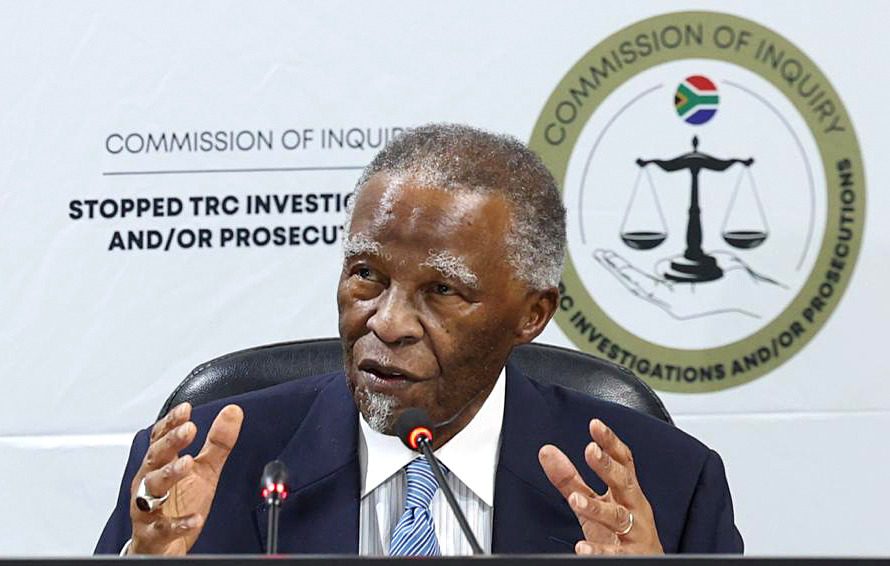
To sit in your 80s, in the glare of TV cameras, and have to explain and deny that you allegedly pardoned apartheid killers and protected them from investigation and prosecution?
On your return, did you sit in the haunted quiet of a township house in Johannesburg to explain to a mother whose son never came home from exile why he disappeared in ANC camps? Or why her son’s killers walked free?
Why did you not, when your own son never came home, either?
That is the question I have asked and cannot answer. It is a question nobody asks Thabo Mbeki: what did you say or do to the killers of your son and your brother? What did you do in their name? And it is the question that should haunt this country.
Today the nation knows Thabo Mbeki as the man with no child. The aloof intellectual. The AIDS denialist. The man who sold out the victims. Who negotiated a compromised settlement. The man who protected apartheid killers from justice.
They do not know that he had an only son: Monwabisi Kwanda Mbeki, born in 1959.
While Kwanda grew up, his grandfather Govan Mbeki was breaking rocks on Robben Island. His father, Thabo, was in exile, in Moscow, in London, in Lusaka, being told every day that he might never see home again. His uncles, including Moeletsi, were scattered.
In 1981, Kwanda, at 21, tried to do what his father had done: cross the border, join the ANC, find his father. He wanted to be with his blood. Apartheid agents intercepted him in Lesotho. He vanished.
No body. No grave. No funeral. No inquest. He is still missing to this day, like Nokuthula Simelane, like many others whose families went to the TRC and were told, “We do not know.”
A year later, in 1982, came his brother Jama Mbeki. His full brother. A lawyer, an activist, his comrade. Jama was lured by an apartheid agent in Botswana, taken to a farm, executed, and buried in an unmarked grave. The TRC later heard how they poured lime over him.
Read more: Mbeki’s Pain Deserves Compassion; the State Owes Every Family Justice
So when we talk about victims’ families, Thabo Mbeki is not an observer. He is the head of a victims’ family. He lost his only heir. His bloodline, in African culture, was cut. He lost his brother, their father’s hope. The Mbeki family paid what many families paid.
And that is what makes the accusation, if true, so painful.
How does it feel to be tried by other families who suffered the same and worse, for allegedly defending the perpetrators who killed your family? For stopping investigations or prosecutions?
Mbeki chose a path. When he became President in 1999, he could have done what the Mafia or African strongmen do. He had the files. He had the National Intelligence Agency. He had the names of the men who took Kwanda. He had the farm where Jama lay. He could have sent men in the night. He could have tortured, jailed, disappeared, and killed to get the truth about his son. No one would have stopped him. The country would have understood: “He is looking for his son.”
He did not.
He, Mandela and the ANC leadership made a cold, brutal calculation: if we dig up every grave, if we prosecute every killer, if we pursue revenge as justice, this country will not have peace. The generals will stage a coup. The economy will collapse. White people will leave with their money. This country will be reduced to rubble. There will be no South Africa left to find justice for.
So they chose the TRC. So they chose conditional amnesty. So they chose to tell policemen: tell the truth, and you go free. He says he told the NPA and the Minister of Justice to do their work.
But he, like Mandela, chose nation-building over retribution. Peace over justice. The future over a past that could not be changed. Leave the past where it belongs: in the past.
To a mother in Gugulethu whose son’s bones are still in a police file, that feels like betrayal. She is right to feel it. She says: there can be no peace without justice. How do you forgive someone who never asked for forgiveness? How do you build a new house on top of unmarked graves without first digging them up?
A son whose father disappeared sees a President who is protecting apartheid killers. He demands justice that will see perpetrators raised from the grave or dragged out of old age to confess their sins. He says: it is poppycock that you did not negotiate to let them walk away free.
To a statesman in his 80s, that pushback feels like heartbreak, because he knows the mother and the son are right. And he knows he is right too.
How does it feel in your 80s, when everything you fought and worked to build is at risk of being dismissed as a sellout deal because apartheid killers were not brought to justice? You say you did it for peace.
It feels like failure. Like your child died twice: once when he disappeared, and again when the country you built in his name calls you a traitor for not avenging him.
It feels lonely, because you cannot say in public: “I too lost.” If you say it, you are using your pain to silence theirs. If you do not say it, you are a heartless technocrat who never bled. You have no feelings.
Mbeki never spoke much about Kwanda. Perhaps because, in African tradition, a father who has lost his only son has no tongue. What do you say? That is why they call him childless. He accepted that label rather than weaponise his grief.
But we must say it now for him: he did not sell out victims, because he was one of them. He made a decision as a victim. He decided that his son’s death would not be answered with another mother’s son’s death. He decided that the cycle of brutal violence and war that had lasted more than 300 years must stop with him, even if it cost him his name.
That is not a sellout. That is statecraft of the most painful kind. It is what Mandela did when he had tea with Betsie Verwoerd. It is what Tutu did when he said there is no future without forgiveness.
Was it right? History will judge. The families who still search for bones will say it was wrong. The children who grew up without civil war will say it was right.
Both are true.
Freedom was never easy. It was not free. The Mbekis paid. They paid with a son whose grave is not known. With a brother whose body had lime poured on it. And now, in his 80s, Thabo Mbeki pays again, with the accusation that he forgot.
He did not forget. He remembered so painfully that he chose to carry the pain alone, so that the country does not have to carry it forever.
That is how it feels.
Get the morning briefing
Our editors’ choice of the day’s stories, in your inbox at six.


Comments
No comments yet.